Are Lab-Grown Diamonds Real Diamonds? The 2026 Expert Verdict
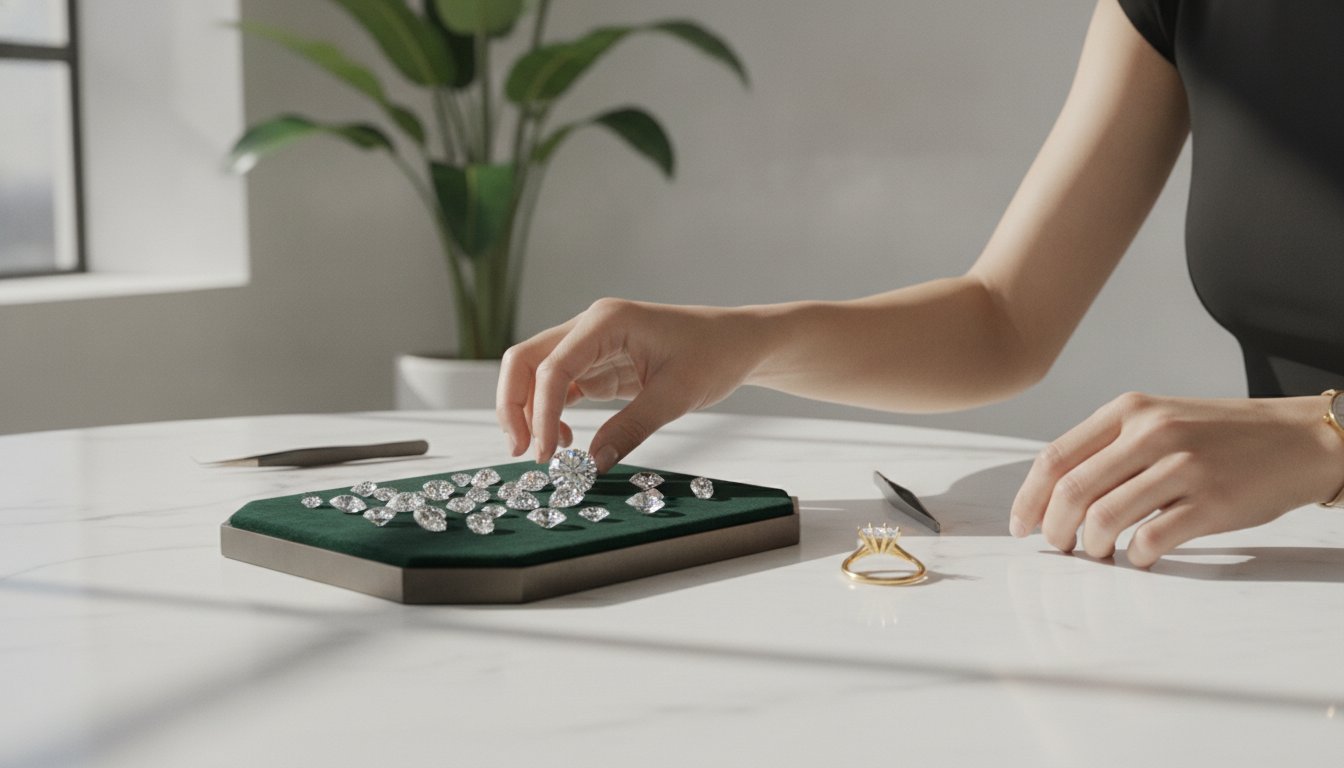
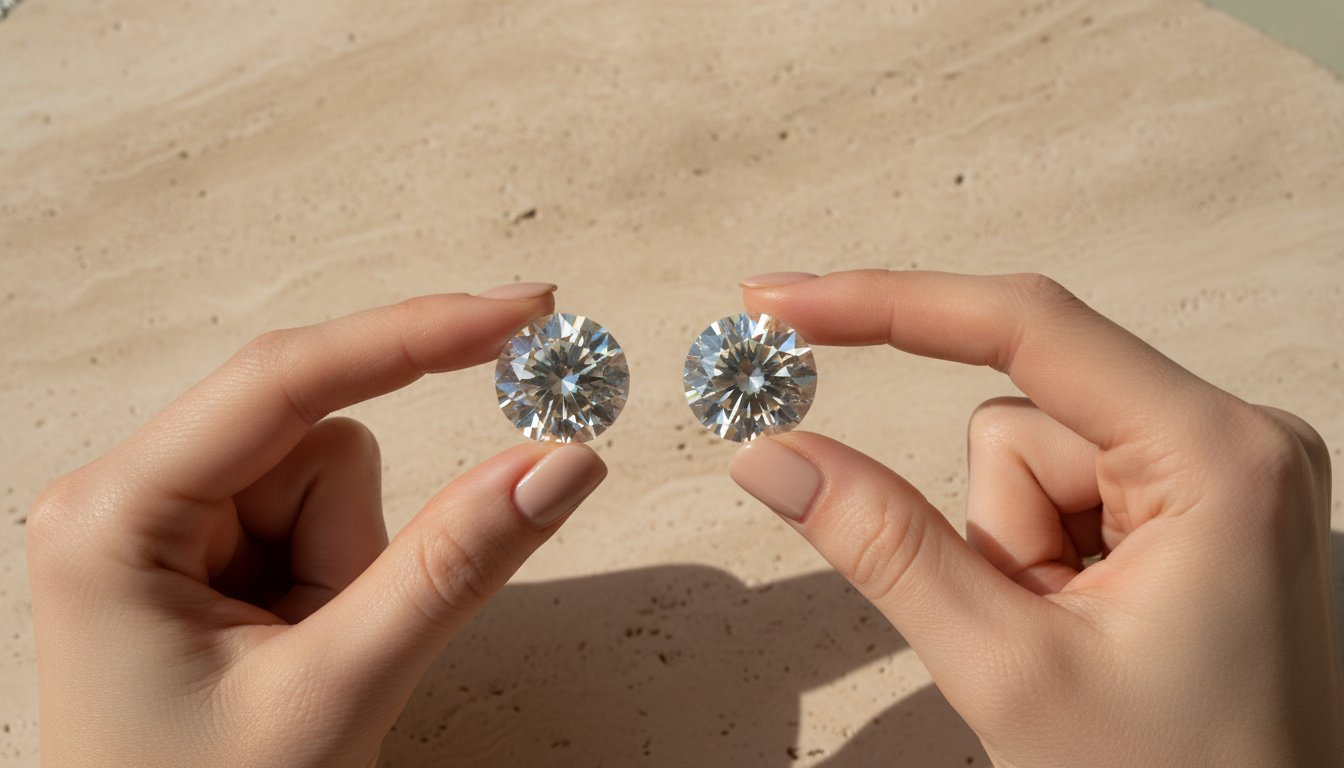
If you held a mined diamond in one hand and a lab-grown diamond in the other, would you be able to tell which one is truly "real"? Many people worry that choosing a lab-created stone means settling for a "fake" or a "cheap" imitation like moissanite. The truth is that are lab grown diamonds real diamonds is no longer a matter of opinion, but a matter of physics. These stones share the exact same carbon structure, physical hardness, and chemical composition as those pulled from the earth.
It's natural to feel some uncertainty when navigating the evolving world of modern luxury. You want the confidence that your jewelry is both ethically sourced and built to last. We promise to clear up the confusion by showing you the scientific and legal evidence that proves these gems are indistinguishable from mined stones.
In this 2026 expert verdict, we will preview the latest GIA grading standards and the certification process that ensures authenticity. You'll discover why 61% of engagement rings now feature lab-grown center stones and how to select a certified loose diamond for a bespoke, made-to-order piece.
Key Takeaways
- Learn why lab-grown diamonds are chemically and physically identical to mined stones, sharing the same pure carbon crystal structure.
- Understand the legal shift and FTC rulings that officially define these gems as diamonds, removing the requirement for "natural" in the core definition.
- Discover why even professional diamond testers often cannot tell the difference, as lab-grown stones possess the same brilliance and fire.
- Get a definitive answer to the question, are lab grown diamonds real diamonds, and see how their significantly lower price point allows for larger, higher-quality designs.
- Explore the ethical advantages of choosing a sustainably sourced, conflict-free stone for your next made-to-order jewelry piece.
The Scientific Truth: Are Lab-Grown Diamonds Chemically Identical?
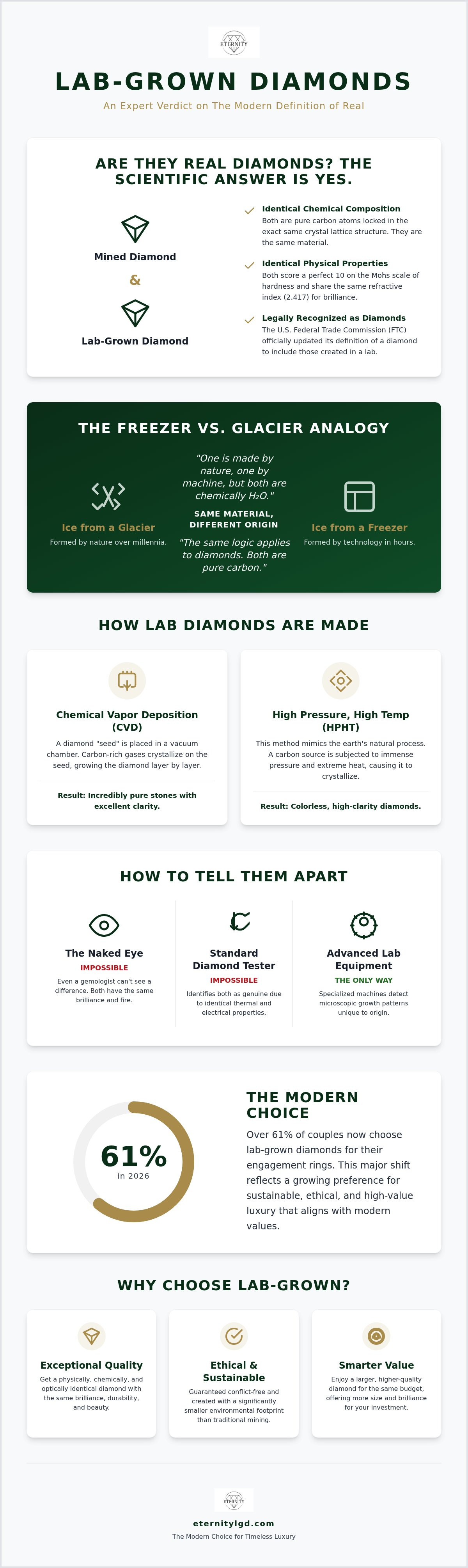
To understand if are lab grown diamonds real diamonds, we have to look at their atomic DNA. A diamond is simply pure carbon atoms locked together in a specific crystal lattice structure. Whether that carbon was compressed by the earth's crust billions of years ago or grown in a controlled environment yesterday, the resulting gemstone is chemically and physically identical. They aren't imitations; they are the exact same material.
The Federal Trade Commission (FTC) made this distinction official when they updated their Jewelry Guides. By removing the word "natural" from the core definition of a diamond, they acknowledged that the origin of the stone doesn't change its essence. This legal ruling ensures that when you purchase a lab-created stone for your engagement rings or custom pieces, you're getting a true diamond, not a substitute.
Think of it through the "Freezer vs. Glacier" analogy. If you take a glass of water and put it in your freezer, you get ice. If you travel to a glacier and chip off a block, you also have ice. One was made by a machine and the other by nature, but they share the same melting point, refractive index, and molecular structure. Lab diamonds follow this same logic. They reach a perfect 10 on the Mohs scale of hardness, ensuring they remain the most durable substance on the planet for daily wear.
CVD vs. HPHT: Replicating Earth’s Intense Conditions
Scientists use two primary methods to grow these stones. Chemical Vapor Deposition (CVD) starts with a small diamond "seed" in a vacuum chamber filled with carbon-rich gas. Microwave energy breaks the gas down, allowing carbon atoms to rain down and crystallize layer by layer. As of 2026, CVD technology has reached a peak of precision, allowing for stones that are incredibly pure and free from the structural graining seen in earlier years.
The second method, High Pressure High Temperature (HPHT), uses massive presses to mimic the crushing weight and intense heat found deep underground. This process effectively "cooks" the carbon until it transforms into a solid diamond. Modern HPHT refinements have nearly eliminated the faint metallic tints that were common in the past. This results in colorless, high-clarity diamonds that are indistinguishable from the finest mined counterparts.
Comparing Lab-Grown and Mined Diamonds: Can You Tell?
To the naked eye, even a seasoned gemologist cannot distinguish a lab-grown diamond from one that was mined. This is because they share the exact same refractive index of 2.417 and the same dispersion, which creates that iconic "fire" or rainbow flash. When people ask are lab grown diamonds real diamonds, they are often looking for a visual tell, but there simply isn't one. Standard diamond testers will identify both as genuine diamonds because their physical properties are identical.
Instead of worrying about mined versus lab, it's more helpful to understand the difference between lab diamonds vs diamond simulants. Simulants like cubic zirconia or moissanite are entirely different minerals that lack the hardness and light-handling of a diamond. Lab diamonds are the real deal. The only way to tell them apart from mined stones is through specialized laboratory equipment that detects microscopic growth patterns. These patterns act like a diamond's birth certificate, showing whether the crystal grew in a square shape in a lab or an octahedral shape in the earth.
Certification: The Role of IGI and GIA
Every high-quality stone should come with a grading report, but the industry standards are shifting. As of late 2025, the GIA transitioned to a "Premium" and "Standard" grading scale for lab-grown stones, while IGI continues to use the traditional 4Cs. IGI is currently a leader in the lab-grown market because they provide the granular detail many buyers prefer when selecting certified loose diamonds for custom designs.
To ensure transparency, lab-grown diamonds feature a microscopic laser inscription on the girdle. This inscription is invisible to the eye but can be seen under a jeweler's loupe. It typically includes the report number and a clear label identifying the stone's origin. While international trade bodies like CIBJO are moving toward the term "synthetic" as of September 2026, the FTC still supports the use of "laboratory-grown" to describe these stones. This ensures you always know exactly what you're buying, providing the same peace of mind as a mined stone's certification.
The Value of Modern Luxury: Why Choose Lab-Grown in 2026?
In 2026, the question of are lab grown diamonds real diamonds has been answered by the market's overwhelming adoption. With prices often 40% to 70% lower than mined stones, you can prioritize carat weight and clarity without compromise. This accessibility has fueled a shift where over 60% of engagement ring buyers now choose lab-grown center stones. They value the ability to get a larger, higher-quality gem for the same budget while enjoying the same physical perfection.
Beyond the price tag, there is the ethical "soul" of the stone. Choosing a lab-grown diamond means wearing a conflict-free, sustainably sourced gem with pride. It represents a modern standard of excellence that values transparency over traditional status symbols. This shift in mindset allows you to move beyond simple rings and explore more elaborate design your own diamond bracelet projects that were once cost-prohibitive for many buyers.
We should also address the "investment" myth. Diamonds are rarely a financial speculation vehicle; their true value lies in the memories they represent and the daily joy of wearing them. While mined diamonds have historically held more resale value, the gap is narrowing as lab diamonds become the standard for modern consumers. Buying for sentiment and durability ensures your piece remains a timeless heirloom regardless of market fluctuations.
Bespoke Beauty and Creative Empowerment
Modern luxury is moving away from mass-produced items toward made-to-order jewelry. By selecting certified loose diamonds directly, you become an active participant in the creative process. You can choose a stone that fits your specific custom vision, ensuring that your piece is as unique as your story. This empowerment is the core of the lab-grown revolution; it turns a complex purchase into an inviting journey of self-expression and ethical pride.
Actionable Key Takeaways
- Trust the Science: Lab-grown diamonds are chemically, physically, and optically identical to mined diamonds.
- Maximize Your Budget: Expect to save 40% to 70% compared to mined stones, allowing for higher color and clarity grades.
- Verify the Source: Always look for IGI or GIA certification and a laser inscription on the girdle for full transparency.
- Focus on Sentiment: Choose your diamond based on the beauty and ethics of the stone rather than its potential resale value.
- Go Custom: Use the cost savings to invest in a bespoke, made-to-order piece that reflects your personal style.
Step Into the Future of Ethical Luxury
Choosing a gemstone today is about more than just brilliance; it's about aligning your personal values with your style. We have established that the answer to are lab grown diamonds real diamonds is a resounding yes. These stones possess the same 10/10 hardness and chemical composition as mined gems, but they come with a modern, ethical story that you can wear with pride.
This evolution in the jewelry industry empowers you to focus on craftsmanship and personalization. With the significant value offered by lab-grown stones, you can select higher-quality, IGI or GIA certified diamonds without compromise. It is an opportunity to create a unique piece that reflects your vision while supporting sustainable and ethical sourcing practices.
Explore our collection of certified Loose Diamonds and start your custom journey with the help of our expert consultation for made-to-order pieces. We look forward to helping you design a timeless heirloom that is as conscious as it is beautiful.
Frequently Asked Questions
Do lab-grown diamonds pass a diamond tester?
Yes, lab-grown diamonds will pass a standard diamond tester because they are composed of the same carbon material as mined stones. These devices typically measure how heat or electricity moves through a gem to verify its diamond nature. Since lab diamonds share the exact thermal and electrical conductivity of those pulled from the earth, they trigger a positive result. Only specialized laboratory equipment used by major grading bodies can distinguish the two based on microscopic growth patterns.
Will a lab diamond ever get cloudy or change colour over time?
No, a high-quality lab diamond will never get cloudy, yellow, or change color over time. Because they are 100% pure carbon, they are chemically stable and possess the highest level of physical durability. They don't oxidize or degrade like cheaper imitations might. You can expect your diamond to maintain its original brilliance and fire for a lifetime, even with the heavy daily wear expected of engagement rings or bracelets.
Are lab diamonds the same as Cubic Zirconia or Moissanite?
No, lab diamonds are entirely different from simulants like Cubic Zirconia or Moissanite. While simulants are designed to look like diamonds, they have different chemical compositions and much lower hardness levels. When people ask are lab grown diamonds real diamonds, they're often looking for this distinction; lab stones are the actual mineral, whereas simulants are simply look-alikes. This difference ensures your lab diamond won't scratch or lose its luster as the years pass.
Do lab-grown diamonds have a resale value?
Yes, lab-grown diamonds do have resale value, though it's important to view them as a luxury purchase rather than a financial investment. The secondary market for these stones has matured significantly as of 2026. While you can sell your diamond, you should expect to receive a percentage of the current market price rather than the full original cost. Most buyers choose lab-grown for the immediate value and ethical pride rather than the hope of future financial profit.
Disclaimer
The information provided in this article is for educational and informational purposes only and should not be considered professional financial, legal, investment, or gemological advice. While Eternity strives to ensure all information is accurate and up to date, diamond grading standards, market prices, industry practices, and product availability may change over time.
All opinions expressed are based on current industry knowledge and are intended to help consumers make informed decisions. Product specifications, pricing, promotions, and services may vary and are subject to change without notice.
Lab-grown diamonds sold by Eternity are independently graded by recognized laboratories such as IGI or GIA where applicable. We encourage customers to consult with our jewelry specialists for recommendations tailored to their individual needs before making a purchase.
© Eternity Inc. All rights reserved. This content may not be reproduced without written permission.