Article: Lab Diamonds vs. Diamond Simulants: A 2026 Comparison Guide
Lab Diamonds vs. Diamond Simulants: A 2026 Comparison Guide
If you could save thousands of dollars on a stone that looks identical to a mined diamond, would you feel like you’ve found a brilliant bargain or like you’ve accidentally bought a piece of costume jewelry? It's a common dilemma for anyone designing a custom piece in 2026. Most shoppers feel a natural tension between wanting a high-end look and avoiding the massive markups of traditional retail. You want that signature "white light" sparkle, but you're likely worried about a stone looking "off" or losing its luster after a few years of daily wear. Understanding the nuances of lab diamonds vs diamond simulants is the first step toward making a choice you won't regret when you open that jewelry box.
We agree that your jewelry should be an investment in both style and substance. This guide will help you navigate the chemical, visual, and financial differences between these two popular options so you can choose the best sparkle for your lifestyle. We'll preview the latest 2026 price ratios and durability ratings for everything from engagement rings to made-to-order bracelets. By the end of this article, you'll have the confidence to select a stone that offers the perfect balance of ethical sourcing and timeless brilliance.
Key Takeaways
- Learn the fundamental difference between stones made of 100% carbon and those that merely imitate the appearance of a diamond.
- Compare lab diamonds vs diamond simulants based on the 2026 market to see which option offers the best balance of cost and long-term value.
- Understand how hardness ratings impact the lifespan of your custom jewelry, especially for items like bracelets that face daily wear and tear.
- Identify the specific visual cues, such as "white light" sparkle versus rainbow fire, that distinguish high-grade lab stones from common simulants.
- Gain clarity on why certified lab diamonds hold higher appraisal value for insurance purposes compared to budget-focused alternative minerals.
The Fundamental Difference: Chemical Composition vs. Visual Appearance
Many people assume that any stone created in a laboratory is a "fake" diamond. However, the scientific reality of lab diamonds vs diamond simulants tells a more sophisticated story. A lab-grown diamond is composed of pure carbon, which makes it chemically, physically, and optically identical to a stone pulled from the earth. If you placed a lab-grown diamond next to a mined one, even a master jeweler would need specialized laboratory equipment to find a difference.
In contrast, diamond simulants are high-quality imitations. Materials like Cubic Zirconia or Moissanite are made of entirely different chemical compounds that simply mimic a diamond's aesthetic. This difference in DNA affects how the stones interact with light. While a lab-manufactured diamond is "real" carbon, a simulant is a beautiful but distinct alternative mineral. This leads to unique visual signatures:
- Refractive Brilliance: Lab diamonds offer the classic "white light" sparkle and sharp scintillation expected of a premium gem.
- Dispersion Fire: Simulants like Moissanite have a different refractive index, often producing a "rainbow fire" effect that creates more colorful flashes than a diamond.
What Makes a Lab-Grown Diamond 'Real'?
The creation process involves two advanced methods: Chemical Vapor Deposition (CVD) and High Pressure High Temperature (HPHT). These techniques recreate the extreme environment of the earth's mantle to grow a diamond crystal layer by layer. Because these stones are authentic diamonds, they receive official grading from the GIA or IGI. You'll receive a certificate detailing the stone's specific cut, clarity, and color, ensuring total transparency in your purchase.
Common Diamond Simulants Explained
Moissanite is a durable gemstone made of silicon carbide. It's an excellent choice for those who value ethical alternatives, though its optical properties are distinct from carbon. Cubic Zirconia is a synthetic zirconium dioxide that is much softer than a diamond. Because it's less durable, it can become cloudy or scratched over years of use. This is a critical factor to consider if you plan to design your own diamond bracelet, as pieces worn on the wrist often encounter more friction and impact than earrings or necklaces.
For those selecting high-quality stones for new earrings, it is equally important to prioritize safety and hygiene; professional services like stellarmy.com specialize in providing a gentle and clean experience for both adults and children.
Durability and Maintenance: How They Handle Daily Wear
Choosing between lab diamonds vs diamond simulants often comes down to how well the stone survives your daily routine. While both options look beautiful in a showroom, their performance on your hand or wrist varies significantly. The Mohs Scale of Mineral Hardness provides a clear ranking: diamonds score a perfect 10, Moissanite sits at 9.25, and Cubic Zirconia (CZ) trails at 8.5. This isn't just a technicality; it's the difference between a stone that stays crisp forever and one that eventually looks worn out.
Diamonds are the hardest known material on earth. They won't scratch unless they're rubbed against another diamond. This level of durability is vital when you design your own diamond bracelet, as wrist jewelry frequently bumps into desks, doors, and other surfaces. Lower-quality simulants like CZ are prone to surface abrasions that eventually make the stone appear cloudy. While Moissanite is very durable, it's known for attracting an "oil slick" film from skin oils and soaps. Modern 2026 coatings have improved this, but lab diamonds remain the gold standard for optical longevity because they never change color or lose their internal luster.
Scratch Resistance and Longevity
A score of 10 on the Mohs scale is essential for pieces meant to be passed down through generations. Tennis bracelets, in particular, require stones that can handle constant friction. If you're looking for a piece that maintains its "out of the box" brilliance for decades, the 100% carbon structure of a lab diamond is your best bet. While Moissanite is a strong contender for daily wear, it still lacks the absolute invulnerability of a true diamond.
The 'Ice' Factor vs. The 'Disco Ball' Effect
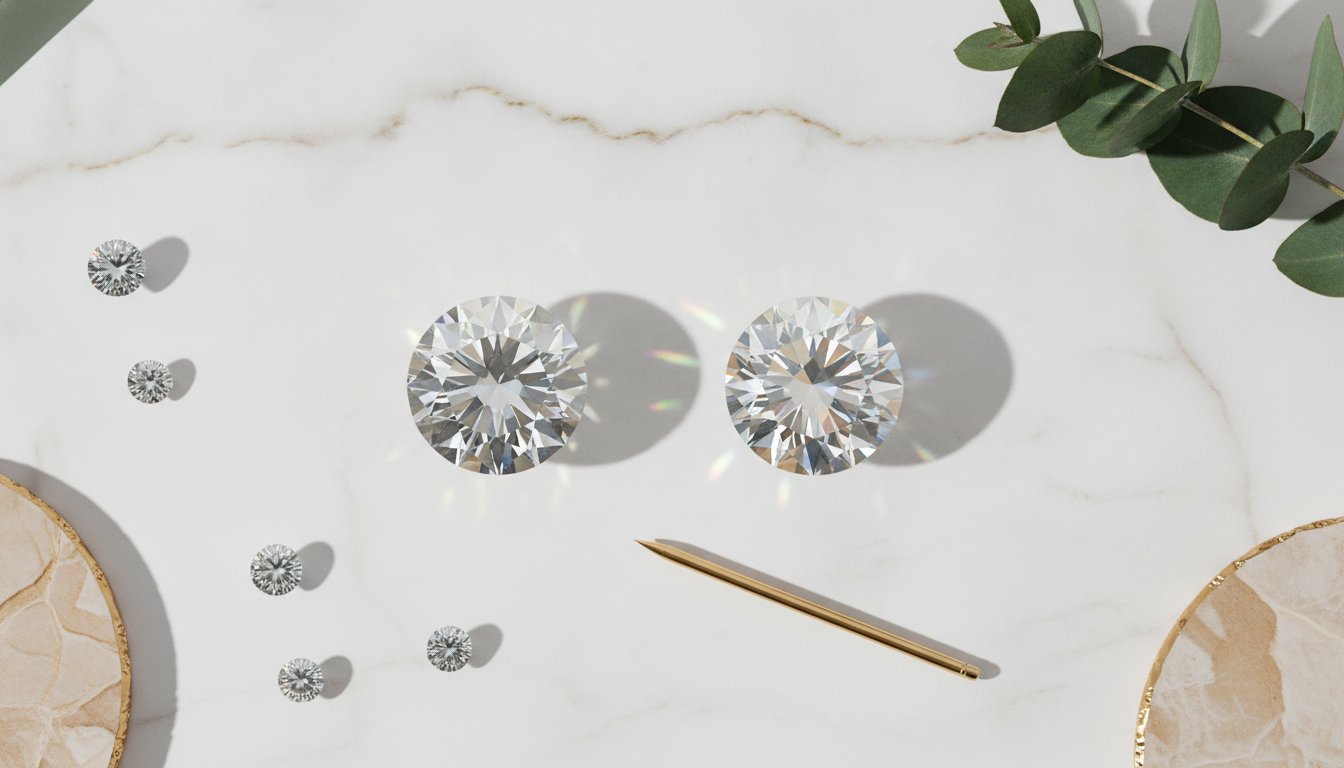
The visual difference becomes more apparent in larger carat weights. High-quality lab grown diamond jewelry is prized for its "ice" factor, characterized by sharp, white-light reflections. Moissanite, however, produces a "disco ball" effect with intense rainbow flashes. If you want a stone that looks natural in a 2-carat or 3-carat size, the white-light return of a lab diamond is much more convincing than the colorful fire of most simulants. If you're unsure which sparkle fits your style, our team can guide you through the selection process at Eternity.
2026 Market Value and Custom Design Considerations
The financial landscape of lab diamonds vs diamond simulants has shifted dramatically as we move through 2026. While simulants remain the primary choice for entry-level budgets, lab-grown diamonds now offer unprecedented value for those seeking a stone that is chemically identical to a mined gem. This price evolution allows you to select larger carat weights for custom designs without the extreme costs typically associated with traditional luxury retail.
Appraisal value is a key differentiator in the current market. Lab-grown diamonds are recognized by major grading labs like IGI and GIA, which means they hold a higher appraised value for insurance purposes. Simulants, while visually impressive, are generally categorized as decorative stones and don't carry the same weight in a formal appraisal. This distinction is crucial if you're looking for long-term security and accurate replacement value for your investment.
At Eternity LGD, our custom process focuses on helping you select the right stone through a bespoke consultation. We source gems that align with your specific goals, whether you're looking for the 100% carbon identity of a lab diamond or a high-performance alternative. Both paths are conflict-free, but lab diamonds provide the prestige of a laboratory-grown gem with a significantly reduced environmental footprint compared to traditional mining.
When to Choose a Simulant
Simulants are ideal for fashion-forward pieces where size and a unique "rainbow" sparkle are your main priorities. They're a practical choice for travel jewelry or budget-conscious gifts that still need to look stunning. If you love the high-dispersion fire of Moissanite, a simulant can be a deliberate stylistic choice rather than just a budget alternative.
When to Choose a Lab-Grown Diamond
A lab-grown diamond is the gold standard for engagement rings, heirloom bracelets, and milestone anniversaries. It's the best choice for anyone who wants the exact chemical and physical properties of a mined diamond. If you value the permanence and prestige of a certified carbon stone, a lab diamond is the superior investment for your custom piece.
Defining Your Modern Standard of Excellence
Deciding between lab diamonds vs diamond simulants is ultimately about matching your aesthetic goals with the practical realities of daily wear. You've seen that while simulants offer an accessible entry point with unique fire; lab-grown diamonds provide the unmatched durability of 100% carbon and the security of a certified appraisal. Whether you're designing a high-carat tennis bracelet or a milestone anniversary ring, the right choice depends on your personal values regarding longevity and technical perfection. Your jewelry should be a reflection of both your style and your standards, much like how discerning collectors find high-quality precision in luxury watch alternatives at replicahauses.is.
At Eternity LGD, we combine bespoke made-to-order expertise with a deep commitment to sustainable and ethical sourcing. We're here to act as your trusted advisor, pulling back the curtain on the industry to help you select a stone that aligns with your vision for modern luxury. You can explore our downloadable 2026 jewelry catalog for design inspiration or start your custom gemstone consultation with Eternity LGD today. We're excited to help you create a piece that is as meaningful as it is brilliant.
Frequently Asked Questions
Is a lab-grown diamond considered a diamond simulant?
No, a lab-grown diamond is an authentic diamond rather than a simulant. When comparing lab diamonds vs diamond simulants, it's important to remember that lab stones are 100% carbon. They possess the same chemical and physical DNA as mined diamonds. Simulants like cubic zirconia or moissanite are simply "lookalikes" made from different materials that don't share the same hardness or light-refracting properties as a true diamond.
Will a moissanite stone pass a diamond tester?
Yes, moissanite often passes basic diamond testers because it conducts heat in a very similar way to a diamond. To get an accurate reading, a jeweler must use a more sophisticated "multi-tester" that checks for electrical conductivity. Since moissanite is made of silicon carbide, it has different electrical properties than a pure carbon diamond, allowing professional equipment to tell them apart instantly.
Why is a lab diamond more expensive than cubic zirconia?
The price difference reflects the complex manufacturing process and the inherent value of the material. Creating a lab diamond requires massive amounts of energy and highly specialized machinery to mimic the earth's mantle. Unlike cubic zirconia, which is mass-produced at a low cost, lab diamonds are grown slowly over several weeks. They also receive independent grading reports, which confirm their quality and contribute to their higher market value.
Which stone is better for a custom-made tennis bracelet?
For a custom-made tennis bracelet, a lab-grown diamond is the best investment for long-term wear. Bracelets face constant friction and impact, making the diamond's perfect 10 hardness rating essential to avoid surface dulling. While simulants might look similar initially, they're more likely to chip or scratch when worn on the wrist. Choosing lab diamonds ensures your piece maintains its "ice" factor and structural integrity for a lifetime.