How the Custom Diamond Ring Process Works
A ring can mark a proposal, an anniversary, a personal milestone, or simply a style that feels unmistakably yours. The custom diamond ring process turns that meaning into a piece you can wear every day, without asking you to settle for a setting or stone that is only almost right.
For many buyers, custom sounds complicated or out of reach. In practice, a well-managed custom experience is a clear series of decisions: choose the diamond priorities, shape the design, review the details, and approve the finished plan before production begins. With lab-grown diamonds, that process can also make exceptional size, quality, and craftsmanship more attainable within a thoughtful budget.
The Custom Diamond Ring Process, Step by Step
A custom ring begins with a conversation, not a display case. You may arrive with a saved photo, a family heirloom you want to reimagine, a clear vision of an oval solitaire, or only a feeling that the right ring should be modern, low-profile, and easy to wear. All are useful starting points.
The goal is to identify what matters most to you. For an engagement ring, that may be maximizing diamond size while keeping the design timeless. For an anniversary ring, it may be adding side stones that represent children or a meaningful date. For a fashion ring, sculptural metalwork or an unusual diamond shape may lead the design.
1. Begin with your priorities and budget
Your consultation should cover the practical details before the decorative ones. Share your preferred budget range, ring size, timeline, metal preference, and any nonnegotiables. If the ring is a surprise, a trusted friend or partner can often help with style clues and sizing.
It also helps to discuss daily life. A healthcare professional, athlete, parent of young children, or anyone who works with their hands may prefer a lower setting with secure prongs. Someone who wants maximum sparkle from every angle may be comfortable with a higher-profile design. Neither choice is universally better. It depends on how the ring will be worn.
Lab-grown diamonds give custom clients meaningful flexibility here. They are real diamonds with the same chemical composition, crystal structure, and optical properties as mined diamonds. Because their pricing is often more accessible, you may be able to prioritize a larger center stone, a higher clarity grade, or more detailed setting work without stretching beyond your comfort zone.
2. Select a diamond with confidence
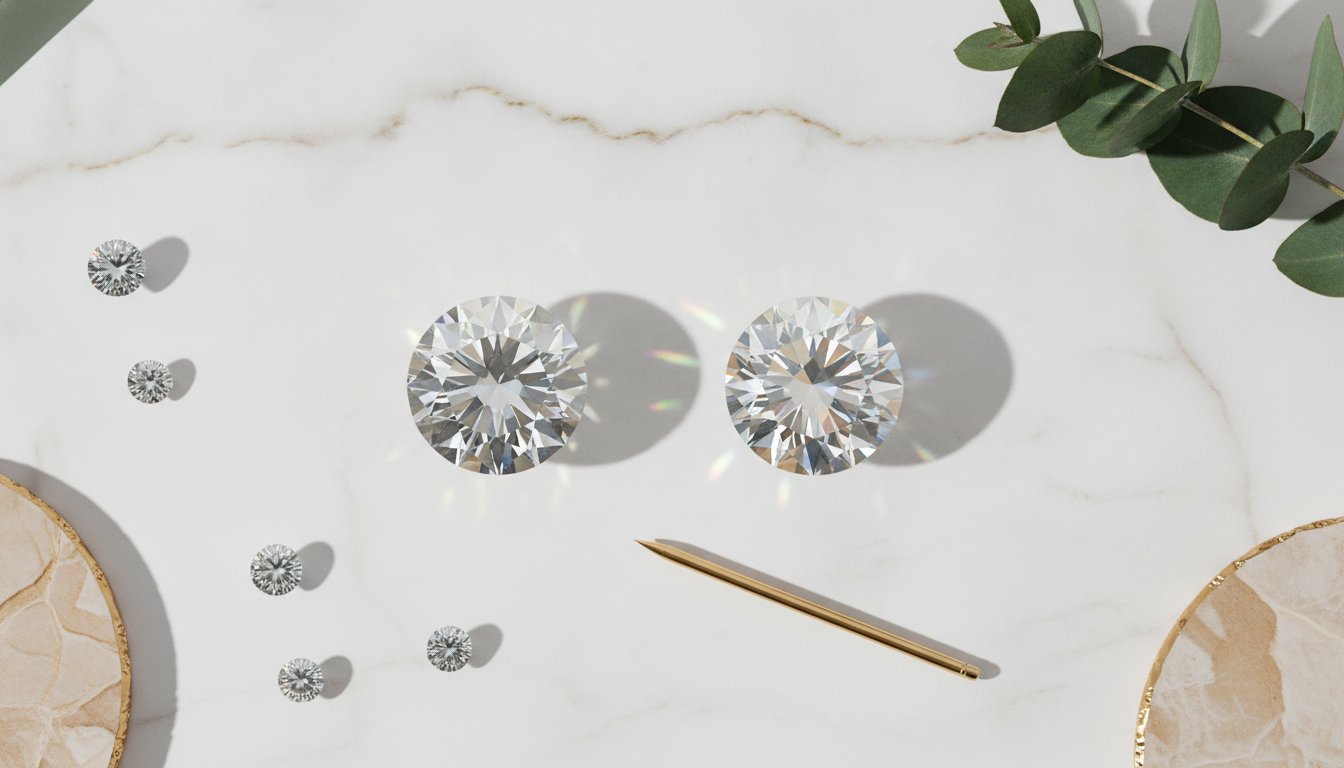
The center diamond sets much of the visual character of the ring. Shape is usually the first decision because it affects everything from the setting proportions to how the diamond looks on the finger. Round brilliants deliver classic fire, ovals can create a lengthening effect, emerald cuts feel crisp and architectural, and cushions bring a softer, romantic look.
Then comes the balance of the 4Cs: cut, color, clarity, and carat weight. Cut is especially important because it influences brightness and sparkle. A well-cut diamond can appear more lively than a larger stone with less precise proportions. Color and clarity preferences vary by shape and setting. For example, yellow gold can complement a slightly warmer diamond, while a white-metal solitaire may encourage some buyers to prioritize a whiter color range.
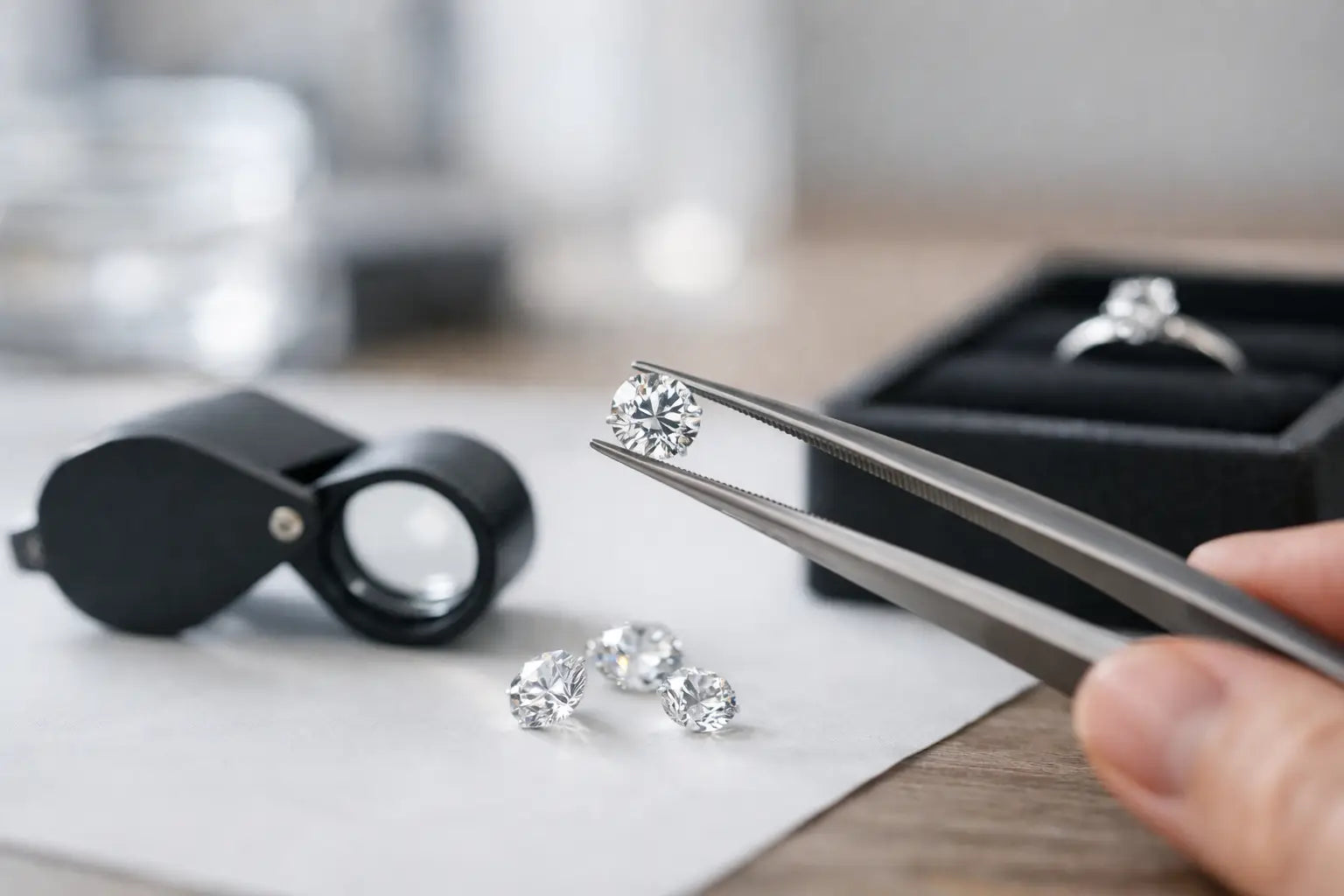
Certification provides a reliable foundation for comparison. An independent grading report documents the diamond's characteristics so you can understand what you are purchasing beyond a product image or carat number. Ask to review the certificate details and discuss any visual features that matter to you, including bow-tie effects in elongated shapes, inclusions, fluorescence, or length-to-width ratio.
3. Develop the setting concept
Once the diamond direction is clear, the design becomes tangible. Your jeweler can translate inspiration into choices around the band, setting style, metal, side stones, and finishing details. A solitaire may be intentionally simple, but even it has important variations: cathedral or low-set shoulders, four or six prongs, a knife-edge or rounded band, and a hidden halo beneath the center stone.
Custom design is especially valuable when standard ring settings do not fit your needs. You might want a wider band that still feels refined, a bezel setting for added protection, a mixed-metal look, or a wedding band designed to sit flush beside the engagement ring. You can also incorporate personal details such as an engraving, a birthstone tucked inside the shank, or diamonds from an existing family piece when appropriate.
Metal selection deserves more attention than it sometimes receives. Platinum is naturally white, durable, and substantial, while 14K and 18K gold offer different balances of richness and hardness. Yellow gold creates warmth, white gold offers a bright contemporary appearance, and rose gold adds a softer tone. The best choice is the one that suits your style, skin tone preferences, and routine, not simply the latest trend.
4. Review the design before production
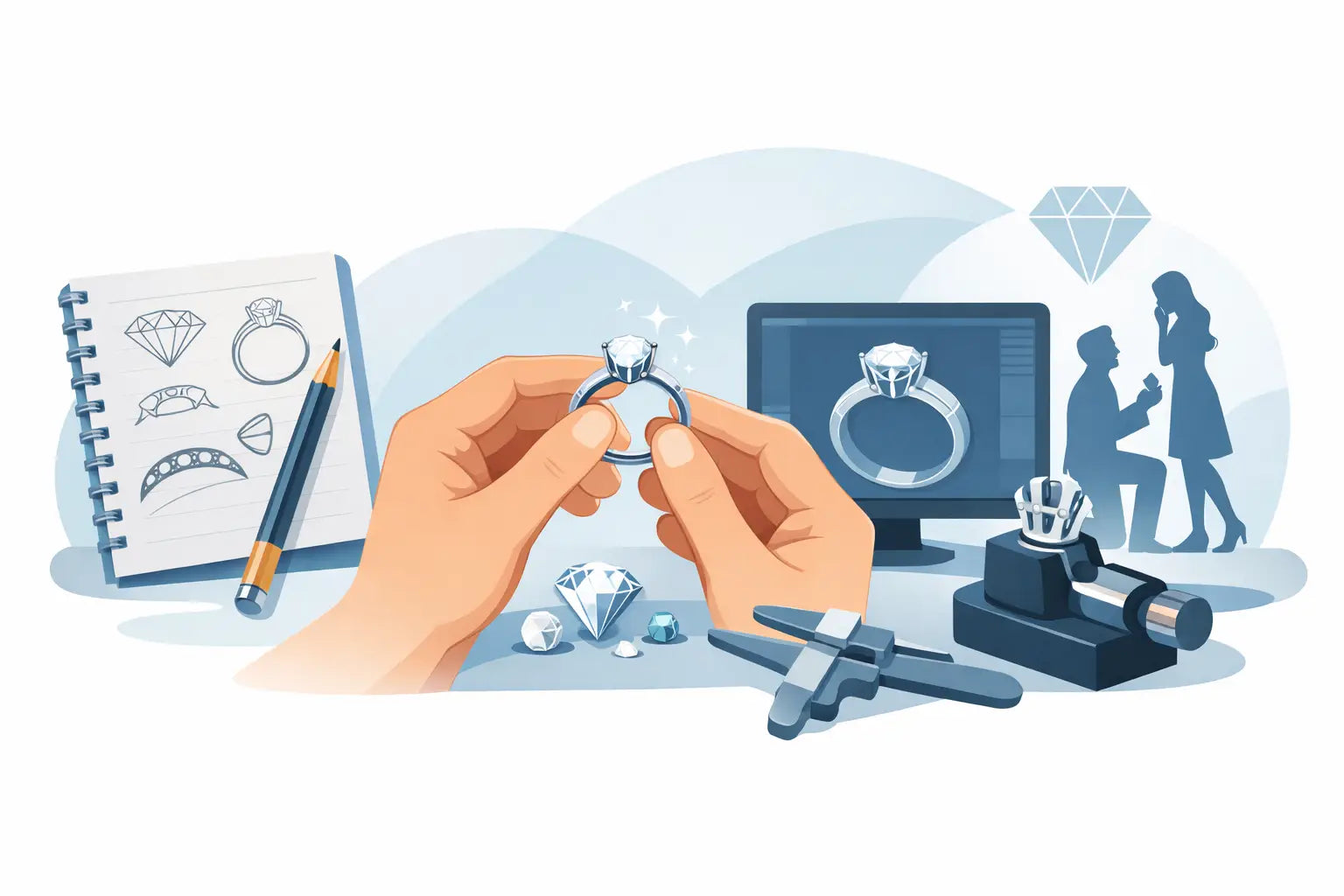
A true custom ring should not move into production based on a vague description. You should have the opportunity to review the proposed specifications and visual design direction. Depending on the project, this may include a detailed rendering that shows the diamond placement, prong style, band dimensions, and side view.
This is the moment to slow down and ask questions. Confirm the ring size, metal type, diamond measurements, total carat weight for accent stones, engraving text, and the profile height. If you are pairing the ring with a wedding band, make sure the design allows for the look and fit you want.
Small adjustments at this stage can make a major difference later. Increasing the band width by a fraction of a millimeter, lowering the center setting, or changing from four prongs to six can alter comfort, durability, and overall style. Approval should feel informed and exciting, never rushed.
5. Production, inspection, and delivery
After approval, skilled craftspeople create the ring to the agreed specifications. The metal is formed, stones are set, surfaces are polished, and the ring undergoes quality inspection. This final review checks that the setting is secure, the finish is clean, the diamond presentation is balanced, and the piece matches the approved design.
Production timing varies with complexity, stone availability, and seasonal demand. A simple solitaire may require a different timeline than an intricate halo ring with custom-cut accent stones. If the ring is tied to a proposal date or anniversary, begin early enough to allow room for design refinement and shipping rather than treating the process as a last-minute purchase.
At Eternity LGD, custom clients are guided from diamond consultation through design approval, inspection, and delivery, with continued support available after the ring reaches its new home. That support matters because a fine ring is not just made for a single occasion. It is made to become part of your life.
What Makes a Custom Ring Worth It?
A custom ring is not automatically the best choice for every buyer. If you find a ready-to-wear design that fits beautifully and checks every box, there is no reason to complicate the purchase. Ready-made rings can be an excellent option when timing is short or your preferences are straightforward.
Custom becomes worthwhile when fit, proportion, sentiment, or individuality matter enough that an off-the-shelf setting feels like a compromise. It can also be the smarter route when you want to build around a specific loose diamond rather than choosing from pre-set combinations. The value is not simply in having something no one else owns. It is in making intentional choices that reflect how you want the ring to look, feel, and last.
Questions to Ask Before You Approve a Custom Ring
Before giving final approval, make sure you understand the diamond's certification, the exact metal and diamond specifications, the projected production timeline, and the warranty or care support available after purchase. If the ring will be worn with another band, ask how the two pieces will sit together. If resizing could be needed, ask how the design may affect that option.
You should also be candid about budget. A knowledgeable jeweler can show where changes will have the greatest impact. Reducing carat weight slightly, selecting a near-colorless diamond instead of a colorless one, or choosing a simpler setting can preserve the overall look while creating room for the details you value most.
The best custom ring does not need to follow someone else's checklist. It needs to feel right when you look down at your hand years from now: personal, beautifully made, and chosen with confidence.