Article: Diamond Upgrade Versus Trade-In Explained
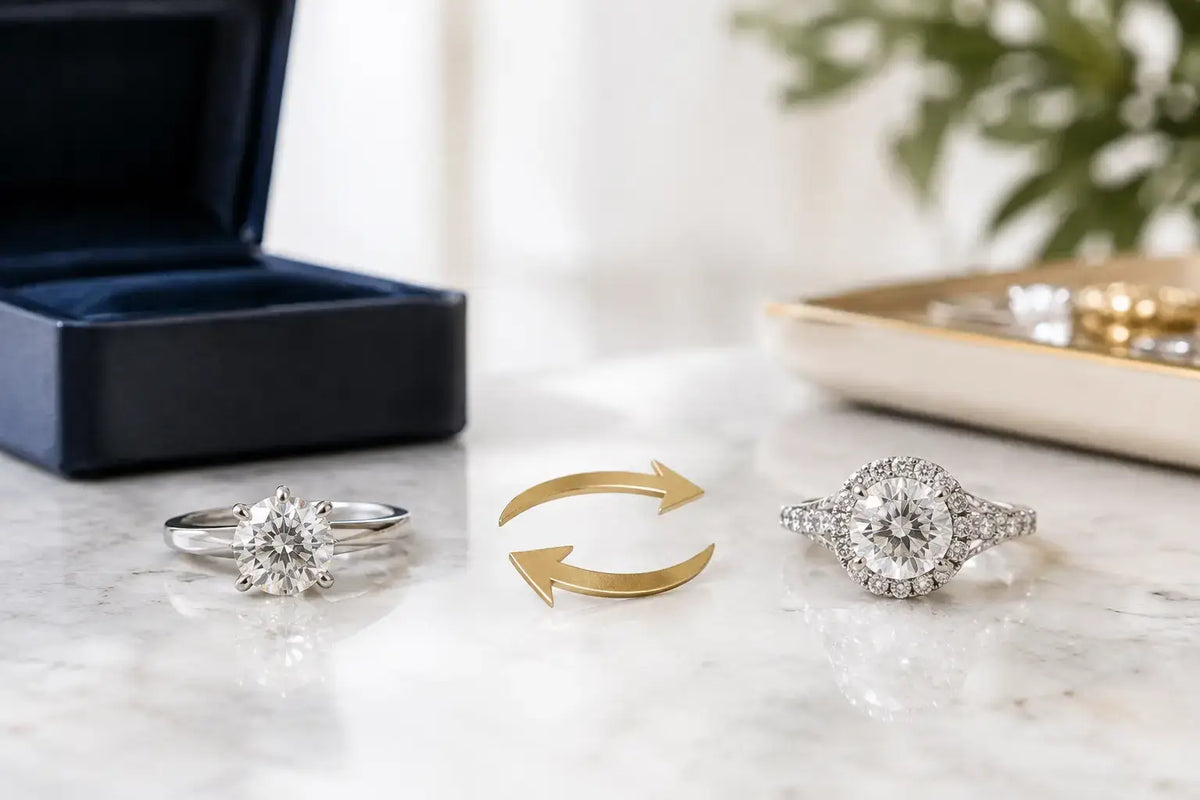
Diamond Upgrade Versus Trade-In Explained
A ring that once felt perfect can start to represent a new chapter: a milestone anniversary, a growing family, a stronger personal style, or simply the chance to choose the diamond you wanted all along. When comparing a diamond upgrade versus trade-in, the right choice is not only about getting a larger stone. It is about understanding what value you can apply, what jewelry you want to keep, and how much freedom you want in the next design.
For lab-grown diamond buyers, this conversation can be especially practical. Lab-grown diamonds offer extraordinary visual beauty, certified quality, and the opportunity to prioritize carat weight or cut within a thoughtful budget. An upgrade or trade-in program can help your original purchase continue serving you as your tastes and circumstances evolve.
Diamond Upgrade Versus Trade-In: The Core Difference
The wording can vary among jewelers, so always request current terms in writing. In general, a diamond upgrade allows you to apply an eligible diamond's credited value toward a new diamond, often one of greater value. You may keep your existing setting, have it reset with the new center stone, or select a new setting if that better suits your vision.
A trade-in usually refers to exchanging an existing piece of jewelry, diamond, or both for credit toward another purchase. This can be a broader transaction. For example, you might trade a complete engagement ring toward a new ring with a different shape, a redesigned setting, or even another category of fine jewelry.
The distinction matters because an upgrade tends to center on the stone, while a trade-in may involve the complete piece. Neither is automatically better. The best route depends on whether your goal is to preserve a meaningful design, refresh your style completely, or simplify the path to a new purchase.
When a Diamond Upgrade Makes Sense
An upgrade is often the natural choice when you still love the ring itself but want a different center diamond. Perhaps your original solitaire has sentimental value, your wedding band was designed around its proportions, or the setting remains exactly your style. Replacing only the center stone can preserve the familiar details while creating a noticeable visual change.
Carat weight is a common reason to upgrade, but it is not the only one. You may want a brighter-cut diamond, a different shape, higher clarity, or a color grade that better matches your preferences. A buyer who originally selected a round diamond may later fall for the elongated look of an oval or emerald cut. A custom consultation can help determine whether the current setting can safely accommodate that change in shape or size.
An upgrade also works well for shoppers who want to invest their new budget primarily in the diamond rather than a full redesign. Because lab-grown diamonds make larger, high-quality stones more accessible, an upgrade can create a meaningful change without requiring the same budget typically associated with mined-diamond retail.
Still, retaining a setting is not always the most cost-effective choice. A new diamond may be too large, too deep, or too differently shaped for the existing mounting. Prongs, the head of the ring, and the overall structure may need modification. Before committing, ask whether the setting can be inspected and adjusted safely or whether a new setting is the wiser long-term choice.
When a Trade-In Is the Better Fit
A trade-in is ideal when the whole piece no longer feels like you. Maybe your original ring was chosen quickly before a proposal, your style has shifted from vintage detail to clean modern lines, or your lifestyle now calls for a lower-profile setting. Trading in the existing ring gives you a more complete reset.
It can also be useful when several pieces are involved. An unworn pendant, older earrings, or a ring with a small center stone may have more practical value as credit toward a piece you will wear every day. Instead of letting meaningful jewelry stay in a box, you can redirect its value toward a custom design with a clearer role in your collection.
For couples celebrating an anniversary, a trade-in may create room for a true redesign: a larger center diamond, a new metal color, a hidden halo, tapered side stones, or a three-stone ring that tells a fuller story. The original jewelry is not being erased. Its value is helping create the next chapter.
Trade-ins require a realistic mindset about value. The amount offered may be based on original purchase details, diamond specifications, condition, certification, current program rules, and the type of item being exchanged. Jewelry is not a short-term investment vehicle, and resale conditions can differ from retail pricing, particularly for lab-grown diamonds as technology and market supply evolve. A transparent jeweler should explain how credit is determined rather than leaving you to guess.
Questions to Ask Before You Decide
The terms of an upgrade or trade-in program shape the decision as much as the jewelry itself. Before moving forward, clarify what is eligible and what documentation is required. Original certificates, purchase records, and receipts can make evaluation more straightforward, especially for a certified loose diamond.
Ask whether the credit applies only to a loose diamond or can be used toward a setting, custom work, or a complete piece of jewelry. Confirm whether a minimum purchase amount applies and whether the replacement diamond must be of greater value. You should also understand how the condition of a setting affects trade-in eligibility, including worn prongs, damaged shanks, or missing accent stones.
If your goal is an upgrade, ask about the practical fit of the new diamond. The measurements matter as much as the carat number. Two diamonds of the same weight can have very different face-up dimensions, and an elongated shape can look significantly larger than a round stone of comparable carat weight. Seeing the proportions in relation to your finger size and setting style can prevent an upgrade from feeling unexpectedly different once it is worn.
Finally, clarify the timing. A custom piece has a design and production process, and a current ring may need to be evaluated before the final credit is confirmed. A clear timeline helps you plan around an anniversary, proposal, or other important occasion.
Let Your Next Piece Reflect the Life You Have Now
The most satisfying upgrade is not always the largest diamond, and the best trade-in is not always a complete redesign. A well-chosen new piece should fit the way you dress, work, travel, and celebrate now. For some people, that means a bold oval solitaire. For others, it means turning an older ring into an elegant everyday pendant and selecting a fresh engagement ring designed from the ground up.
At Eternity LGD, the custom-design process can help turn those preferences into clear decisions, from diamond consultation through final inspection. Bring photos of your current jewelry, any diamond certification you have, and a realistic budget for the next piece. With the right information, your original diamond or ring can become more than a past purchase - it can be the starting point for jewelry that feels personal again.