Article: Diamond Certification: What Buyers Should Know
Diamond Certification: What Buyers Should Know
A diamond can look extraordinary under showroom lighting and still leave you with unanswered questions. Diamond certification gives your purchase a factual foundation: a record of the diamond’s measurable characteristics, created by an independent grading laboratory. For an engagement ring, anniversary gift, or custom piece you will wear for years, that clarity matters.
With lab-grown diamonds, certification is especially useful because it helps you compare stones by more than carat weight or a beautiful product photo. It gives you a consistent way to understand what you are buying, confirm that the diamond presented is the diamond you receive, and decide where your budget will make the greatest visual difference.
What Diamond Certification Actually Means
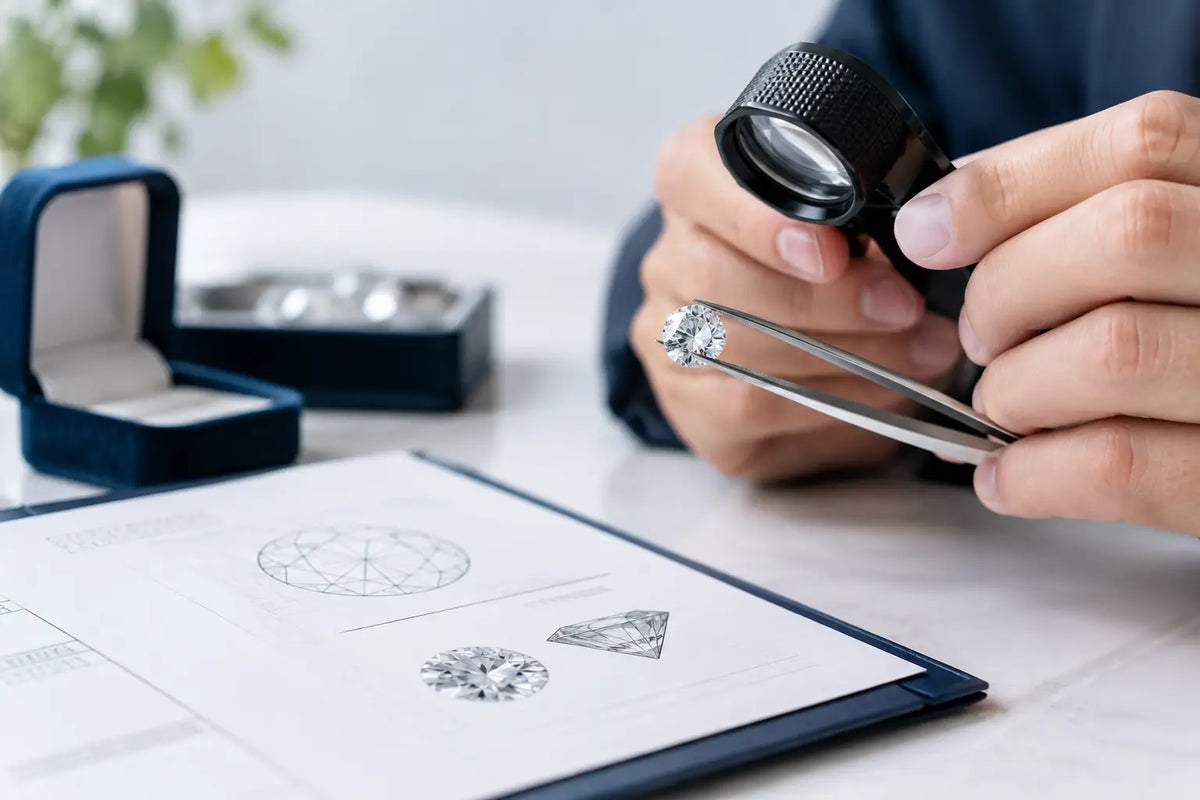
The phrase “diamond certification” is widely used, but most diamonds are accompanied by a grading report rather than a literal certificate. The report is an expert assessment of a loose diamond at the time it was examined. It records characteristics such as shape, measurements, carat weight, color, clarity, cut details, fluorescence, and identifying information.
For lab-grown diamonds, a report typically also identifies the stone as laboratory-grown and may state the growth method, such as CVD or HPHT. Both methods create real diamonds with the same essential chemical, physical, and optical properties as mined diamonds. The growth method is not a shortcut for deciding whether a diamond is beautiful. The individual stone’s cut, color, clarity, and overall light performance still deserve your attention.
A grading report is not an appraisal. It does not set a retail price, promise future resale value, or insure the jewelry. Think of it as a detailed identity and quality document. An appraisal, by contrast, is a valuation often used for insurance purposes after the diamond has been set in jewelry.
Why Certification Matters When Buying Lab-Grown Diamonds
Certification turns a meaningful purchase into a more transparent one. Two round diamonds can both be listed as 2 carats, for example, but look noticeably different because of their cut proportions, color, clarity, or spread. A report gives you the details needed to make an informed comparison.
It also creates an independent record. Rather than relying only on descriptive terms like “premium” or “high quality,” you can see the laboratory’s grades and measurements. This is valuable when comparing diamonds online, planning a custom design, or choosing between a larger stone and a higher color or clarity grade.
For many buyers, the practical advantage is confidence. A certified lab-grown diamond allows you to understand the specifications behind the price. You can prioritize the qualities you will actually see every day instead of paying for features that may not matter to your eye or your setting.
Certification supports comparison, not perfection
A report is powerful, but it is not the entire buying decision. Diamonds can receive the same color and clarity grades yet have different personalities. One may face up brighter, another may appear larger for its carat weight, and another may have inclusions that are technically present but invisible without magnification.
That is why the best choice depends on your priorities. If you want a larger center stone within a specific budget, you may comfortably choose a diamond that is eye-clean rather than flawless. If your ring will feature a platinum solitaire with an icy-white look, you may place more emphasis on color. Certification gives you the starting point; thoughtful selection brings the piece to life.
How to Read a Diamond Certification Report
You do not need gemology training to read a report well. Start by confirming the report number, the laboratory that issued it, and whether the document identifies the diamond as laboratory-grown. Then focus on the specifications that influence appearance and fit.
Shape and measurements tell you more than a shape name alone. Measurements reveal a diamond’s proportions and its face-up size. For fancy shapes such as oval, pear, emerald, and marquise, length-to-width ratio helps indicate whether the stone will look elongated, balanced, or more rounded.
Carat weight measures weight, not visible size. A well-proportioned diamond may appear more generous than another diamond of the same weight. This is one reason it helps to consider millimeter measurements alongside carat weight, particularly when designing a custom setting.
Color grade describes the presence or absence of color. Near-colorless grades often offer excellent value in lab-grown diamonds, especially when set in yellow or rose gold. In white gold or platinum, some buyers prefer a higher color grade for a crisp, colorless appearance. There is no universal right answer - the metal, shape, and your personal preference all play a role.
Clarity grade records internal characteristics, called inclusions, and surface characteristics, called blemishes. A diamond does not need to be flawless to look clean and brilliant when worn. Many buyers find that an eye-clean diamond offers a smart balance of beauty and value, leaving more room in the budget for carat weight, setting details, or a matching wedding band.
Cut information deserves special attention. In round brilliant diamonds, an overall cut grade is often provided and is one of the strongest indicators of brightness and fire. For fancy shapes, reports may not provide one overall cut grade, so proportions, polish, symmetry, videos, and expert guidance become even more helpful. A high carat weight cannot compensate for a poorly cut stone that looks dull or dark.
Fluorescence describes how a diamond reacts to ultraviolet light. It is not automatically a benefit or a drawback. Consider it alongside the full report and the diamond’s appearance rather than treating it as a single deciding factor.
Match the Report to the Diamond
Before finalizing a purchase, make sure the report number corresponds to the diamond. Many certified diamonds have a microscopic laser inscription on the girdle that matches the report number. This identifier is useful for verification and can be referenced during service, insurance, or future documentation.
If a diamond is already set, the inscription may be difficult to view without magnification, and that is normal. Keep a digital and printed copy of the report with your purchase records. Store it separately from the jewelry, along with receipts, warranty information, and any appraisal you obtain for insurance.
When comparing listings, check that the stated carat weight, color, clarity, shape, and report number align. A trustworthy buying experience should make these details easy to understand, not make you chase them down.
Choosing the Right Grading Laboratory
The issuing laboratory matters because grading standards and report formats can vary. Established gemological laboratories use trained graders and documented procedures to evaluate diamonds independently. For lab-grown diamonds, reports from recognized laboratories such as IGI and GIA are commonly encountered by US buyers.
Rather than assuming one report makes every diamond better than another, use the report to assess the individual stone. A diamond’s visual appeal, proportions, and price should still make sense together. Ask questions when anything seems unclear, including whether the report is current, whether it identifies the stone as lab-grown, and how the listed qualities relate to the diamond you are considering.
Certification in a Custom Jewelry Purchase
A custom design adds another layer of excitement because every choice is personal, from the center stone to the setting profile and finishing details. Certification helps keep the process grounded. You can select a diamond based on confirmed specifications, then design around its exact shape and measurements.
This is particularly valuable for settings with halos, side stones, hidden details, or a fitted wedding band. The center diamond’s dimensions influence how the setting is built and how it will sit on the hand. A carefully reviewed report helps ensure the final design feels proportionate, secure, and intentional.
At Eternity LGD, the goal is not to overwhelm you with technical language. It is to help you understand which details will matter most for the jewelry you want to wear. A diamond report should make your decision feel clearer, while the design process keeps the result unmistakably yours.
Questions Worth Asking Before You Buy
Before you commit, ask to see the diamond’s grading report and confirm that it is for the exact stone being purchased. Ask whether the diamond has a matching laser inscription, how its proportions affect its appearance, and whether any clarity characteristics are visible without magnification. If you are choosing a fancy shape, ask about features that do not always show up in a grade alone, such as bow-tie effect in ovals and pears or windowing in some elongated cuts.
Also ask how the stone will be documented after it is set, what warranty coverage applies to the finished jewelry, and what services are available if your ring needs inspection, resizing, repair, or an upgrade later. Certification is one meaningful part of ownership, not the last step.
The right diamond certification does more than provide paperwork. It gives you a clear reference point, so you can choose a diamond for its documented quality, its visible beauty, and the story it will carry every time you wear it.