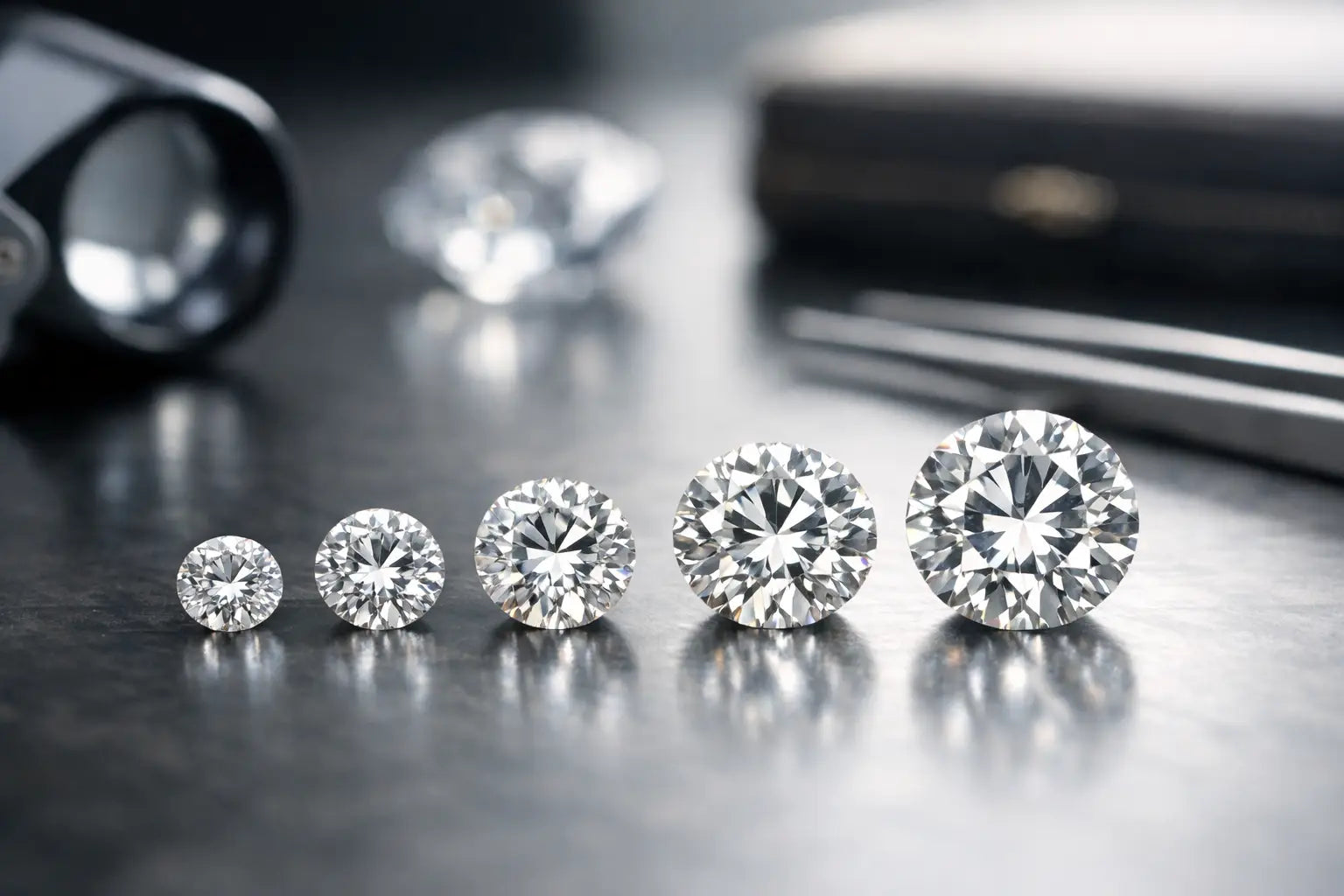
Diamond Carat Size Guide for Better Choices
A 2-carat diamond does not always look twice as large as a 1-carat diamond. That surprise is why a thoughtful diamond carat size guide matters before you choose an engagement ring, anniversary gift, or custom piece. Carat measures a diamond's weight, while the visual impact you see on the hand comes from its shape, cut proportions, setting, and even finger size.
For lab-grown diamond buyers, carat can be an especially exciting place to explore. Because laboratory-grown diamonds offer the same chemical, physical, and optical properties as mined diamonds, many shoppers can consider a more substantial size while still leaving room in the budget for exceptional cut, color, clarity, or a setting that feels uniquely personal.
What Diamond Carat Actually Measures
One carat equals 0.2 grams, or 200 milligrams. It is a measure of weight, not a measurement of a diamond's width. Two stones can carry the same carat weight but look noticeably different from the top because their shapes and proportions distribute that weight differently.
A well-cut diamond has a balance of diameter, depth, and brilliance. A stone cut too deep may hide more weight below the girdle, making it appear smaller face-up than another diamond of the same carat weight. A very shallow stone can look wider, but may sacrifice the lively light return that gives a diamond its sparkle. The best choice is rarely the widest diamond on paper. It is the one that looks bright, balanced, and right for the piece you plan to wear.
Diamond Carat Size Guide: Typical Face-Up Measurements
The measurements below are approximate average widths in millimeters. They are useful reference points, not promises, since each individual diamond has its own proportions and cut quality.
| Carat weight | Round diamond width | Oval diamond length x width | Emerald diamond length x width |
| --- | --- | --- | --- |
| 0.50 ct | about 5.1 mm | about 6.4 x 4.3 mm | about 5.5 x 4.0 mm |
| 0.75 ct | about 5.8 mm | about 7.2 x 4.8 mm | about 6.2 x 4.5 mm |
| 1.00 ct | about 6.4 mm | about 7.8 x 5.8 mm | about 7.0 x 5.0 mm |
| 1.50 ct | about 7.4 mm | about 9.0 x 6.0 mm | about 8.0 x 6.0 mm |
| 2.00 ct | about 8.1 mm | about 10.0 x 7.0 mm | about 9.0 x 7.0 mm |
| 3.00 ct | about 9.2 mm | about 11.0 x 7.5 mm | about 10.0 x 8.0 mm |
A difference of a few tenths of a millimeter may sound minor, yet it can be visible in a ring. For perspective, moving from a 1-carat round diamond to a 2-carat round adds roughly 1.7 millimeters of diameter. The surface area grows meaningfully, but not in a straight one-to-one relationship with carat weight.
Why the Size Increase Is Not Linear
Diamond carat weight increases by volume. As a diamond becomes heavier, it grows in width and depth, so much of the added weight is not visible from above. This is why a 2-carat round is larger than a 1-carat round, but does not appear twice as wide.
That relationship can help you shop with clearer expectations. If your goal is a visible size increase, compare millimeter measurements alongside carat weight. If your goal is maximum brilliance, prioritize a beautiful cut before chasing a specific number on a grading report.
Diamond Shape Changes the Look of Carat Weight
Shape is one of the strongest influences on perceived size. Elongated silhouettes such as oval, pear, marquise, and emerald cut often cover more finger length than a round diamond of equal weight. They can create a graceful, lengthening effect, particularly on smaller or shorter fingers.
Round brilliant diamonds remain a favorite because their symmetrical outline and facet pattern create exceptional sparkle. They may not spread as broadly as some fancy shapes, but their light performance can make them feel vivid and substantial in any setting.
Cushion, princess, and Asscher cuts often have a more compact appearance. Their geometry and depth can concentrate carat weight beneath the surface, which may be ideal for someone drawn to a refined, architectural look rather than the largest possible footprint. There is no universally best shape. A larger face-up look may matter most to one person, while another may prefer crisp lines, vintage character, or maximum fire.
Your Finger Size and Ring Setting Matter Too
The same diamond can look dramatically different on different hands. On a size 4 finger, a 1.5-carat round diamond can have strong finger coverage. On a size 8 finger, that same stone may look more delicate and understated. Neither effect is better. It simply changes the proportion.
Setting design also changes how large a center stone appears. A slender band can make the diamond look more prominent, while a wider band creates a bolder overall ring profile. A halo surrounds the center diamond with smaller diamonds for added visual spread, and a three-stone ring increases presence across the finger. A bezel can offer a clean, modern outline and practical protection, although it may cover a small portion of the diamond's edge.
For an engagement ring you plan to wear every day, consider lifestyle alongside scale. A higher setting can showcase a diamond beautifully, but may be more likely to catch on clothing or gloves. Lower-profile settings, secure prongs, and protective designs can be smart choices for active hands without compromising personal style.
How to Choose the Right Carat Weight for Your Budget
Start with the visual result you want rather than a carat milestone. Many buyers arrive convinced they need a full 2-carat stone, then find that a well-cut 1.50-carat oval or an elegant 1.75-carat round delivers the exact look they had pictured. Others decide a larger stone is worth it and choose a simple solitaire setting that lets the center diamond take the lead.
Lab-grown diamonds can give you more flexibility to make that choice intentionally. Instead of treating size and quality as opposing goals, you may be able to build a more balanced combination of carat weight, cut, color, clarity, and setting craftsmanship. The right balance depends on what you notice most when looking at jewelry.
For many shoppers, cut deserves the first share of attention because it shapes sparkle and apparent beauty. With step-cut styles such as emerald and Asscher, clarity can become more noticeable because their broad, open facets show the interior of the stone more clearly. With brilliant shapes such as round, oval, radiant, and cushion, carefully chosen inclusions may be far less visible in everyday viewing.
You can also consider weights just below common thresholds. A diamond that weighs 0.90, 1.40, 1.90, or 2.90 carats may look very close in size to the next full-carat category, depending on its measurements, while giving you added room for another priority. This is not a rule to follow blindly. Compare the actual millimeter dimensions, video or imagery, certification details, and your preferred setting before deciding.
Try Size in Context Before You Commit
A printed size chart or online image is useful, but jewelry is personal. If you are planning a custom design, share your ring size, preferred metal, daily routine, and reference images early in the process. Those details help translate a carat weight into a ring that feels proportional on your hand rather than merely impressive in a product listing.
It also helps to think beyond the proposal moment. Consider how the ring will sit beside a wedding band, whether you want it to stack with future anniversary rings, and how its profile fits your work and lifestyle. A diamond should be seen, enjoyed, and worn with ease.
The most meaningful carat weight is the one that makes you look down at your hand and feel that the jewelry is unmistakably yours. Choose the size that supports that feeling, then let thoughtful proportions and skilled design make every millimeter count.