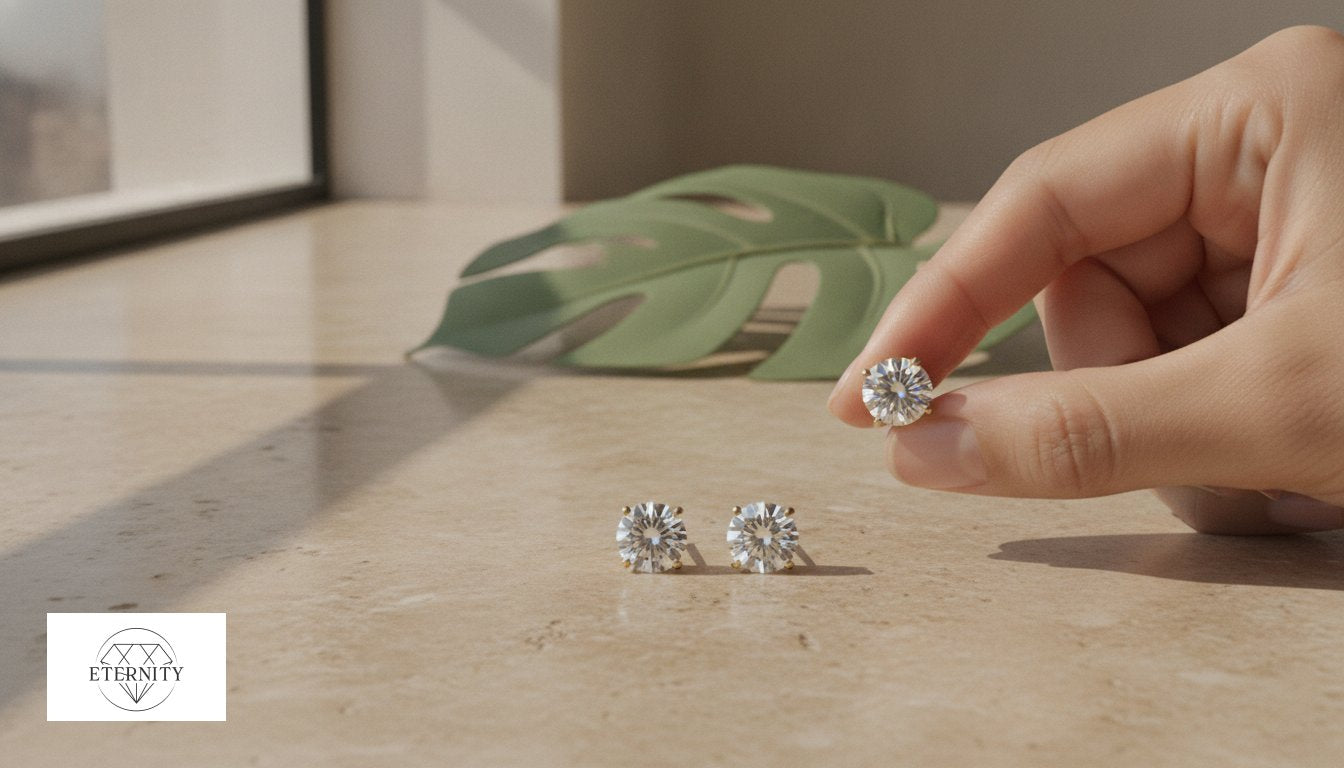
Article: Lab Diamond Clarity Guide for Smart Buyers
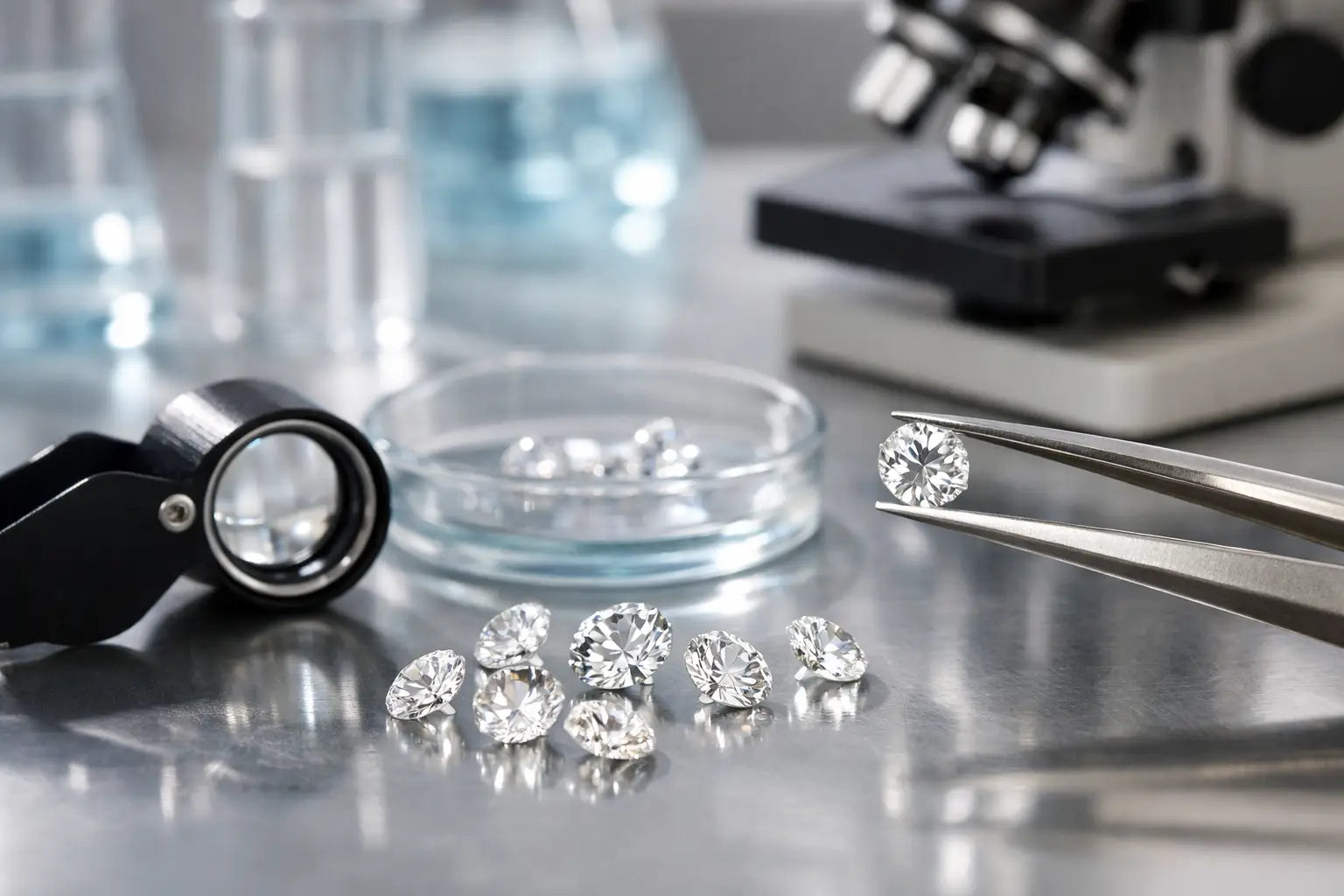
Lab Diamond Clarity Guide for Smart Buyers
A tiny crystal inside a diamond can sound like a flaw worth avoiding. In reality, many inclusions are so small that you would never notice them without magnification. This lab diamond clarity guide helps you separate what matters visually from what only changes a line on a grading report, so you can choose a diamond that feels exceptional on the hand and makes sense for your budget.
Clarity is one part of the 4Cs, alongside cut, color, and carat weight. It matters, but it should not automatically be your first priority. For most engagement rings and fine jewelry, a well-cut, eye-clean lab-grown diamond with strong color will look more impressive than a higher-clarity stone that sacrifices size or cut quality to fit the same budget.
What Diamond Clarity Actually Measures
Diamond clarity describes the presence, size, position, and visibility of internal characteristics called inclusions and external characteristics called blemishes. These features formed as the diamond grew. Lab-grown diamonds are real diamonds with the same chemical, physical, and optical properties as mined diamonds, and they can have clarity characteristics too.
Common inclusions include pinpoint crystals, tiny clouds, feathers, and growth-related features. The word "feather" may sound concerning, but it simply describes an inclusion with a wispy appearance under magnification. Its impact depends on its size and location, not its name alone.
Grading laboratories assess clarity at 10x magnification. That standard is useful for comparing diamonds consistently, but it is different from how you will experience a ring at dinner, at work, or in a proposal photo. Your eyes do not view a diamond at 10x. They see sparkle, brightness, shape, and the overall presence of the stone.
Lab Diamond Clarity Grades Explained
Clarity grades run from Flawless to Included. The higher the grade, the fewer or less visible the characteristics are under 10x magnification.
Flawless and Internally Flawless
Flawless diamonds have no inclusions or blemishes visible to a skilled grader at 10x magnification. Internally Flawless diamonds have no visible inclusions at that level, though they may have minor surface blemishes.
These grades are rare and carry a premium. They can be a meaningful choice for collectors or buyers who want the highest possible specification, but they are rarely necessary for visual beauty. A diamond does not need to be Flawless to look pristine in everyday wear.
Very, Very Slightly Included: VVS1 and VVS2
VVS diamonds have minute inclusions that are extremely difficult for a grader to see at 10x magnification. They are exceptionally clean and offer a luxury specification without moving all the way to Flawless.
For buyers who enjoy knowing their diamond is nearly free of internal characteristics, VVS can be appealing. Still, the visual difference between a VVS diamond and a carefully selected VS diamond is usually impossible to see without magnification.
Very Slightly Included: VS1 and VS2
VS1 and VS2 diamonds have minor inclusions that are difficult to somewhat difficult to see under 10x magnification. This range is a favorite for engagement rings because it often delivers an eye-clean appearance while preserving more budget for carat weight, cut, or a custom setting.
A VS diamond is generally a confident choice across most shapes and sizes. As diamonds become larger, clarity characteristics can become easier to notice, so reviewing the specific stone remains more useful than relying on the grade alone.
Slightly Included: SI1 and SI2
SI diamonds have noticeable inclusions under 10x magnification. Many SI1 lab-grown diamonds can still be eye-clean, especially when the inclusions sit near the edge, blend into a busy facet pattern, or are concealed by a prong after setting.
SI2 diamonds require more care. Some look beautiful face-up, while others may show a dark crystal, cloud, or feather without magnification. An SI2 can offer excellent value, but it should be evaluated individually through clear images, video, and certification details rather than purchased by grade alone.
Included: I1, I2, and I3
Included diamonds have characteristics that are usually obvious under 10x magnification and may be visible to the unaided eye. In some cases, inclusions can affect transparency or durability, particularly when a significant feather reaches the diamond's edge.
These grades may fit certain budget-driven purchases, but buyers should be especially selective. For an engagement ring intended for frequent wear, it is usually wise to prioritize a diamond with a cleaner visual appearance and no obvious durability concerns.
Eye-Clean Matters More Than the Label
"Eye-clean" is not a formal laboratory grade. It means a diamond has no inclusions readily visible to the naked eye when viewed from a normal distance. It is one of the most practical standards for modern diamond buyers.
An eye-clean SI1 may offer better value than a VVS2 that looks identical once set. That does not mean clarity grades are unimportant. They tell you where to look closer and help you compare stones. But the best choice is the diamond that looks clean, bright, and beautiful in the size and shape you want.
Distance matters here. A small inclusion invisible from six to eight inches may be completely irrelevant in a finished ring. If you know you will inspect your diamond closely or you are choosing a very large center stone, you may prefer VS or VVS clarity for added peace of mind.
Why Shape Changes the Clarity Conversation
Diamond shape affects how easily inclusions are seen. Brilliant-cut round diamonds hide small characteristics particularly well because their facet pattern creates intense sparkle. Oval, pear, marquise, and radiant diamonds can also be forgiving, though the exact inclusion placement still matters.
Step-cut shapes such as emerald and Asscher cuts have broad, open facets that act like clear windows into the diamond. Their elegant flashes of light are distinct, but they reveal inclusions more readily than a round brilliant. For these shapes, many buyers prefer VS clarity or better, especially in larger carat weights.
Fancy shapes also have vulnerable points. A feather near the pointed tip of a pear, marquise, or heart-shaped diamond deserves closer attention. A protective setting can help, but the stone itself should be structurally sound before it is set.
Where an Inclusion Sits Can Matter More Than Its Size
A small inclusion directly under the table, the large flat facet on top of the diamond, may be easier to notice than a slightly larger feature near the girdle. Inclusions near the edge can sometimes be hidden by prongs, although they should never be used to disguise a potential durability issue.
Dark or reflective inclusions tend to draw the eye more than transparent or white ones. Clouds can also affect a diamond differently depending on their density. A faint cloud may have no meaningful impact, while a dense grouping can reduce crispness or make the stone appear less lively.
This is why a certificate should start the conversation, not end it. Review the clarity plot, inspect high-quality visuals, and ask a knowledgeable jewelry professional about any inclusion that appears prominent, centered, or close to a pointed edge.
How to Choose Clarity Within Your Budget
Start with the diamond's cut and the look you want. A beautiful cut has the greatest influence on sparkle, and carat weight shapes the stone's visual presence. Then choose a clarity range that supports an eye-clean appearance without paying for microscopic perfection you will not see.
For many buyers, VS2 offers a strong balance of visual cleanliness and value. SI1 can be an excellent option when the individual diamond is eye-clean. If you are selecting an emerald cut, a large diamond, or a design where the center stone will be viewed closely, moving into VS1, VS2, or VVS can be worthwhile.
Certification adds reassurance. An independent grading report documents the diamond's 4Cs and confirms the stone is laboratory-grown. It also gives you a consistent reference point when comparing options. For a custom piece, discussing your budget, preferred shape, setting style, and clarity comfort level early helps narrow the selection without losing the personal details that make the design yours.
A Clearer Way to Buy a Diamond
The right clarity is not always the highest clarity. It is the grade that gives you a clean-looking diamond, confidence in its quality, and room in your budget for the size, cut, and setting that make your jewelry feel personal. When you compare individual certified stones rather than shopping by grade alone, you can choose brilliance you will notice every day - and skip paying extra for details only a microscope can find.