How to Clean Lab Grown Diamond Jewelry: The 2026 Expert Guide
You didn't invest in a high-performance lab grown diamond to watch its spectacular fire get buried under a layer of daily lotions and oils. It's a common frustration to see a centerpiece lose its luster, but many owners hesitate because they aren't sure how to clean lab grown diamond jewelry without risking damage to the metal setting. Since these stones are chemically identical to mined diamonds with a Mohs hardness of 10, they are built for a lifetime of wear, yet they still need a precise care routine to stay brilliant.
We understand the worry that using the wrong household cleaner might cause tarnish or permanent dullness. This guide provides the professional techniques you need to restore a like-new sparkle safely at home. You'll learn which common household items are actually safe to use, why lab diamonds handle cleaning just like mined stones, and how to build a simple weekly routine. By the end, you'll have the confidence to maintain your jewelry so it remains a sparkling reflection of your personal style and values.
Key Takeaways
- Identify the professional toolkit of warm water and mild degreasing soap that protects both your diamond and its metal setting.
- Master the step-by-step process of how to clean lab grown diamond jewelry at home to safely dissolve oils and restore brilliance.
- Establish a bi-weekly maintenance routine to prevent the buildup of films from lotions, perfumes, and daily wear.
- Learn why harsh chemicals and abrasive tools must be avoided to preserve the integrity of your custom-made jewelry.
- Understand the role of professional annual check-ups and ultrasonic cleaning for maintaining deeply embedded grime and secure settings.
Understanding the Essentials: Tools for Lab Grown Diamond Care
A Synthetic diamond possesses the exact same carbon structure as a mined stone, so it attracts the same oils and dust. It's a common misconception that these gems need specialized, expensive solutions. In reality, learning how to clean lab grown diamond jewelry starts with a few high-quality basics you likely already have in your home.
To maintain the fire and brilliance of your piece, gather these essential items:
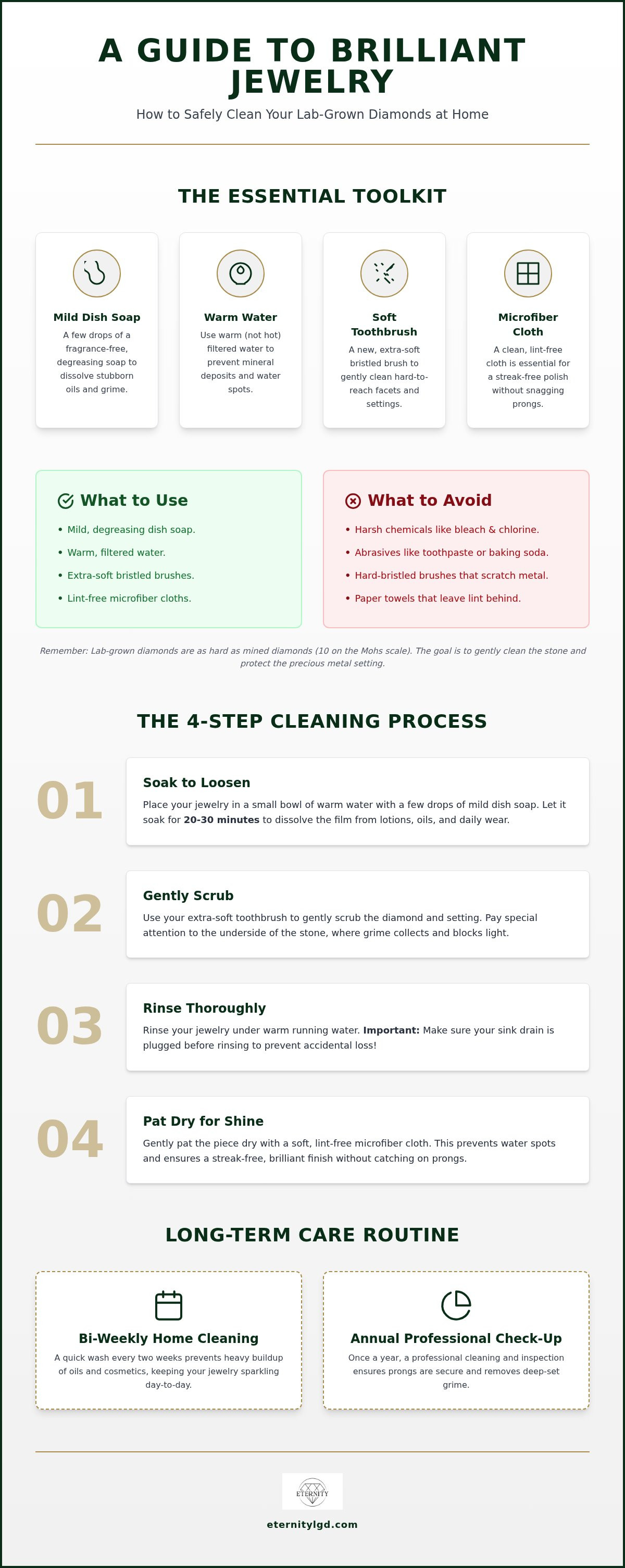
- Fragrance-free, degreasing dish soap to dissolve stubborn oils.
- Warm filtered water to prevent mineral deposits or spots.
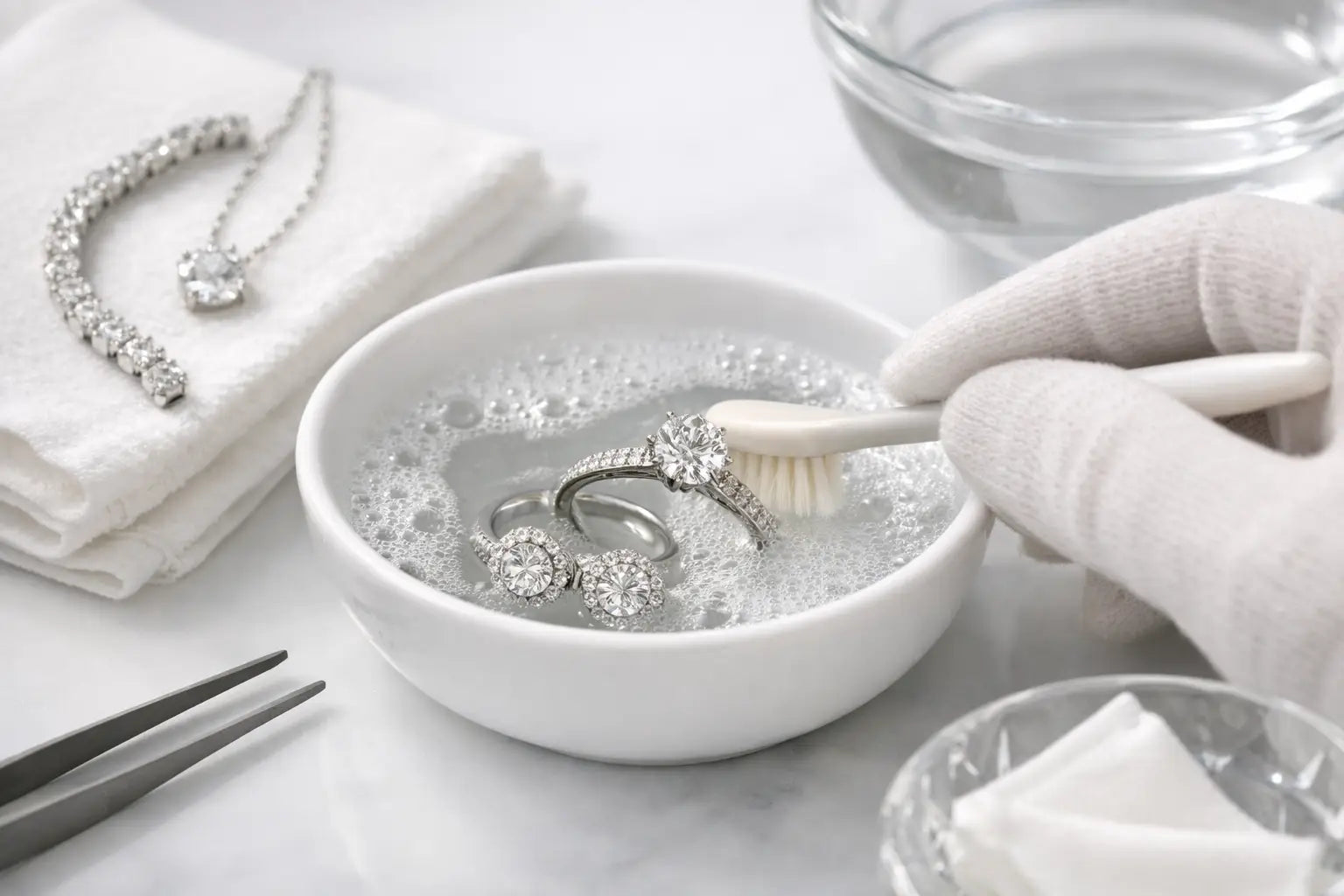
- A new, extra-soft bristled toothbrush for precision cleaning.
- A lint-free microfiber cloth for a final, streak-free polish.
The soft brush is necessary to reach the pavilion and intricate facets where skin oils collect without causing micro-scratches on the polished metal setting. After rinsing, a microfiber cloth is your best defense against unsightly water spots that can dull the stone's surface and obscure its natural light performance.
Chemicals and Materials to Avoid
You might see DIY tips suggesting toothpaste or baking soda, but these are far too abrasive for high-end jewelry. They can easily scratch the surface of gold or platinum settings, permanently damaging the luster of your custom design. Avoid chlorine and bleach at all costs. These harsh chemicals react with the metal alloys in your settings, potentially making the prongs brittle and putting your diamond at risk of falling out.
The Myth of Fragility
Don't let the "lab-grown" label make you think your jewelry is delicate. These stones score a 10 on the Mohs scale, making them the hardest material on Earth and highly resistant to scratching. When you research how to clean lab grown diamond jewelry, remember that you aren't trying to fix the stone itself. You are simply removing a "biofilm" of accumulated lotions and oils that prevents light from entering and exiting the diamond correctly.
Step-by-Step Guide: How to Clean Lab Grown Diamond Jewelry
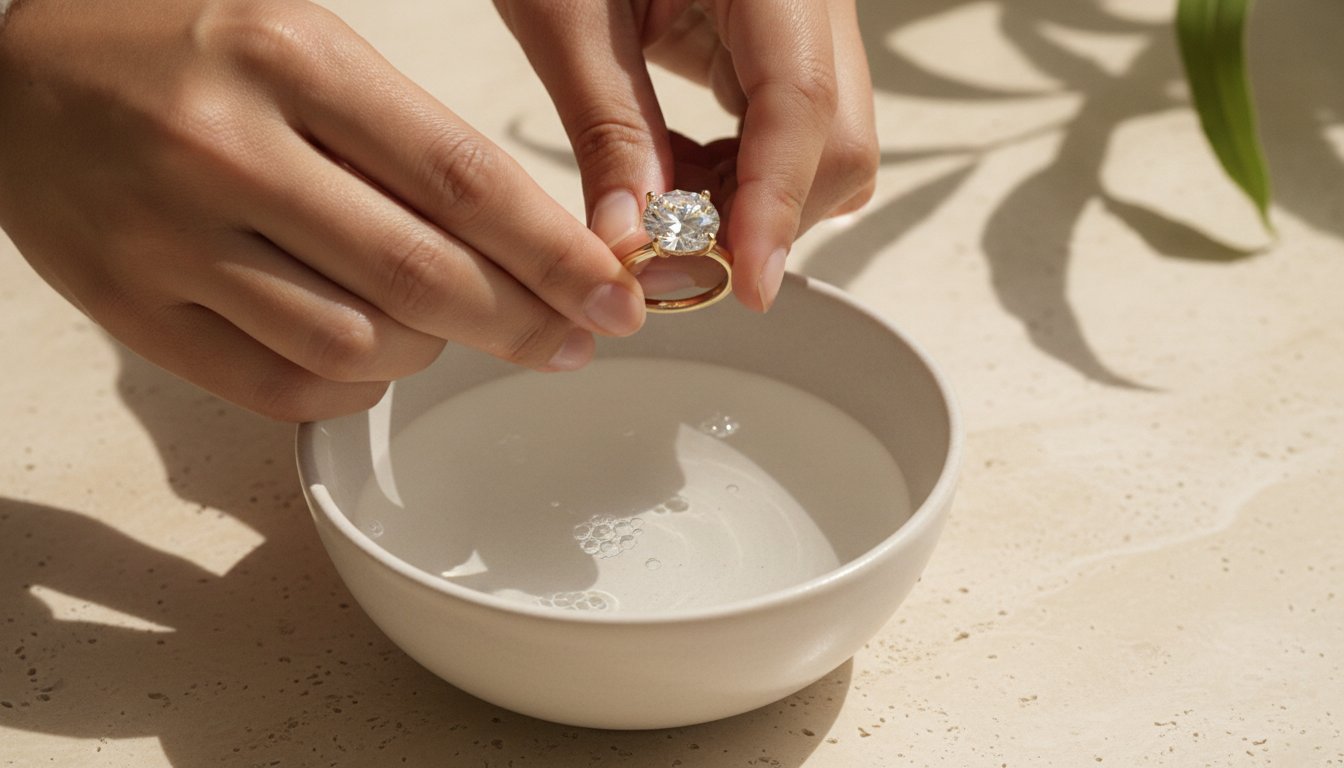
When you're ready to learn how to clean lab grown diamond jewelry at home, the process is surprisingly straightforward. Start with a clean, small bowl filled with warm, not boiling, water. Add a few drops of a mild, degreasing dish soap. This simple solution is the most effective way to break down the oils that cause your stones to look cloudy and dull.
Place your jewelry in the bowl and let it soak for 20 to 30 minutes. This window is essential for loosening the accumulated film from cosmetics and daily wear. Once the soak is finished, use your extra-soft toothbrush to gently scrub the piece. Pay close attention to the underside of the stone, as this is where most grime collects and blocks light from entering the facets. Mastering how to clean lab grown diamond jewelry doesn't just improve aesthetics; it protects the longevity of your investment.
If you are caring for a lab diamond bracelet, remember to clean between every individual link to maintain its fluid movement and shine. As the Gemological Institute of America notes in their resource on How to Clean Your Diamond Jewelry, consistency is more important than harsh scrubbing. If you're maintaining one of our bespoke lab grown jewelry pieces, this gentle routine ensures the custom details remain sharp and clear.
Rinsing and Drying Techniques
Before you rinse, ensure the sink drain is securely plugged. Hold the piece under warm running water to wash away the soap and loosened debris. To dry, avoid paper towels or standard bath towels that can leave lint or snag on the prongs. Instead, use a soft microfiber cloth to gently pat the jewelry dry. This method prevents the fibers from catching on the setting while ensuring a streak-free finish.
Advanced Care for Custom Settings
Intricate, made-to-order designs often feature multiple small stones or hidden details that require extra vigilance. For these pieces, drying thoroughly is non-negotiable. If water is left to air-dry on the facets, it can leave behind "hard water" deposits like calcium and magnesium. These minerals create a new film that obscures the diamond's fire, forcing you to start the cleaning process all over again.
Maintenance and Storage: Preserving Your Ethical Investment
Establishing a consistent care schedule is the most effective way to ensure your jewelry retains its original fire. We recommend a quick home cleaning every two weeks to prevent the buildup of daily contaminants like skin oils and hairspray. This simple habit makes the process of how to clean lab grown diamond jewelry much faster, as you won't be dealing with months of hardened biofilm. Once a year, schedule a professional check-up to ensure the structural integrity of your piece remains intact.
During your bi-weekly cleaning, take a moment to inspect the prongs. Use the soft toothbrush to gently nudge the stone; if you notice any movement or hear a faint clicking sound, it's time to visit a jeweler. This proactive approach is central to the Eternity difference: custom sustainable jewelry. We believe that true ethical luxury isn't just about how a stone is grown, but how well the finished piece is preserved for the future.
Safe Storage Strategies
While diamonds are incredibly durable, their Mohs hardness of 10 means they can easily scratch other gemstones and even the metal of your other jewelry. Always store your pieces in individual, soft-lined pouches or separate compartments. It's best to keep your collection in a dry, temperature-controlled environment. This protects precious metals like 14k gold and platinum from environmental stressors that can cause subtle dulling over time.
When to See a Professional
Home care is vital, but some areas are simply unreachable with a toothbrush. Professional jewelers use ultrasonic cleaners and high-pressure steam to blast away deeply embedded dirt from the smallest crevices. If you're still uncertain about how to clean lab grown diamond jewelry with complex pavé settings, a professional deep clean is the safest answer. As noted in the American Gem Society's jewelry cleaning guide, these experts can also tighten loose settings that home cleaning might reveal, preventing the heartbreak of a lost stone.
Restore the Brilliance of Your Ethical Luxury
Maintaining the fire of your jewelry doesn't require complex chemicals or expensive equipment. By mastering how to clean lab grown diamond jewelry with simple, gentle methods, you preserve the life and light of your most cherished pieces. A consistent bi-weekly routine combined with an annual professional check-up ensures that your custom made-to-order settings remain secure and your GIA or IGI certified stones continue to perform at their peak.
Your commitment to sustainable, conflict-free luxury deserves a sparkle that never fades. Proper care is the final step in the journey of owning a piece that aligns with your modern values. If you're looking to expand your collection with stones that offer both ethical pride and unmatched durability, we're here to guide you through every choice.
Explore our collection of high-brilliance lab manufactured diamonds today and find your next sustainable statement piece. We look forward to helping you keep your ethical investment shining bright for a lifetime.
Frequently Asked Questions
Can I use an ultrasonic cleaner for my lab-grown diamond jewelry?
Yes, you can use an ultrasonic cleaner for most lab-grown diamond jewelry because these stones possess a Mohs hardness of 10. This high-performance durability allows them to withstand the intense vibrations used to shake loose stubborn dirt. However, we recommend using this method sparingly for intricate pavé settings, as the constant sound waves can occasionally loosen smaller stones over time. If you have a complex custom design, a professional check-up is the safest way to ensure the setting remains secure after deep cleaning.
Is it safe to clean my diamond ring with vinegar and baking soda?
It is not safe to use vinegar or baking soda, as these substances are far too acidic and abrasive for fine jewelry. While the diamond itself is nearly indestructible, the chemical reaction can damage the alloys in your gold or platinum settings. This can lead to a dull finish or even structural weakness in the prongs. To protect your piece, follow the expert method of how to clean lab grown diamond jewelry by using only mild, fragrance-free dish soap and filtered warm water.
How often should I clean my lab-grown diamond tennis bracelet?
You should aim to clean your lab-grown diamond tennis bracelet every two weeks to maintain its fluid movement and brilliance. Because these bracelets feature dozens of individual links and settings, they collect skin oils and lotions much faster than a simple solitaire ring. Regular maintenance prevents these contaminants from hardening into a thick film that is difficult to remove. This bi-weekly routine ensures that every stone in the chain continues to sparkle with maximum fire.
Will cleaning my jewelry too often wear down the gold setting?
Cleaning your jewelry frequently will not wear down a gold or platinum setting if you use a soft-bristled brush and gentle soap. In fact, the opposite is true; allowing dirt and grit to accumulate is more damaging because those particles act as an abrasive against the metal. Regular, gentle maintenance is the most effective way to keep the polished surface of your how to clean lab grown diamond jewelry looking new. It also gives you a regular opportunity to inspect the prongs for any signs of wear or movement.
Disclaimer
The information provided in this article is for educational and informational purposes only and should not be considered professional financial, legal, investment, or gemological advice. While Eternity strives to ensure all information is accurate and up to date, diamond grading standards, market prices, industry practices, and product availability may change over time.
All opinions expressed are based on current industry knowledge and are intended to help consumers make informed decisions. Product specifications, pricing, promotions, and services may vary and are subject to change without notice.
Lab-grown diamonds sold by Eternity are independently graded by recognized laboratories such as IGI or GIA where applicable. We encourage customers to consult with our jewelry specialists for recommendations tailored to their individual needs before making a purchase.
© Eternity Inc. All rights reserved. This content may not be reproduced without written permission.