How to Clean Diamond Jewelry Without Damage
A diamond can still sparkle, yet look noticeably dull by the end of the week. Hand lotion, sunscreen, soap, cooking oils, and everyday skin oils form a thin film that keeps light from moving through the stone as brilliantly as it should. Knowing how to clean diamond jewelry properly brings back that crisp, bright look without putting its setting, metal, or any accent stones at risk.
The good news is that most lab-grown and natural diamond jewelry can be safely cleaned at home with a few gentle supplies. Lab-grown diamonds have the same optical, chemical, and physical properties as mined diamonds, so they receive the same care. The detail that matters most is not where the diamond came from. It is how the piece is made, what metal it uses, and whether it includes other gemstones.
How to Clean Diamond Jewelry at Home
For a diamond engagement ring, wedding band, tennis bracelet, diamond studs, or pendant in good condition, warm water, mild dish soap, and a soft brush are usually all you need. Skip harsh cleaners and abrasive tools. Fine jewelry is durable, but prongs, pavé settings, finishes, and delicate chains deserve a thoughtful approach.
Before you begin, place a clean towel over the counter or work on a flat surface away from the sink. Small earrings and rings can disappear quickly near an open drain.
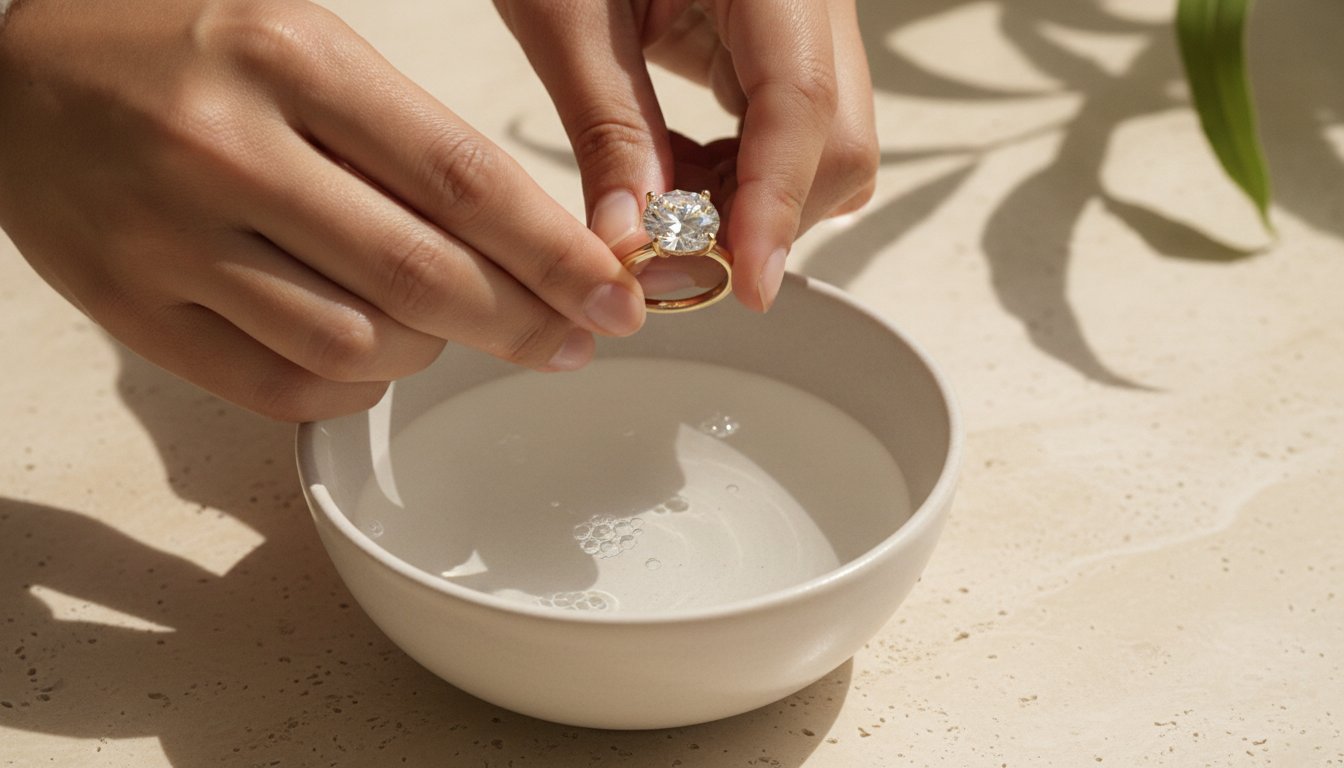
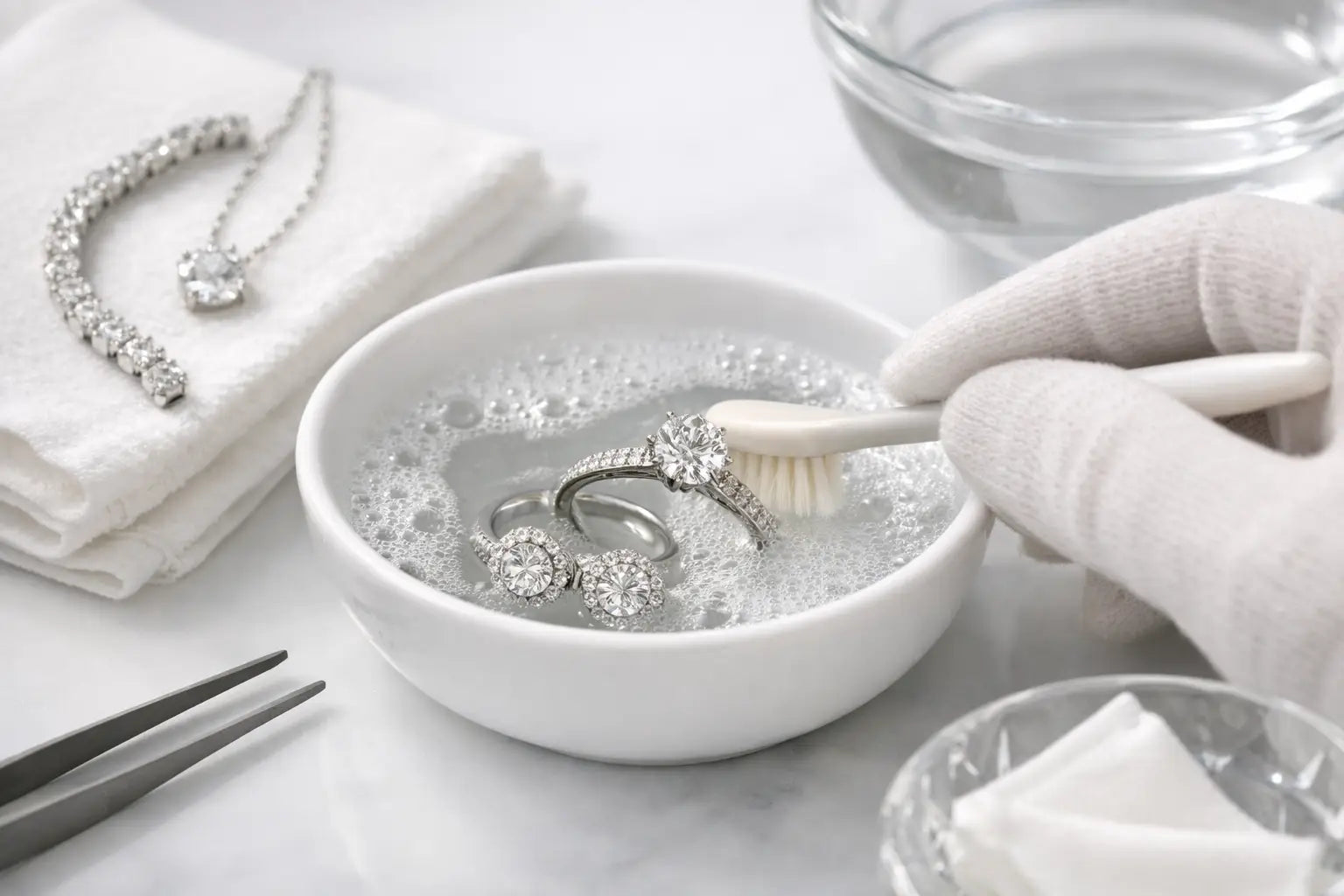
1. Fill a small bowl with warm water and add a few drops of mild dish soap. The water should feel comfortably warm, never hot. Avoid soaps with moisturizers, bleach, or exfoliating particles, which can leave residue behind.
2. Let the jewelry soak for 10 to 15 minutes. This loosens the oils and product buildup that collect beneath a center stone and around the gallery of a ring.
3. Use a new, very soft toothbrush or a soft jewelry brush to gently clean the diamond, prongs, and underside of the setting. The underside is where much of the dulling film collects. Use light pressure, especially around pavé diamonds and shared prongs.
4. Rinse the piece in a separate bowl of clean, lukewarm water. Do not rinse directly over a drain. If any stone feels loose, stop cleaning and have the setting inspected before wearing it again.
5. Pat dry with a soft, lint-free cloth and allow the jewelry to air-dry fully before putting it away. A paper towel may seem harmless, but its fibers can catch on prongs or leave fine scratches on some metals.
For many people, this simple routine once every one to two weeks keeps a frequently worn ring looking its best. If you use hand cream often, exercise in your jewelry, or wear sunscreen daily, a quick gentle cleaning may be helpful more often.
Why Diamonds Lose Their Sparkle
A diamond's brilliance comes from the way it reflects and refracts light. When lotion, oil, makeup, or soap scum covers its surface, the stone cannot perform the way it was cut to perform. That is why a well-cut diamond may suddenly appear cloudy or less lively even when there is nothing wrong with it.
The metal can collect buildup, too. White gold, yellow gold, platinum, and rose gold all benefit from gentle cleaning, though each finish can show wear differently over time. Platinum develops a soft patina that many owners love, while white gold may eventually need professional rhodium replating to restore its bright white finish. Cleaning removes residue, but it does not replace professional refinishing when needed.
What Not to Use on Diamond Jewelry
The internet is full of quick-cleaning shortcuts, but many are better left out of your jewelry routine. Bleach, chlorine, acetone, toothpaste, baking soda, and powdered cleaners can damage metal, wear down finishes, or leave unwanted marks. Toothpaste is especially risky because it is designed to be mildly abrasive.
Ultrasonic cleaners require more judgment than a simple yes or no answer. A sturdy solitaire diamond ring with secure prongs may tolerate an ultrasonic cleaner, but vibration can aggravate an already loose stone or affect fragile settings. Jewelry with pavé diamonds, emeralds, opals, pearls, enamel, inlays, or older settings should not be placed in an ultrasonic cleaner unless a jewelry professional has confirmed it is appropriate.
Steam cleaners also call for caution. Sudden heat and pressure may not be ideal for every setting or for jewelry that combines diamonds with other materials. When you are not certain about the construction of a piece, the soap-and-water method is the safer choice.
Cleaning Rings, Earrings, Bracelets, and Necklaces
The basic method works across most diamond jewelry, but each style needs slightly different handling. Rings collect the most residue because they are exposed to hand soap, lotion, and daily tasks. Pay particular attention to the basket beneath the center diamond and the inside of the band.
Diamond studs are generally easy to clean, but inspect the earring backs and posts. A buildup around the back can make earrings feel less comfortable and affect their shine. For hoop earrings or drop earrings, clean slowly around hinges, clasps, and small connecting links rather than scrubbing aggressively.
Tennis bracelets and diamond necklaces deserve extra care because their individual links and settings move. Let them soak, then brush gently section by section. Do not twist a bracelet or pull on a chain to remove buildup. A soft cloth and patience are better than force around delicate connections.
With a mixed-gemstone design, care should follow the most delicate stone, not the diamond. Pearls, opals, turquoise, emeralds, and many other gems need a more limited cleaning approach. In those cases, wipe the jewelry with a slightly damp, soft cloth and seek professional guidance for a deeper clean.
Everyday Habits That Keep Jewelry Brighter
Cleaning works best when it is paired with smart wear and storage habits. Put diamond jewelry on after applying perfume, hair products, makeup, and lotion. This small change limits the residue that settles on a stone and in its setting.
Remove rings and bracelets before swimming, using household cleaners, gardening, lifting weights, or playing contact sports. Chlorine and cleaning chemicals are not kind to fine jewelry, and physical impact can bend prongs or loosen stones. A diamond is exceptionally hard, but that does not mean the jewelry mounting is indestructible.
Store each piece separately in a soft pouch or lined jewelry box compartment. Diamonds can scratch other jewelry, including other diamonds, when pieces rub together. Necklaces should be fastened before storage to reduce tangling and stress on the chain.
It is also wise to check your jewelry occasionally under good lighting. Look for a snagging prong, a stone that shifts when gently touched, a bent earring post, or a clasp that no longer closes securely. These are maintenance signals, not reasons to panic, but they should be addressed promptly.
When Professional Jewelry Cleaning Is Worth It
At-home cleaning removes normal daily buildup, but professional service adds another level of care. A jeweler can clean difficult-to-reach areas, inspect prongs and stones under magnification, check clasps, and identify wear before it leads to a lost diamond.
Schedule an inspection at least once a year for jewelry you wear frequently, especially an engagement ring or wedding band. More frequent checks can make sense for pavé styles, shared-prong bands, tennis jewelry, and rings worn during active work or travel. If your jewelry looks cloudy after gentle cleaning, catches on fabric, or has a loose-feeling stone, do not keep scrubbing it at home. Have it evaluated first.
Fine diamond jewelry is made to be worn, admired, and woven into real life. A gentle cleaning ritual and regular setting checks help protect both its beauty and the memories attached to it, so every meaningful piece can keep shining for years to come.