How to Measure Ring Size: The 2026 Guide to a Perfect Fit
What if the most stressful part of choosing a lab-grown diamond ring isn't the cut or clarity, but the fear it might slip off your finger unnoticed? It's a valid concern because a ring that's even half a size too large can feel insecure, while one that's too tight becomes a daily burden. Learning how to measure ring size accurately is the first step toward a piece of jewelry that feels like a natural extension of yourself.
You probably already know that professional resizing for intricate gold or platinum bands can be expensive, sometimes reaching up to $250 depending on the design. We believe that custom luxury should be transparent and stress-free, starting with a fit that's right the first time. Whether you're navigating the differences between US and international scales or wondering how a wider band changes your size, you deserve clarity before you commit.
This guide provides the definitive methods to find your perfect fit, from using calibrated smartphone apps to traditional physical tools. We'll break down the nuances of finger fluctuations and how to use our downloadable sizing tools to ensure your made-to-order ring is secure. By the end, you'll have the technical confidence to order your next piece with absolute certainty.
Key Takeaways
- Learn the critical difference between using paper and string to ensure you don't overestimate your circumference with elastic materials.
- Discover how to measure ring size using our downloadable PDF tool for a precision fit that aligns with professional jewelry standards.
- Understand why measuring in the evening and at room temperature is essential for capturing your finger's true, comfortable average.
- Master the "knuckle test" to ensure your made-to-order band slides on with ease while remaining secure during daily activity.
- Gain clarity on how ring width affects your final size, helping you choose the right dimensions for both thin bands and wider fashion rings.
Reliable DIY Methods to Measure Your Ring Size at Home
Determining how to measure ring size at home is the first step in creating a piece of jewelry that feels like a natural extension of yourself. While professional tools offer the highest precision, these refined DIY techniques provide a reliable starting point for your custom design journey. Accuracy is essential because even a fraction of a millimeter can change how a ring sits on your knuckle.
The Paper Strip vs. String Method
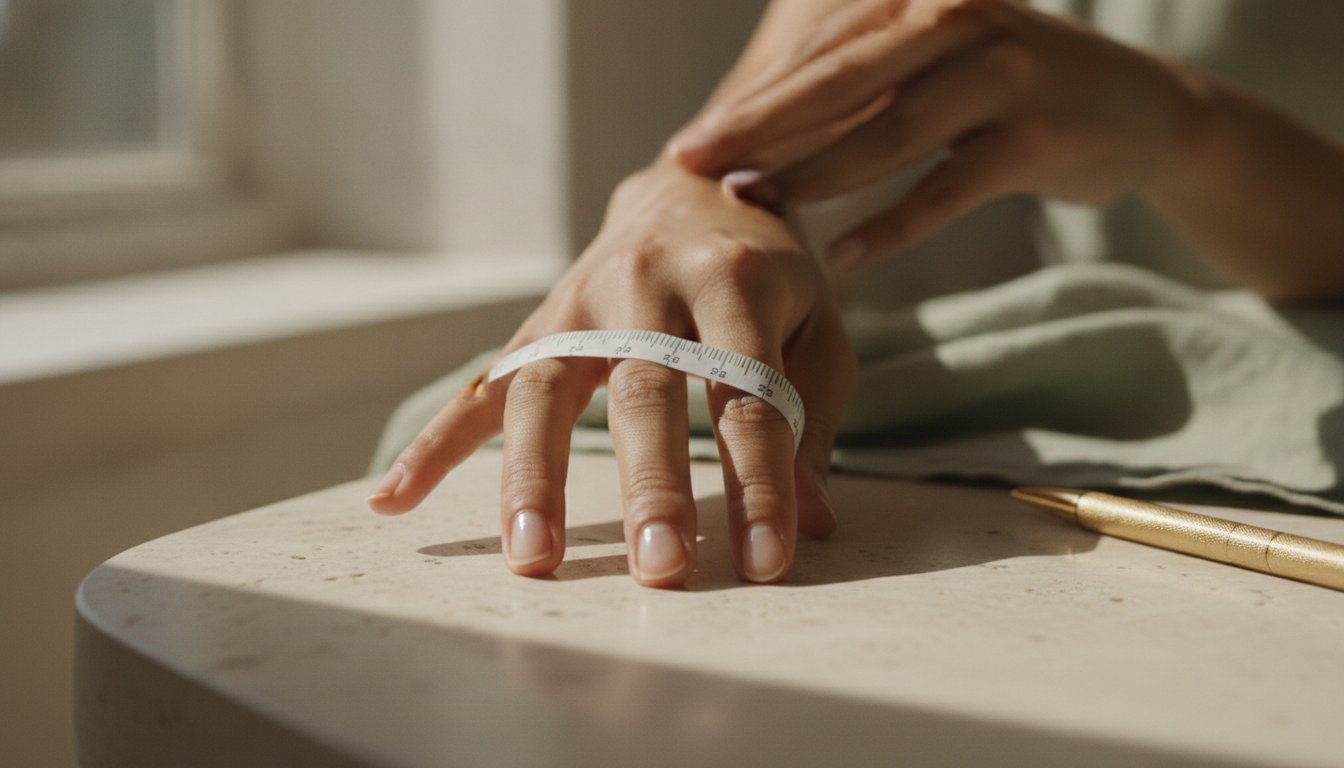
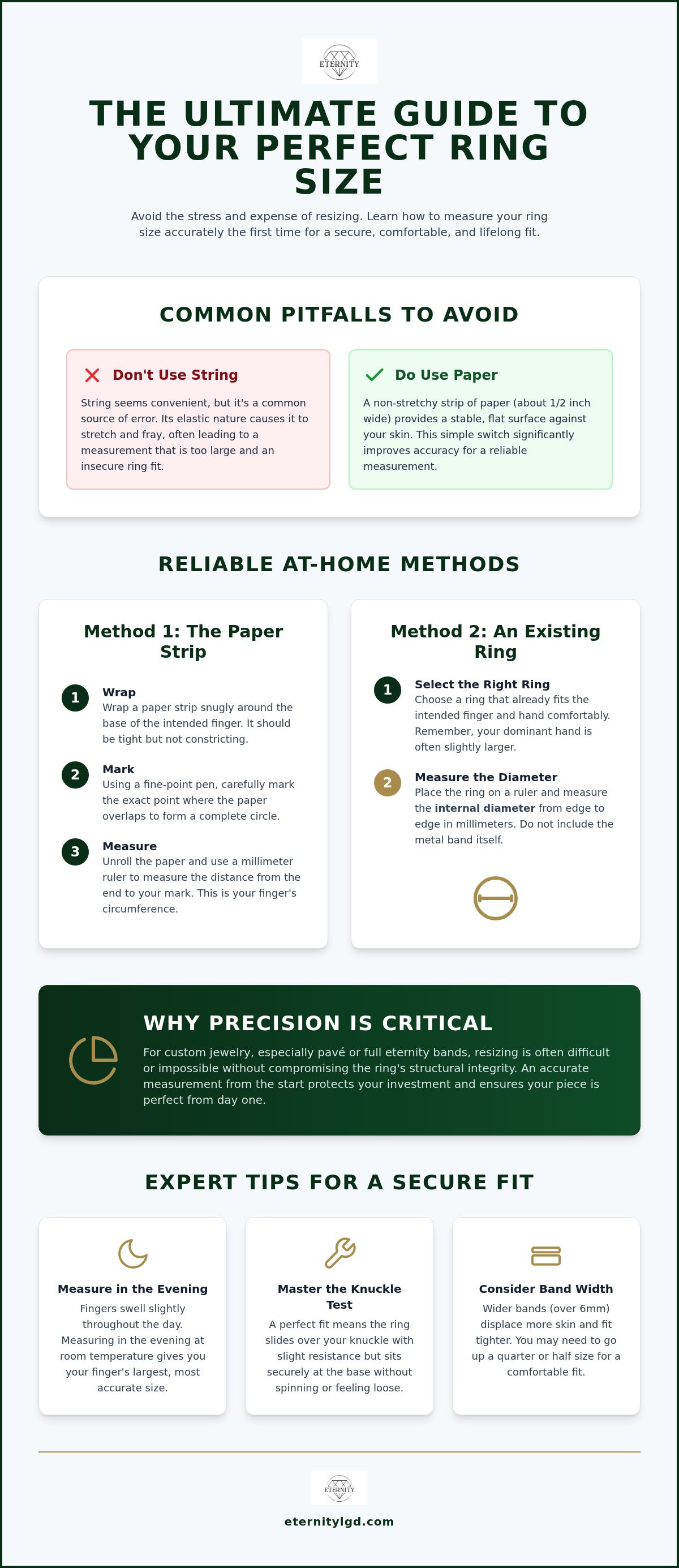
Many guides suggest using a piece of string, but this often leads to significant errors. String is inherently elastic and can stretch or fray, which causes you to overestimate the circumference of your finger. A 1/2 inch strip of paper offers much better stability and a flatter surface against the skin. Wrap the paper snugly around the base of your finger and mark the exact point of overlap with a fine-point pen. Measuring this distance against a millimeter ruler helps you achieve a 0.5mm accuracy level. This level of detail is vital when comparing your results to international ring size standards.
Measuring an Existing Ring
If you're planning a surprise or already have a comfortable fit, measuring an existing ring is your best strategy. You must choose a ring worn on the same finger of the same hand. Dominant hands are often slightly larger, so a ring for the left hand might not fit the right. Focus solely on the internal diameter for the highest precision. Place the ring on a ruler and measure the distance across the widest part of the inside circle. Do not include the thickness of the metal band in your measurement. Standard size charts rely on this internal diameter to determine the correct fit.
For a truly secret measurement, you can also press a partner's ring into a piece of soft clay or wax to create an impression. This allows you to measure the diameter later without the physical ring present. Understanding how to measure ring size using these methods ensures your made-to-order piece arrives ready for a lifetime of wear.
Using Professional Sizing Tools for Maximum Accuracy
While DIY methods provide a helpful estimate, professional tools eliminate the guesswork that often leads to resizing anxiety. This precision is especially vital when selecting lab grown diamond engagement rings. A perfect fit ensures the center stone remains centered and the band feels secure during daily wear. Transitioning from a rough estimate to a technical measurement is the best way to protect your investment.
The Eternity Printable Sizer
Our downloadable PDF sizer offers an immediate, accurate solution without the wait of traditional shipping. To ensure the results are valid, you must set your printer scaling to 100% and verify the printed guide with a standard credit card or a coin. Use the "cut-and-slot" method by sliding the paper sizer onto your finger and pulling it until it's snug. It should slide over your knuckle with slight resistance, mirroring how a metal band behaves. This simple step is a core part of how to measure ring size with professional results from your own desk.
Why Precision Matters for Custom Lab-Grown Rings
Technical accuracy is non-negotiable for modern jewelry settings. Many made-to-order designs, particularly those with pavé diamonds or full eternity bands, are incredibly difficult or even impossible to resize without compromising the metal's integrity. Ensuring an exact fit from the start is a key pillar of The Eternity Difference: Custom Sustainable Jewelry. By prioritizing precision, you avoid the cost and potential structural risks of post-purchase alterations.
If you prefer a tactile experience, a plastic belt-style sizer is an excellent alternative. These professional ring sizing tools allow you to wear the sizer for a few hours to see how your finger reacts to temperature changes throughout the day. You should also keep international differences in mind. While the US uses a numerical scale, the UK relies on an alphabetical system, and many EU regions use millimeters. Always consult a conversion chart if you're ordering across regions to ensure your how to measure ring size efforts are accurate. Before you begin your custom design, we recommend using our ring sizing tool to confirm your dimensions with absolute certainty.
Expert Tips for a Comfortable and Secure Fit
Achieving a technical measurement is only part of the process. You must also account for the natural fluctuations of your body because fingers change size throughout the day. Most experts recommend measuring in the evening when your fingers are at their largest. This prevents you from ordering a ring that feels uncomfortably tight by the end of the day. Understanding these physiological changes is a key part of how to measure ring size for long-term comfort.
Temperature is another critical factor. Cold weather can make your fingers shrink; heat or high humidity can make them swell significantly. A ring that fits perfectly in a cool room might feel tight after a summer walk. Aim for a measurement at room temperature to find a consistent baseline. You should also consider the "knuckle factor." Your ring must slide over the knuckle with slight resistance but sit securely at the base. If it slides off without any effort, you risk losing it during daily activities.
Environmental Factors and Finger Fluctuations
Diet and lifestyle impact your results more than you might realize. Avoid measuring your finger immediately after a salty meal or intense exercise; both cause temporary swelling that can skew your data. To find your true average, we suggest measuring three to four times across different days. This methodical approach ensures you aren't catching your finger at an extreme high or low point. It's the most reliable way to gain confidence before committing to a made-to-order design.
Sizing for Different Ring Styles
The width of the band changes how a size feels on your hand. Wide fashion bands, typically those 4mm or wider, cover more skin surface and create more friction. A common rule of thumb is to size up by a quarter or half size for these wider styles to maintain a comfortable fit. This differs from sizing a lab diamond bracelet, which requires more drape and movement to avoid pinching the wrist.
If you're planning on wearing stackable rings, you may also need a slightly larger size. Multiple bands pushed together occupy more space on the finger, making them feel tighter than a single solitaire. Mastering how to measure ring size with these style-specific nuances in mind ensures your jewelry remains a joy to wear every day.
Your Journey to a Flawless Fit Starts Here
Finding the right fit is about balancing technical data with real-world comfort. You now have the knowledge to navigate environmental factors, account for knuckle resistance, and understand why wider bands require more breathing room. Mastering how to measure ring size is more than just a technical step; it's the essential foundation for a piece of jewelry you'll cherish for a lifetime. When you prioritize this precision, you're ensuring that your investment feels as good as it looks from every angle.
At Eternity, we're dedicated to helping you move from measurement to masterpiece. Our expert team combines the brilliance of sustainable lab-grown diamonds with a personalized, step-by-step custom design consultation to bring your unique vision to life. We offer global shipping on all made-to-order pieces, ensuring your dream ring arrives safely, no matter where you are. Your creative journey is just beginning, and we're honored to be your trusted companion at every stage. Download Our Free Ring Sizing Tool today to start designing with absolute confidence.
Frequently Asked Questions
What is the most common ring size for women and men?
The most common ring size for women in the U.S. is a size 7, with a typical range between 6 and 8. For men, the average range falls between 8 and 10. These statistics serve as a helpful benchmark when you're double-checking your own results. If your measurement is significantly outside these ranges, it's a good idea to measure again at a different time of day to ensure accuracy.
Should a ring be tight or loose on the knuckle?
Your ring should fit snugly enough so it won't fall off, but loose enough to slide over your knuckle with some resistance. It should sit comfortably at the base of your finger without pinching the skin or leaving deep marks. If the ring is too easy to remove, you risk losing it during hand washing or cold weather. Mastering how to measure ring size involves finding this specific tension for a secure fit.
Can all lab-grown diamond rings be resized later?
While many simple bands can be adjusted, complex lab-grown diamond rings like full eternity bands or pavé-set designs often cannot be resized without damaging the setting. Because our pieces are made-to-order, we emphasize getting the measurement right from the start to maintain the ring's structural integrity. Resizing costs for intricate designs in 2026 can range from $150 to $250, making precision a valuable investment during the design phase.
How do I measure my ring size in cm or mm for international orders?
To find your size in millimeters, wrap a stable paper strip around your finger and measure the distance between the overlap marks on a metric ruler. This circumference measurement is the foundation of most European and Asian sizing systems. For example, a 54.4mm circumference typically aligns with a US size 7. Using millimeters is the most precise method for how to measure ring size when ordering from international collections or comparing different regional charts.
Disclaimer
The information provided in this article is for educational and informational purposes only and should not be considered professional financial, legal, investment, or gemological advice. While Eternity strives to ensure all information is accurate and up to date, diamond grading standards, market prices, industry practices, and product availability may change over time.
All opinions expressed are based on current industry knowledge and are intended to help consumers make informed decisions. Product specifications, pricing, promotions, and services may vary and are subject to change without notice.
Lab-grown diamonds sold by Eternity are independently graded by recognized laboratories such as IGI or GIA where applicable. We encourage customers to consult with our jewelry specialists for recommendations tailored to their individual needs before making a purchase.
© Eternity Inc. All rights reserved. This content may not be reproduced without written permission.