Are Lab Diamonds Ethical? What Buyers Should Know
A diamond can mark a proposal, an anniversary, a new beginning, or simply a moment when you chose something beautiful for yourself. That meaning is exactly why many buyers ask, are lab diamonds ethical? The honest answer is that lab-grown diamonds can be a more ethical choice, particularly when compared with the human-rights and land-impact concerns associated with some mining. But ethical luxury is not a one-word label. It depends on how a diamond is produced, where the energy comes from, and how openly a jeweler shares the facts.
Are Lab Diamonds Ethical? The Straight Answer
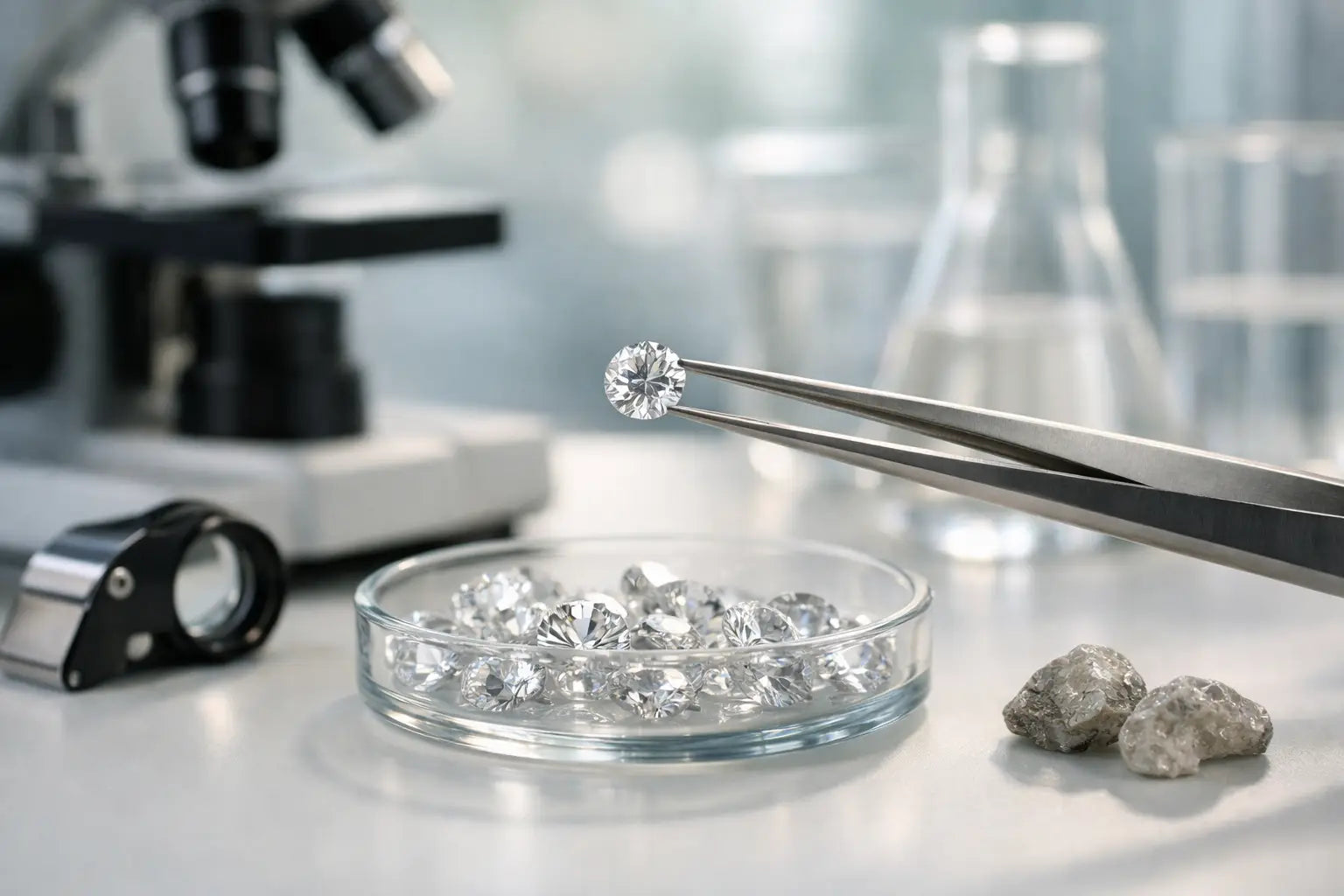
Lab-grown diamonds are real diamonds created in controlled laboratory environments rather than extracted from the earth. They have the same carbon crystal structure, optical properties, and physical durability as mined diamonds. Their origin is different, not their identity.
From an ethics perspective, lab diamonds remove the need for new diamond mining. That can reduce concerns connected to mining-related displacement, unsafe working conditions, conflict financing, and disruption to local ecosystems. For buyers who want a diamond without relying on a newly mined supply chain, that difference carries real weight.
Still, “lab-grown” does not automatically mean impact-free. Creating a diamond requires sophisticated equipment, significant heat or pressure, skilled labor, and electricity. A laboratory powered mainly by fossil fuels will have a different environmental footprint than one using lower-carbon energy. Responsible buying means appreciating the advantage of lab-grown diamonds without treating any luxury purchase as consequence-free.
Why Origin Matters to Modern Diamond Buyers
Mined diamonds can pass through many hands before reaching a jewelry case. While industry oversight and sourcing programs exist, tracing every diamond from mine to market can be complicated. Supply chains vary widely by country, mining operation, cutting facility, and distributor.
A lab-grown diamond begins in a more controlled setting. Its production route is generally shorter and easier to document, which can give shoppers greater confidence about how the stone entered the market. This is especially meaningful for couples who want their engagement ring to reflect their values as clearly as it reflects their style.
Ethics also extend beyond a diamond’s origin. A thoughtful purchase considers the quality of the finished jewelry, the conditions under which it was made, the clarity of the pricing, and whether the piece is designed to be worn and loved for years. A well-made ring that becomes part of your life has a different kind of value than something purchased carelessly and quickly replaced.
Lab-Grown Does Not Mean “Synthetic” in the Way Buyers Often Think
The word “synthetic” can sound like imitation, but a lab-grown diamond is not cubic zirconia, moissanite, glass, or a diamond-look alternative. It is a diamond, with the same chemical composition as one formed beneath the earth over billions of years.
Most lab diamonds are created through High Pressure High Temperature, known as HPHT, or Chemical Vapor Deposition, known as CVD. Both methods replicate conditions that allow carbon to crystallize into diamond. After growth, the diamond is cut, polished, graded, and set into jewelry just as a mined diamond would be.
This scientific equivalence matters because it allows buyers to choose based on values, budget, and design rather than sacrifice. A lab-grown oval, emerald cut, or round diamond can offer the brilliance and durability expected from fine jewelry while making a larger carat weight or higher color and clarity range more attainable.
The Environmental Question Is More Nuanced
Mining can involve land excavation, water use, fuel consumption, habitat disruption, and the management of waste rock. These effects are not identical across every mine, but they are part of the broader environmental discussion around newly mined diamonds.
Lab diamond production avoids excavation, but it uses energy. The source of that energy is one of the most useful questions a conscientious buyer can ask. A producer that improves energy efficiency, uses renewable electricity, or documents emissions practices may offer a stronger environmental story than a producer that provides only broad marketing language.
It is also worth being cautious with sweeping claims such as “zero impact” or “completely eco-friendly.” Environmental reporting methods differ, and a single number rarely captures the full lifecycle of a diamond or its setting. Gold, platinum, packaging, shipping, and future repairs all contribute to the footprint of a finished piece. Transparency is more valuable than perfection language.
Certification Helps You Buy With Confidence
A grading report does not make a diamond ethical by itself, but it is an essential part of an informed purchase. Reputable laboratory reports identify a diamond as laboratory-grown and document its key quality characteristics: carat weight, color, clarity, cut information where applicable, proportions, and any treatments or growth details noted by the grading organization.
This documentation helps you compare diamonds fairly. Two stones with the same carat weight can look very different depending on cut quality, proportions, color, clarity, and the shape you choose. Certification provides an independent reference point so you can understand what you are paying for rather than relying on a product description alone.
For an engagement ring or custom jewelry project, ask to review the report before you commit. Match the report number to the diamond when possible, and request clear photos or video that show the actual stone. Ethical buying is closely tied to transparent buying: you should know what the diamond is, how it is graded, and what makes its price make sense.
Questions That Separate Real Transparency From Easy Claims
Jewelry shoppers do not need to become supply-chain experts. A few direct questions can reveal whether a seller is prepared to support an ethical purchase with useful information.
- Is the diamond clearly identified as lab-grown and accompanied by an independent grading report?
- Can the jeweler explain the diamond’s growth method, if that information is available, and disclose any post-growth treatments?
- What information is available about the producer’s energy use or environmental practices?
- Are the metal type, diamond specifications, return terms, warranty coverage, and final price explained clearly before purchase?
Ethical Value Also Means Buying What You Truly Want
Lab-grown diamonds appeal to many buyers because they can make fine jewelry feel more financially flexible. Instead of stretching a budget for a smaller stone, you may be able to prioritize the proportions, shape, setting, or carat weight that feel right to you. That can be especially helpful when designing a custom engagement ring or choosing a meaningful anniversary gift.
But a better price should not pressure you to buy bigger than your lifestyle or taste. A dramatic solitaire may be perfect for one person, while another will love a low-profile bezel ring, a refined diamond band, or a pair of everyday stud earrings. The most responsible choice is one you will wear often, care for properly, and continue to value long after the purchase.
Consider practical details before finalizing a design. Think about your daily routine, ring size, preferred metal, maintenance needs, and whether the setting protects the diamond appropriately. A personal consultation can help translate a vision into a piece that looks exceptional and functions beautifully in real life.
A More Thoughtful Way to Choose a Diamond
For many buyers, a lab-grown diamond offers a compelling balance: the beauty and permanence of a real diamond, a more controlled origin story, and the ability to invest thoughtfully in design and quality. It is not a claim that every lab diamond has the same environmental profile or that every mined diamond has the same history. It is a choice to ask better questions and make room for better answers.
Choose the diamond that feels honest to your priorities, then choose a setting that makes it unmistakably yours. When the details are transparent and the design has personal meaning, your jewelry can carry both brilliance and intention.