Article: How to Compare Diamond Certificates Before You Buy
How to Compare Diamond Certificates Before You Buy
A diamond can look extraordinary under showroom lighting and still be the wrong choice for your budget, setting, or expectations. When you compare diamond certificates, you move beyond a listing's headline carat weight and see the documented details behind the stone. That is especially valuable with lab-grown diamonds, where shoppers can often choose a larger or higher-quality diamond while keeping the purchase thoughtful and financially comfortable.
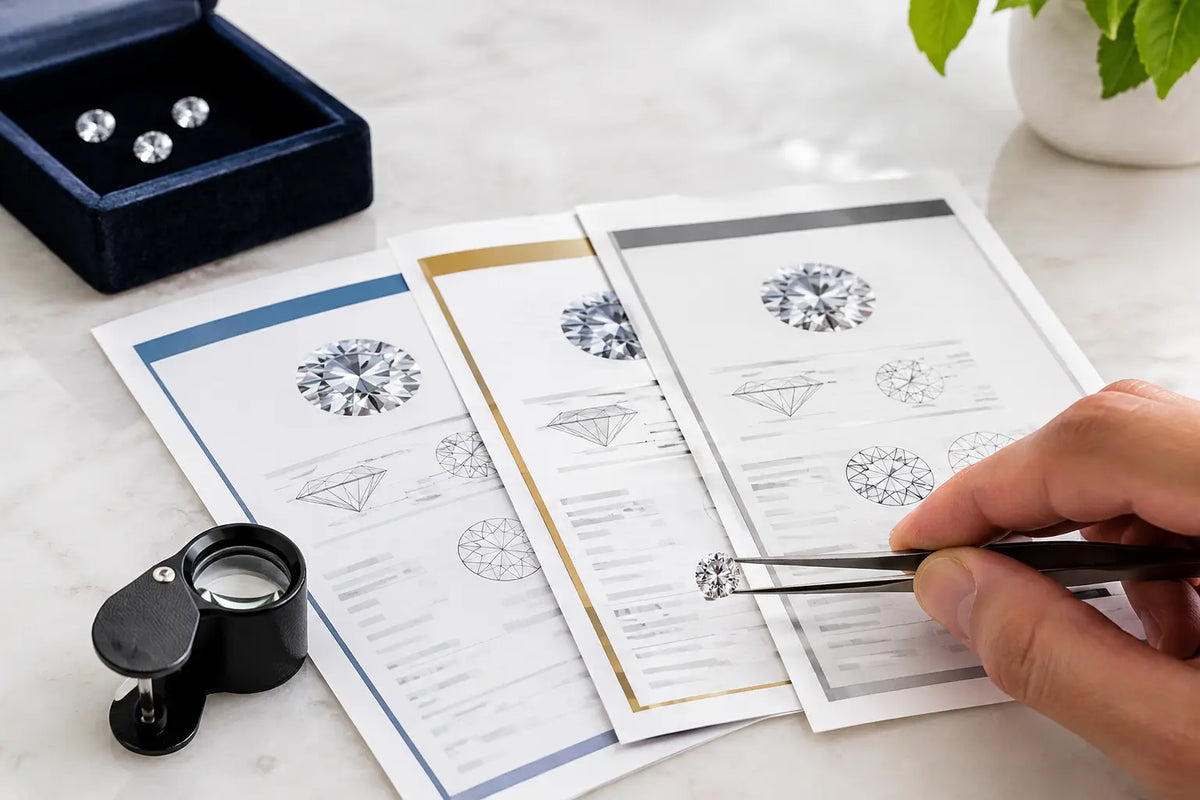
A certificate, more precisely called a grading report, is not a beauty score or a promise that every buyer will prefer one diamond over another. It is an independent record of the diamond's measurable characteristics and observed features. Read it well, then pair it with photos, video, and expert guidance. That is how you select a diamond that feels as exceptional in real life as it does on paper.
Why Diamond Certificates Deserve a Closer Look
A grading report identifies a loose diamond and describes the standards used to evaluate it. Most reports include the diamond's shape, measurements, carat weight, color grade, clarity grade, cut information where applicable, proportions, polish, symmetry, fluorescence, and a plotted or written description of inclusions.
For lab-grown diamonds, the report should also state that the stone is laboratory-grown and commonly disclose its growth method, such as CVD or HPHT. It may note post-growth treatment if one was used to adjust color. This is useful information, not a reason to dismiss the diamond. Lab-grown diamonds are real diamonds with the same essential optical, chemical, and physical properties as mined diamonds. The report simply gives you a transparent record of the individual stone.
Think of certification as a starting point for comparison, not a substitute for seeing the diamond. Two diamonds can share the same carat weight, color, and clarity grades but have different proportions, inclusions, or light performance. Those differences can affect how bright, crisp, or large the diamond appears once it is set in a ring.
How to Compare Diamond Certificates Meaningfully
Start by confirming that you are comparing like for like. A 2-carat oval and a 2-carat round do not face up the same way, and a clarity grade alone does not tell you where inclusions are located. Focus on the details that affect the look you want rather than trying to find the highest possible grade in every category.
Check the issuing laboratory and report details
The issuing laboratory matters because grading standards and report formats can differ. A report from a respected independent grading laboratory gives you a consistent framework for evaluating the stone. Still, no grading process is perfectly mechanical. Color and clarity involve trained human observation, so small differences in interpretation can occur.
Look for the report number, date, diamond shape, measurements, and any laser inscription noted on the document. If a diamond has a report number or inscription, it should correspond with the seller's documentation and the stone you receive. A report can generally be verified through the issuing laboratory's report-checking process before purchase.
Be careful not to compare grades from different laboratories as though they are automatically identical. A diamond graded one level differently by another laboratory may not look noticeably different to the eye. When the price gap is meaningful, prioritize the complete picture: the report, actual imagery, and a trusted jeweler's assessment.
Read the 4Cs in the right order for your priorities
Carat weight is the diamond's weight, not necessarily its visible size. Measurements tell you more about face-up presence. For fancy shapes such as oval, pear, marquise, and emerald cut, length-to-width ratio also influences the overall look. A slightly lower-carat diamond with appealing measurements may look more elegant on the hand than a heavier stone with less desirable proportions.
Color measures the presence or absence of noticeable tint. Many buyers find near-colorless lab-grown diamonds offer a beautiful balance of icy brightness and value, particularly in yellow or rose gold settings where a subtle warmth is often less apparent. Platinum and white gold can make color easier to notice, so the right range depends on the setting metal and your personal preference.
Clarity describes internal inclusions and external blemishes under magnification. The practical goal is often an eye-clean diamond, meaning inclusions are not readily visible without magnification at a normal viewing distance. A higher clarity grade can be worthwhile when inclusions sit under the table, appear near a vulnerable point in a fancy shape, or are likely to affect transparency. Otherwise, paying for a grade difference you cannot see may not be the best use of your budget.
Cut deserves special attention in round brilliant diamonds because it has a direct relationship with brightness, fire, and scintillation. For fancy shapes, reports may provide polish and symmetry rather than an overall cut grade. That makes proportion details, imagery, and video even more important. An excellent color and clarity grade cannot compensate for a diamond that appears dark, leaky, or poorly proportioned.
What the Proportions Can Tell You
Measurements and proportions help explain why diamonds with similar grades can look quite different. In a round brilliant, table percentage, depth percentage, crown angle, pavilion angle, girdle, and culet work together to influence light return. There is no single set of numbers that guarantees beauty, but balanced proportions are usually a positive sign.
For fancy shapes, evaluate the visual outcome with even more care. Ovals, pears, and marquises can show a bow-tie effect, a darker area across the center. Some contrast can be attractive, while a strong bow tie may reduce the lively appearance you want. Emerald cuts and Asscher cuts reveal clarity more readily because of their broad, open facets, yet their clean geometric flashes are exactly what many people love about them.
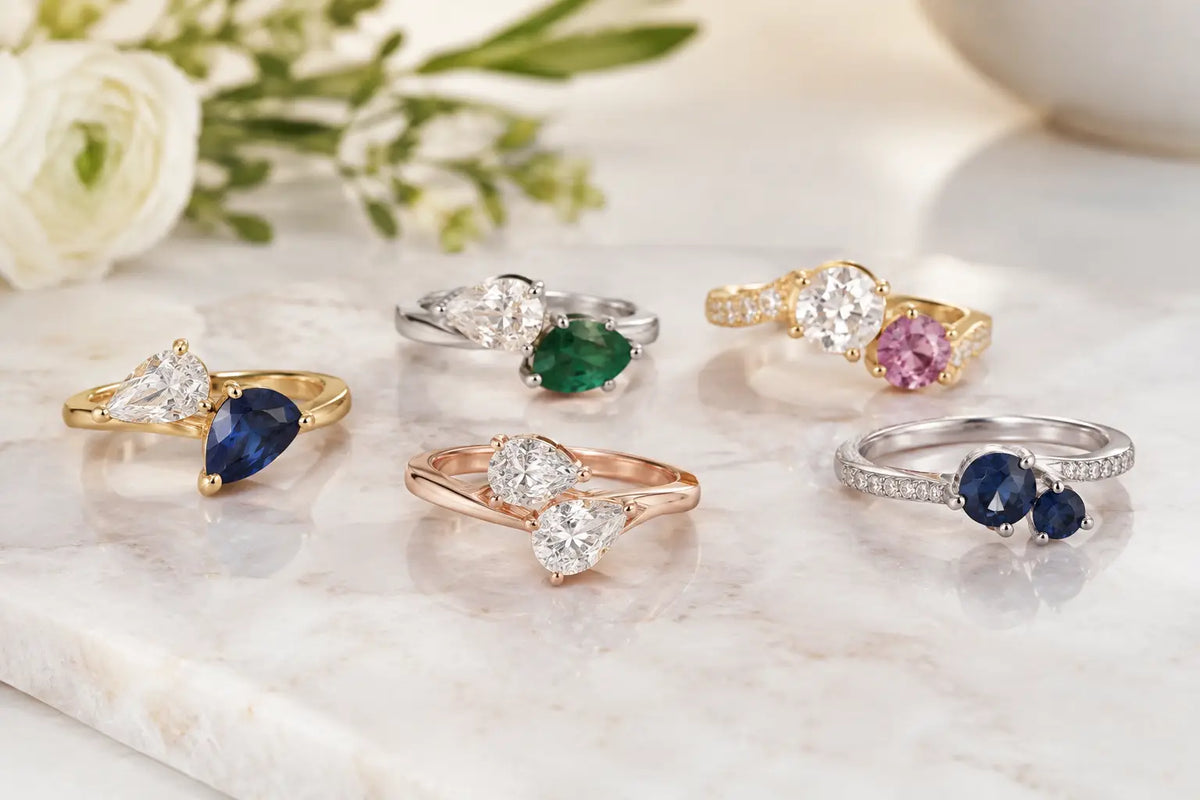
Use the certificate to narrow your options, then inspect clear imagery. If you are designing a custom ring, consider how the center stone will interact with the setting. A halo, bezel, side stones, or a sleek solitaire can each change the way color, size, and shape are perceived.
Fluorescence, Treatments, and Other Details
Fluorescence describes how a diamond reacts to ultraviolet light. It is more frequently discussed with mined diamonds, but if fluorescence appears on a report, read it as one part of the story rather than an automatic positive or negative. The best question is whether the individual diamond looks bright and appealing in normal lighting.
For lab-grown diamonds, pay attention to growth method and treatment disclosure. CVD and HPHT are established methods for creating diamonds in controlled environments. A treatment notation may describe a process used after growth to improve or modify color. Transparency is the key. You should know what the report says, understand what you are buying, and have the price reflect the stone's full documented characteristics.
Also review comments for clarity characteristics, graining, or any durability considerations. Most inclusions are simply identifying features, but feathers near a thin point or significant surface-reaching characteristics deserve a closer look, particularly for pointed shapes. A knowledgeable jeweler can help you assess whether the feature is merely a grading detail or relevant to everyday wear.
Compare the Diamond, Not Just the Certificate
The most common mistake is treating certificates like a leaderboard. A D-color, flawless diamond is rare, but it is not automatically the best diamond for every engagement ring or every budget. You may prefer a larger, eye-clean stone with excellent visual performance over a smaller diamond with paper grades beyond what you can appreciate once it is set.
Set a priority before you start comparing. If size matters most, look for a well-cut, eye-clean diamond in a color range that suits your chosen metal. If you love a crisp, colorless look in platinum, place more emphasis on color. If you are choosing an emerald cut, spend additional time on clarity and video. This approach creates room for a diamond that is personal, beautiful, and sensible.
At Eternity LGD, the goal is not to overwhelm you with specifications. It is to help you understand what those specifications mean for the piece you will wear, give, and remember. Bring your favorite reports into the conversation, ask why one stone is priced differently from another, and compare them alongside the design you have in mind. The right certificate should leave you better informed, but the right diamond should still make you pause when you see it.