Article: Diamond Shapes Comparison for Your Ring
Diamond Shapes Comparison for Your Ring
A diamond’s shape changes far more than its outline. It affects how large the stone appears, the kind of sparkle you see, how it sits in a setting, and whether the finished ring feels classic, dramatic, understated, or distinctly personal. This diamond shapes comparison is designed to help you look beyond a beautiful product photo and choose the cut that fits your hand, style, and priorities.
For lab-grown diamonds, shape is a style decision rather than a question of authenticity. A lab-grown diamond has the same crystal structure and optical properties as a mined diamond. That means a round brilliant can deliver the same lively fire, an emerald cut can show the same elegant flashes of light, and an oval can create the same elongated look - often while allowing more room in the budget for carat weight, color, clarity, or a custom setting.
Diamond Shapes Comparison: What Actually Changes?
Shape refers to a diamond’s face-up outline: round, oval, cushion, pear, and so on. Cut quality refers to how precisely that diamond has been proportioned and faceted. They are closely connected, but they are not the same thing.
A well-cut round diamond is widely known for exceptional brilliance because its faceting pattern is engineered to return light intensely. Fancy shapes - every non-round shape - can be equally beautiful, but each has its own light performance and visual personality. Some appear larger per carat. Some make fingers look longer. Others are chosen for their clean geometry or heirloom-inspired character.
No single shape wins for every buyer. The right choice depends on whether your priority is maximum sparkle, a larger-looking center stone, a specific era of style, or a setting that can handle everyday wear comfortably.
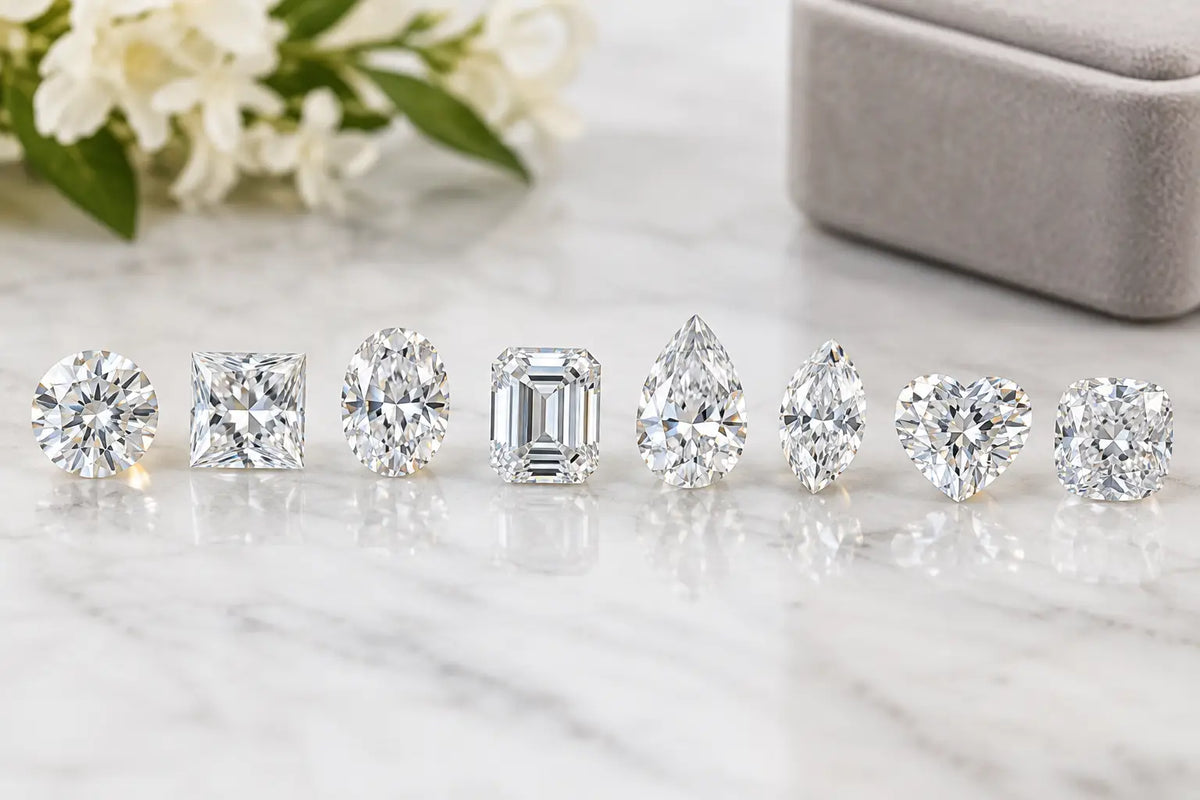
The Most Popular Diamond Shapes, Side by Side
Round brilliant: the benchmark for sparkle
Round brilliant diamonds are the most traditional choice for engagement rings, and for good reason. Their symmetrical facet arrangement produces a bright mix of white light, rainbow fire, and scintillation, the crisp flashes seen as the diamond moves. If sparkle is your non-negotiable, a round is the safest place to start.
The trade-off is value per carat. Because more rough diamond is typically removed to create a round stone, it often costs more than fancy shapes of similar quality and weight. It also has a smaller face-up footprint than an elongated shape at the same carat weight. A round solitaire is timeless, while a round with a hidden halo, side stones, or a sleek bezel can feel decidedly modern.
Oval: elongated, bright, and versatile
Oval diamonds offer much of the brilliance associated with round diamonds, with a longer silhouette that can make both the stone and finger appear more elongated. They are a favorite for buyers who want visual size without choosing a very high carat weight.
Look closely for a bow-tie effect, a darker band across the center that can appear in elongated fancy shapes. A subtle bow tie is normal and can be part of the stone’s character. A strong dark area that remains obvious in different lighting may be distracting. Length-to-width ratio also matters: a narrower oval feels refined and elongated, while a wider oval has a softer, fuller presence.
Cushion: soft edges with romantic character
Cushion diamonds combine a square or rectangular outline with rounded corners. Their personality can vary dramatically. Some look pillowy and antique-inspired, while others have a more modern, crushed-ice sparkle pattern.
This is a shape worth viewing carefully through videos and images, not just a grading report. Two cushions with the same carat weight and measurements can look quite different because of their facet patterns. A cushion suits someone drawn to warmth, romance, and a ring that does not feel overly formal. In a halo or vintage-style setting, it can look especially luminous.
Emerald: clean lines and quiet confidence
Emerald cuts are rectangular step cuts with broad, parallel facets. Rather than the glittering sparkle of a round, they create dramatic flashes of light and dark known as the hall-of-mirrors effect. Their open table and clean geometry make them elegant, architectural, and beautifully suited to minimalist settings.
The same openness means inclusions and color can be easier to notice. Consider prioritizing clarity and color a little more carefully than you might with a brilliant-cut shape. An emerald cut is ideal for a buyer who values sleek sophistication over maximum flash. It also pairs naturally with tapered baguettes or a simple gold band.
Radiant: the bold middle ground
Radiant diamonds bring together an emerald-like rectangular or square shape and the lively faceting of a brilliant cut. Their trimmed corners provide a practical advantage, too: they are less exposed than the pointed corners of a princess cut.
A radiant can be an excellent option for someone who loves the crisp outline of an emerald cut but wants more sparkle. It can also help mask inclusions due to its faceting. The trade-off is that a radiant’s interior pattern is more energetic and less clear than an emerald’s, so it may not appeal to someone seeking a very minimal look.
Princess: modern geometry and bright sparkle
The princess cut is typically square with sharp corners and a brilliant faceting pattern. It delivers a contemporary, graphic look and can appear impressively bright. Its square face also works beautifully in designs with clean lines, channel-set bands, or geometric details.
Protective prongs are essential because the corners are more vulnerable to chipping than rounded edges. Choose a setting designed to cover them securely. If you love a square diamond but want a softer profile, compare princess and cushion cuts in person or through detailed imagery before deciding.
Pear and marquise: maximum length and presence
Pear-shaped diamonds combine a rounded end with a pointed tip, while marquise diamonds taper to points at both ends. Both offer dramatic elongation and can look larger than their carat weight suggests. They are expressive shapes for a buyer who wants a center stone with immediate personality.
Orientation changes the mood. A pear worn point-up feels classic, point-down can feel fashion-forward, and a sideways east-west setting creates an unexpected modern statement. For either shape, the points should be protected with a V-shaped prong. As with ovals, assess bow tie carefully and look for balanced, even curves.
Asscher and heart: distinctive choices with a point of view
Asscher cuts have the step-cut clarity of emerald cuts in a square form. Their cropped corners and concentric facet pattern give them an Art Deco feel that is striking without being loud. They reward careful selection of clarity and symmetry.
Heart-shaped diamonds are less common, which is exactly their appeal. A well-proportioned heart should have two even lobes, a clear cleft at the top, and a defined point. This shape makes a meaningful choice for a pendant, anniversary gift, or a ring designed around a personal love story.
Choose for Finger Coverage, Not Carat Alone
Carat measures weight, not visible size. A 1.50-carat oval, marquise, or pear usually presents a larger-looking surface area than a 1.50-carat round because its weight is distributed across a longer outline. This can be a smart route for buyers who want more finger coverage while staying within a defined budget.
That does not mean elongated shapes are automatically better value. Proportions matter. An overly shallow stone may look broad but can lose light performance, while an overly deep diamond may carry weight below the visible surface. Ask to review the diamond’s measurements, not only its carat weight, and compare its appearance in the setting you want.
Ring size also plays a role. Elongated stones can look especially graceful on longer fingers, but they can be beautiful on any hand. A wider oval or cushion may create a balanced look on broader fingers, while a round or square shape can provide a centered, classic proportion. Personal comfort and visual preference matter more than a rigid rule.
Match the Shape to Your Setting and Lifestyle
Your setting should support the diamond’s personality and protect its vulnerable areas. Rounded shapes like round, oval, and cushion work well in many settings, from four-prong solitaires to bezels and halos. Pointed shapes need thoughtful protection. Emerald and Asscher cuts benefit from settings that leave their clean outlines visible rather than crowding them with too much detail.
For an active daily routine, consider how far the ring sits off the finger. A lower-profile bezel or secure prong setting can make everyday wear easier without sacrificing beauty. If you are planning a custom ring, decide on the center shape early. The shape influences the proportions of the band, the best side-stone options, and the amount of visual detail the design can comfortably hold.
A diamond should not only photograph beautifully. It should feel right when you look at it across a dinner table, catch it sparkling in daylight, and wear it through the ordinary moments that become part of its story.