Best Diamond Cuts for Sparkle, Ranked by Light
A diamond can have excellent color and clarity yet still look quiet if its facets do not return light well. That is why the best diamond cuts for sparkle are not simply the shapes with the most facets or the highest price tags. They are the cuts that handle light beautifully, suit the jewelry you want to wear, and are finished with precision.
For an engagement ring, an anniversary upgrade, or a custom piece designed around your personal style, sparkle is often the detail people notice first. Understanding what creates it helps you choose a lab-grown diamond with confidence - and put more of your budget toward the qualities you will actually see.
What Makes a Diamond Sparkle?
Sparkle is not one single effect. Jewelers generally look at three kinds of light performance: brightness, fire, and scintillation. Brightness is the white light that reflects back to your eye. Fire is the flash of rainbow color created as light disperses through the diamond. Scintillation is the pattern of flashing light and dark areas you see as the diamond moves.
A diamond’s shape influences those effects, but cut quality has the final say. Proportions, facet alignment, symmetry, and polish determine whether incoming light reflects back through the top of the stone or escapes through the sides and bottom. A beautifully cut lab-grown diamond has the same optical potential as a beautifully cut mined diamond because both are crystallized carbon with the same physical and visual properties.
This is also why carat weight alone does not guarantee presence. A smaller diamond with exceptional light performance can look more alive than a larger stone with weak proportions.
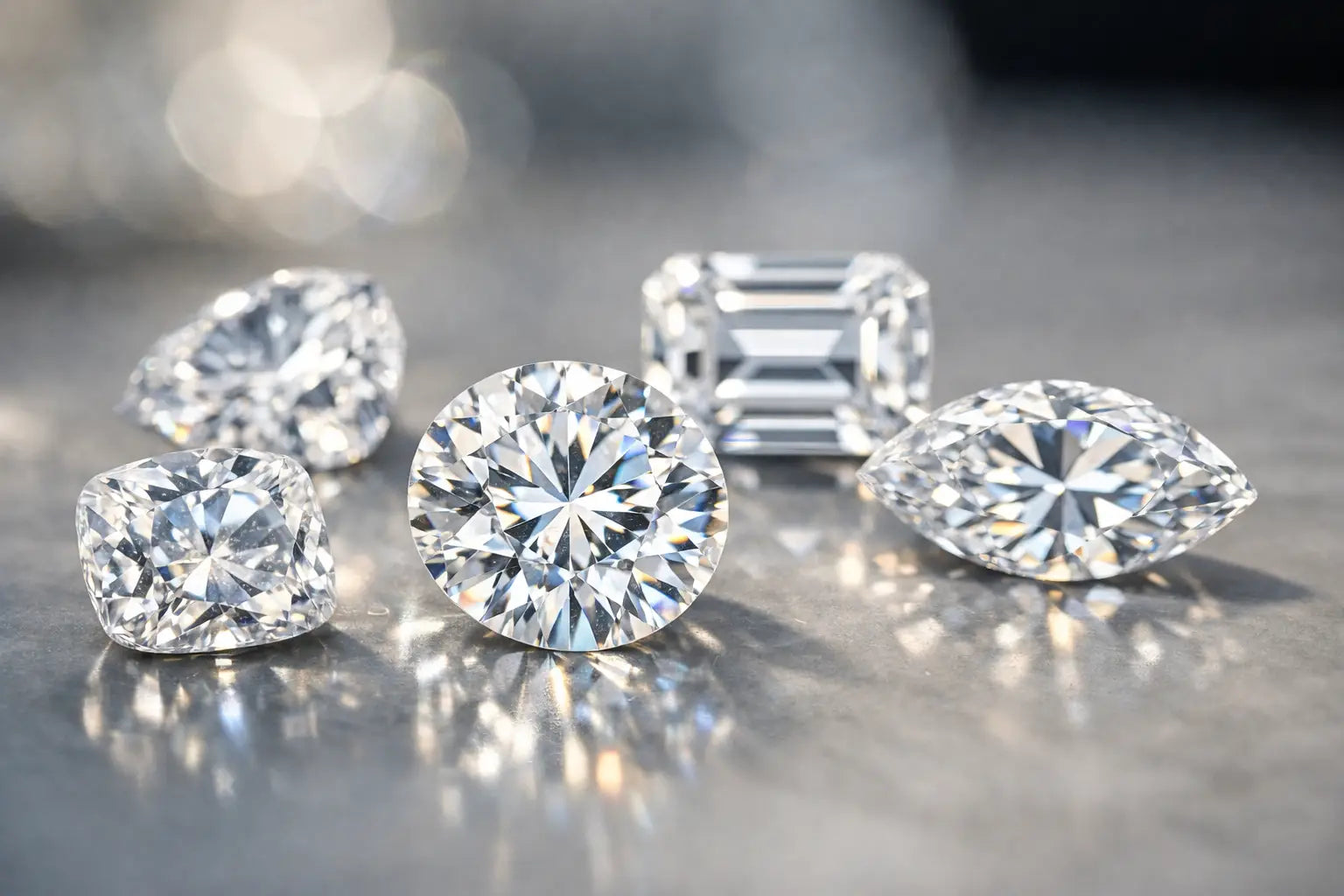
The Best Diamond Cuts for Sparkle
Round Brilliant: The Benchmark for Brightness
The round brilliant is the clear first choice for shoppers who want maximum all-over sparkle. Its 57 or 58 carefully arranged facets were developed to balance brightness, fire, and scintillation more effectively than any other classic diamond shape. When it is cut well, it delivers crisp flashes from nearly every viewing angle.
A round brilliant is especially fitting for someone who wants a timeless engagement ring, diamond studs, or a pendant that will look luminous every day. It also works with almost every setting style, from a clean solitaire to a detailed halo.
The trade-off is that round diamonds typically cost more per carat than fancy shapes, even in lab-grown diamonds. If your goal is the largest possible face-up look for a fixed budget, another shape may offer more visual spread. But for pure, dependable sparkle, round brilliant remains the standard.
Radiant Cut: Bold, Modern, and Full of Flash
Radiant cuts combine the outline of an emerald cut with a brilliant-style faceting pattern. The result is a rectangular or square diamond with lively, crushed-ice-like sparkle. It is a strong choice for buyers who appreciate a more contemporary silhouette but do not want the broad, subtle reflections of a step-cut diamond.
Radiant cuts can be particularly forgiving in slightly lower clarity ranges because their many facets help disguise small inclusions. They also look striking in elongated proportions, where the shape can create an elegant lengthening effect on the finger.
Not every radiant cut performs the same way. Some show a darker center, often called a bow-tie effect, while others have a more even pattern of brightness. Review the diamond closely through video or in person and look for balanced light return rather than choosing by carat weight alone.
Oval Brilliant: Lively Sparkle With a Larger Look
Oval diamonds use brilliant-style facets, so they can deliver bright, energetic sparkle while appearing larger than a round diamond of the same carat weight. Their elongated outline is flattering on many hands and has made them a favorite for modern engagement rings.
The main consideration is the bow tie, the shadow that can appear across the center of some oval diamonds. A slight bow tie can be normal and may disappear as the stone moves. A strong, consistently dark band can reduce the open, bright look many shoppers want. Choosing an oval based on its actual light performance is more meaningful than relying on a length-to-width ratio alone.
For sparkle with a softer, more distinctive profile than a round, an oval is one of the most compelling options.
Cushion Brilliant: Romantic Fire and Soft Edges
Cushion-cut diamonds have rounded corners and a gently square or rectangular outline. In brilliant-cut versions, they can produce abundant fire, with larger, more dramatic flashes than the pinfire sparkle often seen in round brilliants.
This is an excellent shape for someone drawn to a romantic, slightly vintage-inspired look without sacrificing brilliance. A cushion can feel especially personal in a custom design, whether paired with a delicate hidden halo, tapered side stones, or a warm-toned setting.
Cushions vary widely. Some have a chunky facet pattern with bold flashes, while others have a more crushed-ice appearance. Neither is automatically better. The right choice depends on whether you prefer distinct flashes of color or a busier field of shimmer.
Pear and Marquise: Dramatic Shapes With Brilliant Facets
Pear-shaped and marquise diamonds are both brilliant-cut shapes that offer high visual impact and an elongated face-up appearance. A pear has one rounded end and one pointed end, creating a graceful teardrop outline. A marquise has two points and a sleek, eye-catching profile that can appear impressively large for its carat weight.
Both can sparkle beautifully, but both can also show a bow tie. Their pointed ends require thoughtful setting design, too. Prongs should protect vulnerable tips without overwhelming the shape. For a ring with a distinctive look and plenty of movement, either cut can be a memorable choice.
Sparkle Is Not the Same as Every Kind of Beauty
Some diamonds are prized for a different light personality. Emerald cuts and Asscher cuts have step facets: long, parallel planes that create broad flashes and a hall-of-mirrors effect. They do not usually produce the intense, glittering scintillation of a round or radiant cut.
That does not make them less beautiful. A well-cut emerald diamond can look elegant, calm, and remarkably sophisticated. It asks for more in clarity because its open facet structure can make inclusions easier to see, but it rewards the right buyer with a refined look that never feels overly busy.
If your definition of sparkle means constant flashes from across the room, choose a brilliant-cut shape. If you prefer clean geometry and dramatic mirror-like reflections, a step cut may feel more like you.
How to Choose a Sparkling Lab-Grown Diamond
Start with shape, then look beyond the shape name. For round brilliants, prioritize an Excellent cut grade from a respected grading report, along with Very Good or Excellent polish and symmetry when available. For fancy shapes such as oval, radiant, cushion, pear, and marquise, grading reports do not always provide an overall cut grade, so visual review becomes even more valuable.
Ask to see clear video, images, or the diamond itself under normal lighting. Look for even brightness across the stone, lively contrast as it moves, and minimal distracting darkness. Avoid choosing solely from a certificate’s measurements. Reports are essential for confirming identity and quality details, but light performance is visual.
Setting choice matters as well. Open, simple settings allow more of the diamond’s outline to take center stage, while halos add additional surface sparkle around the center stone. White metal can enhance a crisp, icy appearance, while yellow or rose gold creates contrast that makes a colorless diamond stand out. A well-designed setting should support the diamond’s personality rather than compete with it.
A Smart Way to Prioritize Your Budget
If sparkle is your priority, spend first on cut quality and the visual performance of the individual diamond. Then balance carat weight, color, and clarity around what you can actually see. Lab-grown diamonds often give buyers more flexibility to choose a larger size or stronger quality combination within the same budget, without compromising the meaningful standards behind the purchase.
For many shoppers, a near-colorless diamond that looks bright and eye-clean will be a smarter choice than paying for grades that are difficult to distinguish once the stone is set. The best balance is personal: a round brilliant may justify a premium for someone who wants classic maximum sparkle, while an oval or radiant may offer a larger-looking centerpiece with a more fashion-forward feel.
The right diamond should do more than perform well on paper. Choose the cut whose light, shape, and character make you want to look at your hand one more time - then let the design around it make that feeling entirely your own.