Article: GIA Lab Diamonds: What Buyers Need to Know
GIA Lab Diamonds: What Buyers Need to Know
A diamond certificate should make a major purchase feel clearer, not more complicated. Yet when shoppers search for GIA lab diamonds, they often find conflicting advice about grading reports, value, and whether a GIA document means a lab-grown diamond is somehow different from another lab-grown diamond. The simple answer is that GIA is an independent gemological authority, while the diamond itself is still a real diamond grown in a laboratory.
What matters is understanding exactly what the accompanying report tells you, then pairing that information with the diamond's actual appearance, cut quality, and the jewelry you want to create.
What Are GIA Lab Diamonds?
“GIA lab diamonds” is a common shorthand for laboratory-grown diamonds that have been assessed by the Gemological Institute of America. It does not refer to a separate diamond category, a particular growing process, or a special material. Lab-grown diamonds have the same crystal structure, optical properties, and chemical composition as mined diamonds. They are made of carbon, and they offer the same fire, brilliance, and durability expected from diamond jewelry.
The GIA evaluates diamonds independently. Its documentation helps identify whether a stone is laboratory-grown and records the quality characteristics observed during examination. That independent assessment can give buyers useful context, particularly when comparing loose diamonds with similar carat weights and prices.
Still, a report is not the entire buying decision. Two diamonds with similar reported specifications can look noticeably different in person because cut precision, light return, proportions, and facet pattern all influence beauty.
GIA Reports for Lab-Grown Diamonds Have Evolved
One source of confusion is that GIA's lab-grown diamond reporting has changed over time. Earlier GIA laboratory-grown diamond reports commonly provided individual quality grades for the familiar 4Cs, including color and clarity. Those reports remain meaningful records for the diamonds they describe.
For eligible colorless to near-colorless laboratory-grown diamonds submitted under GIA's newer assessment approach, the report may use an overall quality description such as “Premium” or “Standard” rather than separate color and clarity grades. The report also identifies the diamond as laboratory-grown and includes key information such as carat weight, shape, cutting style, and measurements.
That distinction matters when comparing diamonds. A newer GIA assessment with an overall quality category is not directly interchangeable with an older full grading report that lists a specific color and clarity grade. Neither format automatically makes one diamond more beautiful or more valuable than the other. They simply communicate quality in different ways.
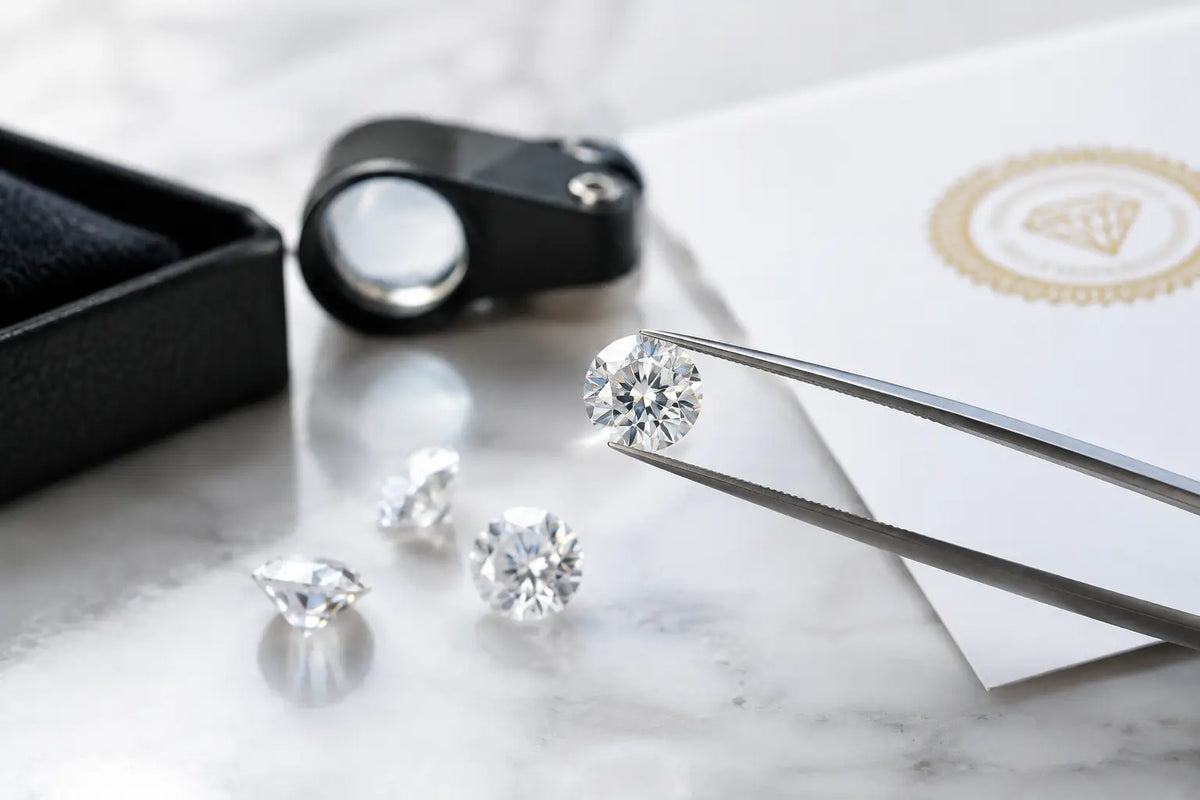
If you are comparing diamonds side by side, ask to see the complete documentation, not just a headline label. Confirm the report number, review the measurements and proportions, and make sure the report matches the exact diamond being offered. Many diamonds also have a report number laser-inscribed on the girdle, which can provide another layer of identification.
What a GIA Report Can and Cannot Tell You
A GIA report provides independent information. It can help confirm the diamond's laboratory-grown origin and document defining characteristics. This is especially useful for buyers who want a clear paper trail for an engagement ring, custom pendant, or meaningful anniversary gift.
But a report cannot tell you whether a particular diamond is the right choice for your setting, style, or budget. It does not replace a close review of the stone's visual performance. It also does not establish a fixed resale price or guarantee that a diamond will look larger than another stone of the same carat weight.
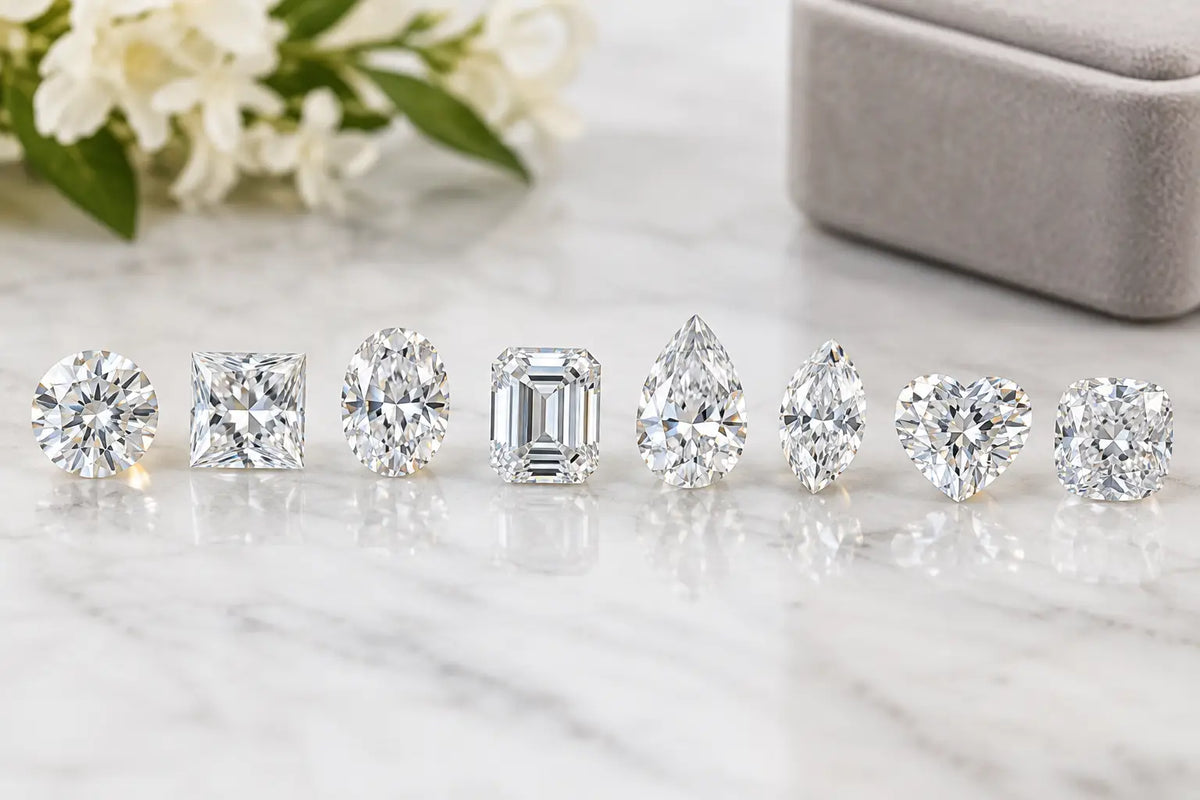
For example, an elongated oval may appear larger face-up than a round diamond with the same carat weight, while a round brilliant is often prized for its balanced sparkle. A report will identify shape and measurements, but it will not decide which look feels most like you.
This is why a well-guided purchase considers both documentation and design. The diamond should be beautiful on its own, but it should also suit the proportions of the ring, the metal color, and the way the piece will be worn every day.
How to Compare GIA Lab Diamonds Confidently
Start with the characteristics that have the greatest effect on what you see. Carat weight influences size, but measurements tell you more precisely how large the diamond will look. Cut is especially important for round diamonds, where excellent proportions and symmetry can create brighter, more lively light return. For fancy shapes such as radiant, cushion, emerald, pear, and oval, proportions and facet patterns deserve careful attention.
Color is another personal decision. In white gold or platinum, many buyers prefer a near-colorless or colorless appearance. In yellow or rose gold, a subtle amount of warmth can be less noticeable, allowing more of the budget to go toward size or cut. Clarity works similarly: the goal is often an eye-clean diamond, not necessarily the highest clarity grade available.
When reviewing GIA lab diamonds, compare like with like. Do not assume that two stones are equivalent simply because both are called Premium, both weigh two carats, or both have the same shape. Look at their dimensions, proportions, polish, symmetry where listed, and imagery or video. If the diamond is being set into custom jewelry, consider how the setting may affect its appearance. A delicate solitaire emphasizes the center stone, while a halo or side stones can change the overall visual impact.
Fluorescence is often a concern for shoppers familiar with mined-diamond reports, but laboratory-grown diamonds may show different growth-related characteristics depending on how they were created. What matters most is transparency from the seller and a visual review of the actual stone. If a diamond has a noticeable effect that could influence appearance, it should be discussed clearly before purchase.
Certification Supports Value, but It Is Not a Shortcut
A GIA report can inspire confidence because it comes from a recognized independent laboratory. That is valuable, particularly for a purchase intended to mark a proposal, wedding, milestone, or family memory. It helps you understand what is being sold and preserve records for insurance or future service needs.
At the same time, certification should not become a reason to overlook the fundamentals. A beautifully cut, well-proportioned lab-grown diamond with transparent specifications may be a stronger choice for your budget than a stone chosen solely for a familiar report name. The best value is not the lowest price on a certificate. It is the diamond that delivers the appearance, quality, and meaning you want without paying for features you will never see.
This is also where lab-grown diamonds can be especially compelling. Because they are generally more accessible than comparable mined diamonds, many buyers can prioritize a larger center stone, a higher-performing cut, or a more detailed custom setting. That flexibility can turn a fixed budget into a piece that feels distinctly personal rather than compromised.
Questions to Ask Before You Buy
Before selecting a GIA-assessed laboratory-grown diamond, ask whether the report is a full grading report or a newer quality assessment. Request the report number and confirm that it corresponds to the diamond. Review the measurements, not only the carat weight, and ask for clear visuals of the exact stone whenever possible.
It is also wise to discuss the setting before making a final selection. A diamond can look different once placed in a bezel, hidden halo, three-stone design, or low-profile setting. Ring size, lifestyle, and preferred metal all shape the right choice. A person who works with their hands may prioritize a secure, lower setting, while someone drawn to bold style may choose a larger elongated shape or a more architectural design.
Finally, understand the seller's ongoing support. Fine jewelry is meant to be worn, celebrated, and cared for. Clear warranty coverage, inspection guidance, resizing options where appropriate, and future upgrade or buyback policies can matter long after the proposal or gift is given.
A GIA report can be a smart part of buying a lab-grown diamond, but the most satisfying choice is the one that looks extraordinary to you, fits the life you live, and carries its story with confidence.