Men’s Lab Diamond Wedding Band Buying Guide
A mens lab diamond wedding band is more than a wedding-day accessory. It is one of the few pieces of jewelry you may wear through workouts, commutes, travel, workdays, and every ordinary moment that becomes part of a shared life. The right band should feel personal, look considered, and hold up to the way you actually live.
Lab-grown diamonds make that choice more flexible. They have the same chemical composition, crystal structure, and optical beauty as mined diamonds, while often allowing more room in the budget for diamond coverage, a premium metal, or a custom detail that makes the ring distinctly yours.
What Makes a Men’s Lab Diamond Wedding Band Different?
The defining feature is not simply the diamonds. It is the balance between diamond design and everyday wearability. Some men want a clean, understated line of sparkle. Others prefer a high-impact eternity look, a bold center row, or diamonds set into a textured or mixed-metal band. There is no single “right” level of diamond presence.
A lab diamond wedding band can be made with the same attention to quality as any fine diamond ring. The diamonds are created in a controlled laboratory environment and evaluated using the familiar standards of cut, color, clarity, and carat weight. What matters most is how those details work together in the finished band, not just the specifications listed individually.
For many couples, lab-grown diamonds make a meaningful design feel more attainable. A wider band with larger stones, for example, may be within reach without forcing a compromise on the metal or craftsmanship. Still, value is not only about getting the biggest possible diamonds. It is about choosing a ring you will be pleased to wear for years.
Start With Your Everyday Style
Before comparing carat weights, consider the jewelry and clothing you already wear. A wedding band should feel like an extension of your style rather than an accessory you save for special occasions.
If you prefer minimal, tailored pieces, a narrow channel-set band or a single row of small diamonds may offer the right amount of light without feeling flashy. If your style leans modern or fashion-forward, a wider band with round, emerald-cut, or baguette lab diamonds can create a stronger architectural look. Black rhodium details, brushed finishes, and two-tone metals can add contrast while keeping the design refined.
Your occupation and routine matter, too. Someone who works with tools, lifts weights frequently, or has a hands-on job may prefer lower-profile diamonds and a more protective setting. A ring intended primarily for office wear or formal occasions can accommodate a little more height and visual drama.
Choose a Width That Looks and Feels Right
Band width has a major effect on appearance. A 4 mm band can look sleek and subtle, while a 6 mm to 8 mm design feels more substantial and gives diamonds more visual space. Wider is not automatically better. On shorter fingers, an overly wide band may feel restrictive; on larger hands, a very narrow band can disappear visually.
The best approach is to consider proportion, comfort, and the diamond layout together. If you want a broad band but prefer a restrained look, a single centered row of diamonds can keep the design balanced. If you want maximum brilliance, multiple rows or a full pavé surface may be the better fit.
Diamond Settings: Beauty Meets Practicality
The setting determines how much diamond you see, how securely each stone is held, and how easily the band fits into daily life.
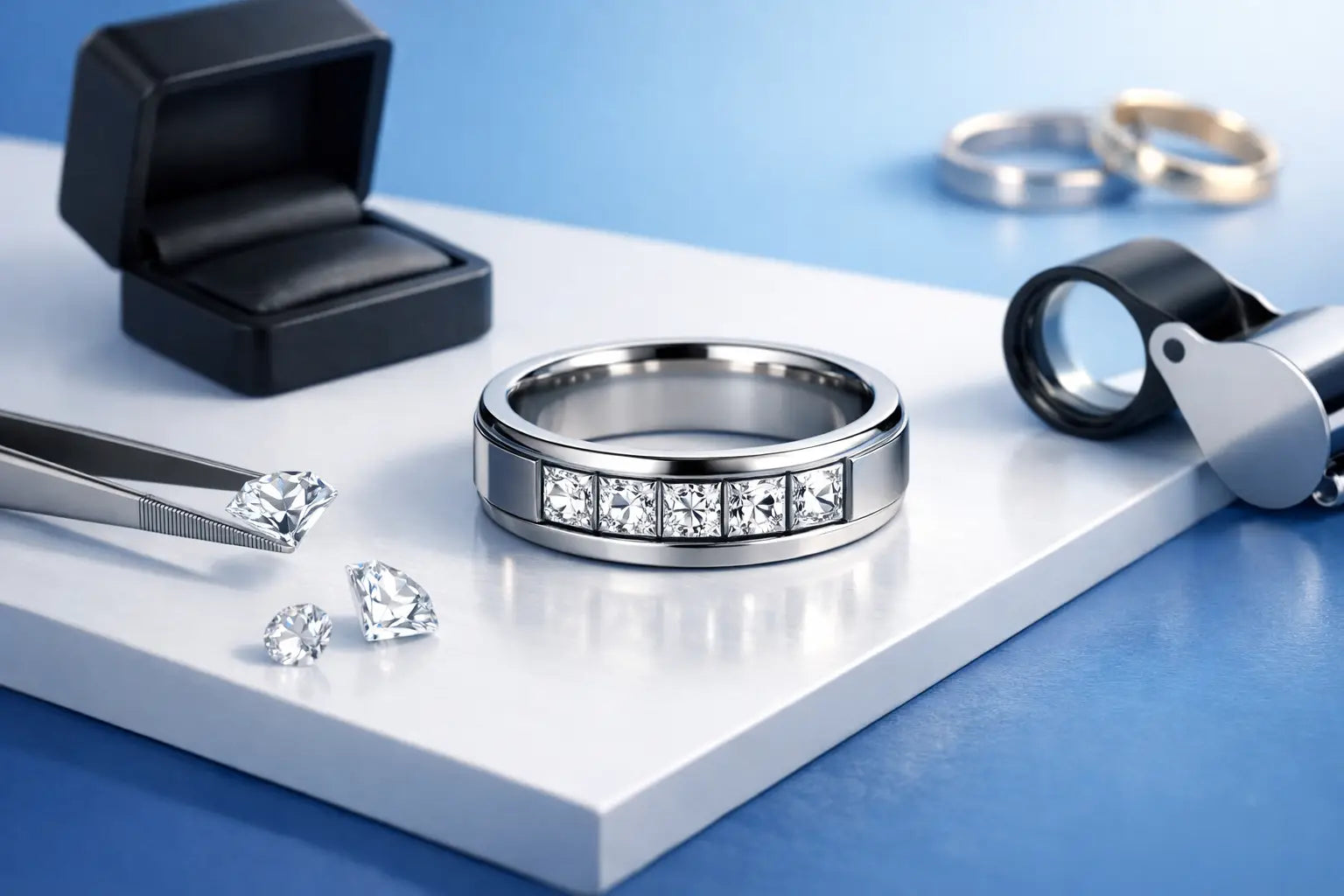
Channel-set diamonds sit between two metal walls, creating a smooth, clean surface with excellent protection. This is a strong option for buyers who want sparkle without exposed prongs. Bezel settings surround each diamond with metal, offering a contemporary look and dependable security. They can also make a diamond pattern feel more graphic and masculine.
Prong-set diamonds allow more light into each stone and can create intense brilliance, especially in a shared-prong or scalloped design. The trade-off is that prongs sit higher and should be inspected periodically as part of normal fine-jewelry care. Pavé designs use tiny beads of metal to hold closely set diamonds, producing a continuous shimmer. They are elegant, but they may not be the first choice for an especially rugged routine.
For a mens lab diamond wedding band that will be worn every day, low-profile settings are often the easiest place to begin. They reduce snagging, protect the diamond edges, and make the ring feel more natural on the hand.
Pick a Metal for the Life You Live
Metal choice shapes both the look and maintenance of your wedding band. Platinum is naturally white, dense, and highly durable. It develops a soft patina over time rather than wearing away quickly, which many people appreciate in a ring meant for lifelong wear. Its weight also gives it a substantial feel.
White gold offers a bright, polished appearance and is typically lighter than platinum. It may need occasional rhodium replating over the years to maintain its crisp white finish. Yellow gold brings warmth and classic character, particularly when paired with white lab diamonds for contrast. Rose gold feels distinctive and personal, with a soft tone that can make a diamond band stand apart.
For an active lifestyle, 14K gold is often a practical choice because it generally has a bit more hardness than 18K gold. On the other hand, 18K gold has a richer color and a more luxurious gold content. The better choice depends on whether you prioritize everyday resilience or the depth of the metal’s color.
Understand Diamond Quality Without Overcomplicating It
A wedding band uses multiple diamonds, so consistency is often more important than chasing the highest grade for every stone. Look for diamonds that match well in color, size, and overall brightness. A coordinated row of well-cut diamonds will usually look more beautiful than stones with impressive paper specifications that do not visually work together.
Cut deserves special attention because it influences sparkle. Round lab diamonds tend to deliver the most traditional brilliance, while emerald-cut and baguette diamonds show broader flashes of light and a more tailored, understated style. Princess-cut diamonds offer crisp geometry, and oval diamonds can soften the appearance of a straight band.
Color and clarity should be chosen with the setting in mind. In white metal, near-colorless diamonds often create a clean, icy look. In yellow or rose gold, a slightly warmer color can still look beautiful, especially when the band is designed intentionally around that contrast. For clarity, diamonds in a band typically do not need to be flawless. The goal is for them to appear eye-clean and bright at normal viewing distance.
For larger individual diamonds or a custom band with standout stones, ask about independent diamond grading documentation when applicable. Clear specifications and knowledgeable guidance help you understand exactly what you are purchasing.
Comfort Fit Is Worth Asking For
A beautiful wedding band will not get much wear if it feels sharp, tight, or awkward. A comfort-fit interior has gently rounded edges, allowing the ring to slide over the knuckle more easily and sit more comfortably through the day. This detail is especially valuable in wider bands.
Sizing deserves more care than many buyers expect. Fingers can change slightly with temperature, activity, and time of day. If possible, confirm size when your hands are at a normal temperature and not immediately after exercise. For a diamond eternity band, accurate sizing matters even more because resizing may be limited depending on the placement of the stones.
If you are designing a custom piece, discuss your preferred fit before production. At Eternity LGD, the custom process can help translate practical needs such as width, comfort, diamond coverage, and metal preference into a band that feels intentionally made rather than simply selected.
Think Beyond the Wedding Day
A diamond wedding band should be insured and checked periodically for loose stones or worn prongs. Remove it during activities that involve harsh chemicals, heavy impact, or a high chance of catching the ring on equipment. Gentle cleaning with warm water, mild soap, and a soft brush can restore brilliance between professional inspections.
It is also wise to think about the future. Your style may evolve, and a meaningful band may eventually be paired with an anniversary ring, upgraded, or passed down. Choosing quality construction, transparent diamond details, and support after purchase gives the piece a stronger long-term story.
The best choice is not necessarily the widest band, the largest total carat weight, or the most elaborate setting. It is the one that feels right when you look down at your hand years from now: personal, comfortable, brilliantly made, and ready for everything ahead.