Article: Ring Size Measurement That Gets the Fit Right
Ring Size Measurement That Gets the Fit Right
A ring can be beautifully designed, expertly set, and chosen for exactly the right moment - but if it spins, pinches, or will not pass the knuckle, the experience changes fast. Ring size measurement is a small step with a major effect on comfort, security, and the confidence of wearing a meaningful piece every day.
Whether you are planning a surprise proposal, selecting a wedding band, or creating a custom lab-grown diamond ring, a reliable size gives the design its proper finish. The goal is not simply to find a number. It is to find a fit that feels natural through changing temperatures, daily movement, and real life.
What a Proper Ring Fit Should Feel Like
A well-fitted ring slides over the knuckle with gentle resistance, sits securely at the base of the finger, and comes off without a struggle. It should not rotate constantly or leave a deep indentation after a few minutes. A slight mark can be normal, especially after a warm day, but pain, numbness, or a finger that feels compressed are signs the ring is too small.
Fit is personal. Some people prefer a closer fit for a slim solitaire engagement ring, while others want a little more ease in a wider wedding band. The ideal size can also differ from one finger to another. Your dominant hand is often slightly larger, and fingers can change with heat, exercise, hydration, travel, and time of day.
That is why one quick measurement is useful, but repeating it under normal conditions is better. Measure when your hands are at a comfortable temperature, not immediately after a workout, hot shower, cold commute, or salty meal. These temporary changes can make an otherwise accurate size feel misleading.
Ring Size Measurement Methods You Can Trust
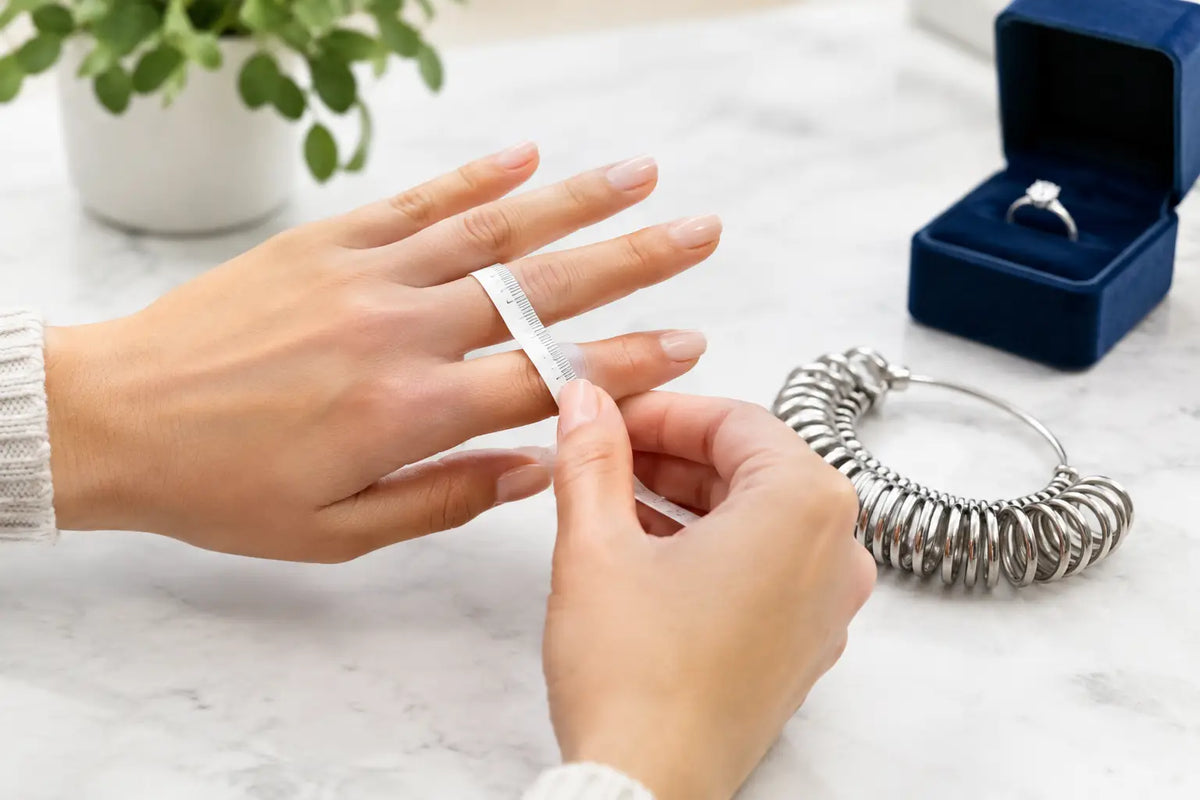
The most dependable option is a professional ring sizer. It provides a series of precisely sized bands that let you feel the difference between a size that merely goes on and one that wears comfortably. For an engagement ring or a custom piece, this is especially worthwhile because the setting, metal, and band width all influence the final fit.
If an in-person measurement is not practical, an at-home sizing tool can be a strong alternative when used carefully. A reusable ring sizer is generally more accurate than measuring with string or paper because it mimics the way a ring moves over the knuckle. Try it several times during the day, and make a note of the size that consistently feels secure without feeling restrictive.
Measuring an existing ring can also help if it already fits the intended finger. Place it flat and measure the inside diameter from edge to edge at the widest point. The measurement must be taken from the inner edges, not the outer metal edges. Then compare that diameter to a standard US ring-size chart.
Paper-strip and string methods are best treated as a starting point, not a final answer. They can stretch, overlap, or sit too loosely against the skin, producing a result that is off by enough to matter. If you use one, mark the point where the material overlaps, lay it flat, measure the length in millimeters, and check it against a US sizing chart. Repeat the process at least twice.
Why a Ring’s Width Changes the Fit
Two rings with the same inside diameter can feel very different. A narrow band, often around 1.5 to 2 millimeters, has less metal touching the finger and typically feels lighter. A wide band has more surface area, so it can feel tighter as it passes over the knuckle and rests against the skin.
As a general guideline, people choosing a band around 6 millimeters or wider may prefer to consider a quarter or half size up. This is not a fixed rule. Finger shape, knuckle size, and personal comfort still lead the decision, but it is a useful conversation to have before finalizing a design.
Settings matter, too. A substantial three-stone ring, a wide eternity style, or a ring with a low-profile, comfort-focused interior may wear differently than a delicate band. When a ring is being made to order, sharing the intended width and style helps ensure that the size recommendation fits the complete piece rather than a generic sample band.
How to Find Someone Else’s Ring Size Discreetly
A surprise proposal adds a layer of strategy. Borrowing a ring they wear on the correct finger is often the best approach, provided you can return it before it is noticed. Remember that ring sizes are not automatically interchangeable between fingers. A ring worn on the right ring finger may not fit the left ring finger the same way.
If borrowing a ring is not possible, enlist a trusted friend or family member. They may be able to suggest a size, invite your partner to try rings casually, or help arrange a low-pressure jewelry outing. A close estimate is valuable, but avoid relying only on assumptions based on height, clothing size, or hand appearance. There is no dependable formula for sizing a finger by sight.
When the choice comes down to two sizes, slightly larger is often the safer direction for a surprise. A ring that is too small may not go on at all during the proposal. A ring that is a little roomy can be worn temporarily with care and assessed for adjustment afterward. The best choice still depends on the band width and how pronounced the knuckle is.
Common Sizing Mistakes to Avoid
The most frequent mistake is measuring just once. Fingers fluctuate, and a measurement taken only in the early morning or at the end of a warm day can skew the result. Check more than once and prioritize the size that works across those measurements.
Another mistake is forcing a ring over the knuckle to prove it fits. The ring should have some resistance, but it should not require excessive pressure. A fit that feels acceptable for thirty seconds may become uncomfortable after several hours.
It is also easy to overlook the design stage. If you are choosing a custom ring, do not wait until production is underway to discuss sizing. A detailed consultation should account for the desired band width, profile, gemstone layout, and the possibility of future resizing. Some designs are more flexible than others.
Full eternity bands deserve special attention. Because diamonds extend around the entire circumference, resizing can be more complex than it is with a plain metal band or a design with a clear sizing area at the back. Getting the measurement right before production is particularly valuable for these styles.
When a Ring Should Be Resized
A ring that turns repeatedly, slides off with little resistance, or feels loose enough to create anxiety may need to be sized down. One that leaves a deep groove, causes discomfort, or cannot be removed without significant effort may need to be sized up. Do not try to cut, stretch, or alter fine jewelry at home.
Resizing is a practical option for many rings, but it depends on the construction. Metal type, setting style, engraving, side stones, and the number of sizes needed can all affect what is possible. A thoughtful evaluation protects the structural integrity and appearance of the ring.
For major life moments, it can help to think beyond the proposal or ceremony. Your ring should suit the hand you will use while commuting, working, traveling, celebrating, and handling everyday tasks. Fine jewelry is meant to be enjoyed, not constantly adjusted.
Make the Final Choice With Confidence
If you are uncertain, ask for guidance before the ring is made or purchased. A sizing tool, a few repeat measurements, and an honest discussion of the chosen design can prevent a great deal of guesswork. At Eternity LGD, the same care that goes into selecting a lab-grown diamond and refining a setting should extend to the fit that makes the finished ring feel truly yours.
The right size is not the one that sounds most precise on paper. It is the one that lets a meaningful ring settle comfortably into your life, ready to be worn and remembered.