Article: Diamond Bezel Versus Prong: Which Fits You?
Diamond Bezel Versus Prong: Which Fits You?
A ring setting changes more than the profile of a diamond. In the diamond bezel versus prong decision, it can determine whether your ring feels delicate or bold, low-profile or lifted, understated or visibly brilliant from across the room. For an engagement ring you will wear every day, that choice deserves as much consideration as diamond shape, carat weight, and metal color.
Both settings can be beautiful, secure, and appropriate for a lab-grown diamond. The better choice comes down to your lifestyle, preferred design, and the way you want the diamond to look on your hand. Here is how to make that decision with confidence.
Diamond Bezel Versus Prong: The Core Difference
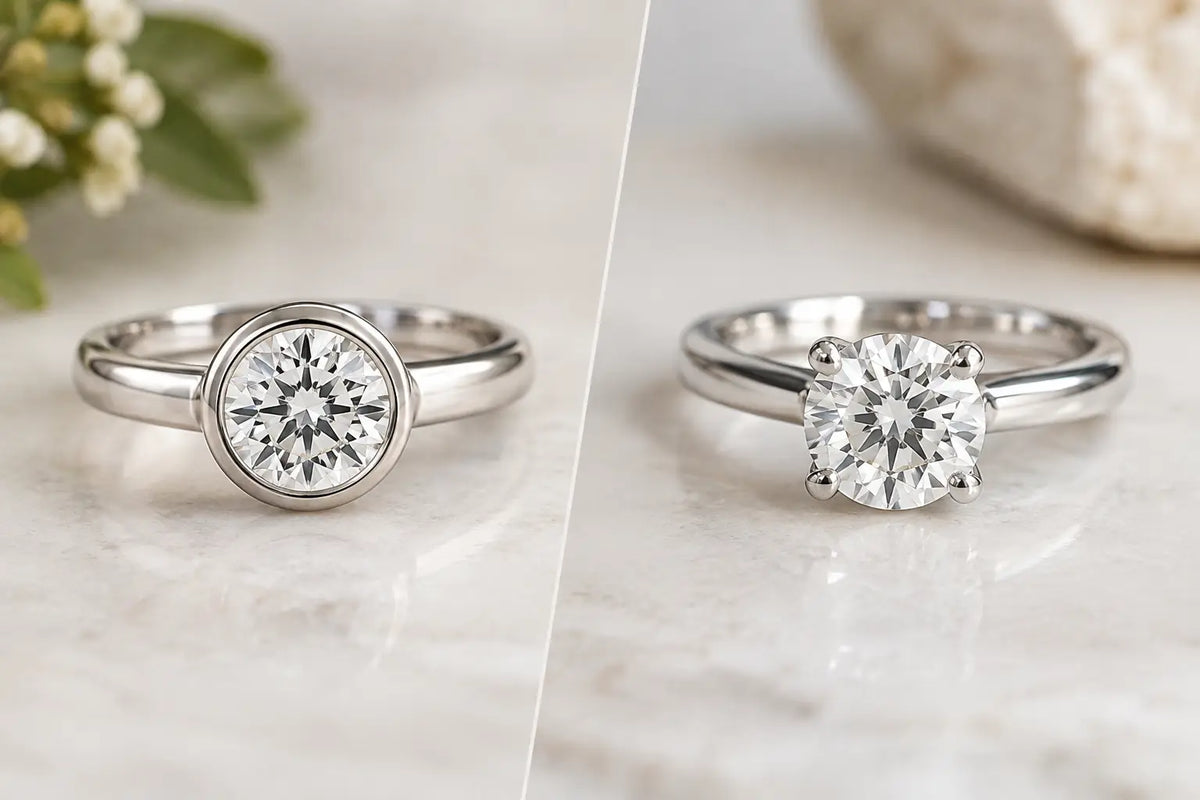
A prong setting holds a diamond in place with small metal claws. Four-prong and six-prong designs are especially common for solitaire engagement rings, although prongs can be shaped, split, rounded, pointed, or integrated into a more intricate setting. Because less metal covers the diamond, the stone remains highly visible from the top and sides.
A bezel setting surrounds the outer edge of a diamond with a slim rim of precious metal. In a full bezel, that rim circles the entire stone. A partial bezel, sometimes called a semi-bezel, leaves selected areas open while securing the diamond at key points. The result is clean, architectural, and often more contemporary in appearance.
Neither is automatically better. A prong setting puts the diamond front and center. A bezel creates a polished frame that feels intentional, protective, and modern.
Security for Everyday Wear
For active hands, a bezel is often the practical favorite. The metal rim protects more of the diamond's edge, or girdle, and there are no individual prongs to catch on knitwear, hair, or gloves. This makes a bezel especially appealing for people who work with their hands, exercise regularly, care for children, or simply prefer jewelry they do not need to think about throughout the day.
Prongs are also secure when they are properly made and maintained. A well-built four- or six-prong setting holds a diamond firmly while allowing it to remain open and bright-looking. Still, prongs can gradually wear down, bend, or loosen after years of daily contact with hard surfaces. They should be inspected periodically, particularly if the ring has been knocked, snagged, or begins catching on fabric.
A bezel is not indestructible, and a prong setting is not fragile. The difference is the kind of upkeep each design invites. With a bezel, the diamond has more built-in protection. With prongs, routine checks are a smart part of long-term ownership.
Does a Bezel Make a Diamond Look Less Sparkly?
This concern is understandable, but the answer is more nuanced than it first appears. A full bezel covers more of the diamond's perimeter, so it can show less side profile than an open prong setting. It may also make a stone look slightly more contained, particularly in a narrow or high-polish metal frame.
However, a diamond's sparkle primarily comes from its cut quality, proportions, and the way it handles light through its top surface. A well-cut lab-grown diamond can look exceptionally lively in either setting. Light does not need to enter from every side for a diamond to perform beautifully.
Prongs create a more open visual effect, which can make a diamond appear airy and prominent. A bezel creates a different kind of impact: it outlines the shape and can make the face-up presence of the stone feel stronger. On a round diamond, a fine bezel often gives a crisp, modern halo-like border without adding extra stones. On an elongated oval, emerald cut, or radiant cut, it can emphasize the distinctive silhouette.
If visible brightness is your highest priority, choose a diamond with excellent cut and review the specific setting proportions. A heavy bezel around a small stone will look very different from a fine, carefully fitted bezel around a larger center diamond.
Style: Classic Airiness or Modern Definition
Prongs have enduring engagement-ring appeal for a reason. They let the center stone remain the visual focus and pair naturally with nearly every style, from a timeless solitaire to a pavé band, hidden halo, or three-stone ring. A round diamond in a six-prong setting feels especially classic, while four prongs can create a cleaner, more minimal look.
Bezels suit buyers drawn to refined simplicity, vintage-inspired details, or a sleek modern profile. They work beautifully with geometric diamond shapes, including emerald, Asscher, princess, and radiant cuts. They can also soften the outline of an oval or pear shape while making the overall ring look more substantial.
Metal choice matters. Yellow gold creates warm contrast around a colorless or near-colorless diamond, making the bezel part of the design statement. White gold or platinum tends to blend more quietly with the stone, while rose gold brings a romantic, distinctive edge. With prongs, matching the prong metal to the diamond's color appearance can help the center stone remain visually crisp.
A useful question is whether you want people to notice the diamond alone or the entire ring as one designed object. Prongs usually favor the first effect. Bezels often excel at the second.
Comfort, Cleaning, and Daily Practicality
A low-set bezel can feel exceptionally comfortable because it has a smooth perimeter and fewer exposed edges. Many people who are sensitive to snags or who dislike a high-profile ring find that a bezel is easier to wear from morning to night. Its streamlined finish also makes it a strong choice for stackable rings.
Prong-set diamonds are often raised higher above the finger, especially in solitaire designs. That height helps showcase the side view of the diamond and can make a center stone feel more prominent. The trade-off is that a high setting can catch more easily and may require more awareness during hands-on activities.
Both settings need regular cleaning. Lotions, soap, and natural skin oils can collect behind any diamond, reducing the brightness you see. Prong settings tend to offer more open access beneath the stone, while a full bezel can make certain areas less accessible. Gentle at-home cleaning and occasional professional inspection keep either option looking its best.
Diamond Shape Can Guide the Choice
Some shapes naturally lend themselves to one style, but there are no hard rules. Round brilliants look excellent in both settings. Prongs highlight their classic brilliance, while bezels give them a sleek, contemporary outline.
Emerald and Asscher cuts are especially striking in bezels because the metal frame echoes their clean, geometric lines. Oval, pear, and marquise diamonds can benefit from a bezel or partial bezel when extra edge protection is desired. These elongated shapes also look elegant in prongs, provided the setting is designed to secure the pointed areas properly.
For a larger lab-grown diamond, a bezel can help create a balanced, wearable ring with a lower profile. For buyers who want to maximize the visual openness of a stone, prongs may be the more natural match. During a custom design consultation, viewing the diamond shape alongside setting sketches can make the preference clear quickly.
Cost and Custom Design Considerations
The setting style can affect price, but it is not as simple as bezel costing more or prongs costing less. A full bezel may require more metal and more detailed bench work. An intricate prong setting with pavé accents, sculpted details, or a hidden halo can be equally complex. The center diamond, metal type, band design, and craftsmanship all influence the final investment.
Lab-grown diamonds give many buyers more room in the budget to prioritize both the diamond and the setting. Rather than choosing between a meaningful carat weight and a thoughtfully engineered design, you can often balance the two. This is particularly valuable when a ring needs a lower profile, a specific band width, or a customized bezel that follows an unusual diamond shape.
If you are designing a ring from the ground up, share how you actually use your hands, whether you plan to stack bands, and what jewelry you already wear most often. These details are just as useful as a saved inspiration photo.
Choose the Setting You Will Love Wearing
Choose a bezel if you want a smooth, low-maintenance feel, added edge protection, and a design with modern definition. Choose prongs if you love an open, classic presentation and want the center diamond to appear as visually unrestricted as possible. A partial bezel offers a compelling middle path, combining protective coverage with a more open view of the stone.
The best ring is not the one that follows a rule. It is the one that suits your diamond, your routine, and the story you want to see every time you look down at your hand. Whether you choose a sculptural bezel or graceful prongs, thoughtful design will let your lab-grown diamond feel unmistakably yours.