The 2026 Buyer’s Checklist: Finding the Best Lab Diamonds for Sale
Did you know that a high-quality 1-carat diamond now costs roughly 90% less than its mined counterpart? While these savings are undeniable, browsing the many lab diamonds for sale online often feels like a crash course in chemistry you never asked for. You're likely feeling overwhelmed by technical terms like CVD or HPHT. The recent shifts in GIA grading standards have also made it harder to compare stones, leaving many buyers worried they'll end up with a low-quality diamond.
We believe that luxury should be transparent and empowering, not intimidating. You deserve a stone that is as ethical as it is beautiful, without the fear of overpaying for a diamond that doesn't meet your standards. This guide provides a comprehensive 2026 checklist to help you evaluate quality and value with total confidence. We'll explore why IGI has become the preferred certificate for clear grading, how to handle new international labeling regulations, and the exact steps to take for a seamless custom design journey.
Key Takeaways
- Identify why IGI has become the practical standard for grading clarity and how to prioritize Cut to ensure your diamond captures the most light.
- Gain a clear perspective on the 2026 market for lab diamonds for sale to confidently secure a stone that offers both high value and ethical integrity.
- Decode the technical differences between CVD and HPHT growth methods to choose the specific scientific process that suits your jewelry needs.
- Streamline your custom design experience by utilizing professional sizing tools and expert consultations to eliminate guesswork and return anxiety.
The Technical Checklist: Evaluating Stone Quality and Certification
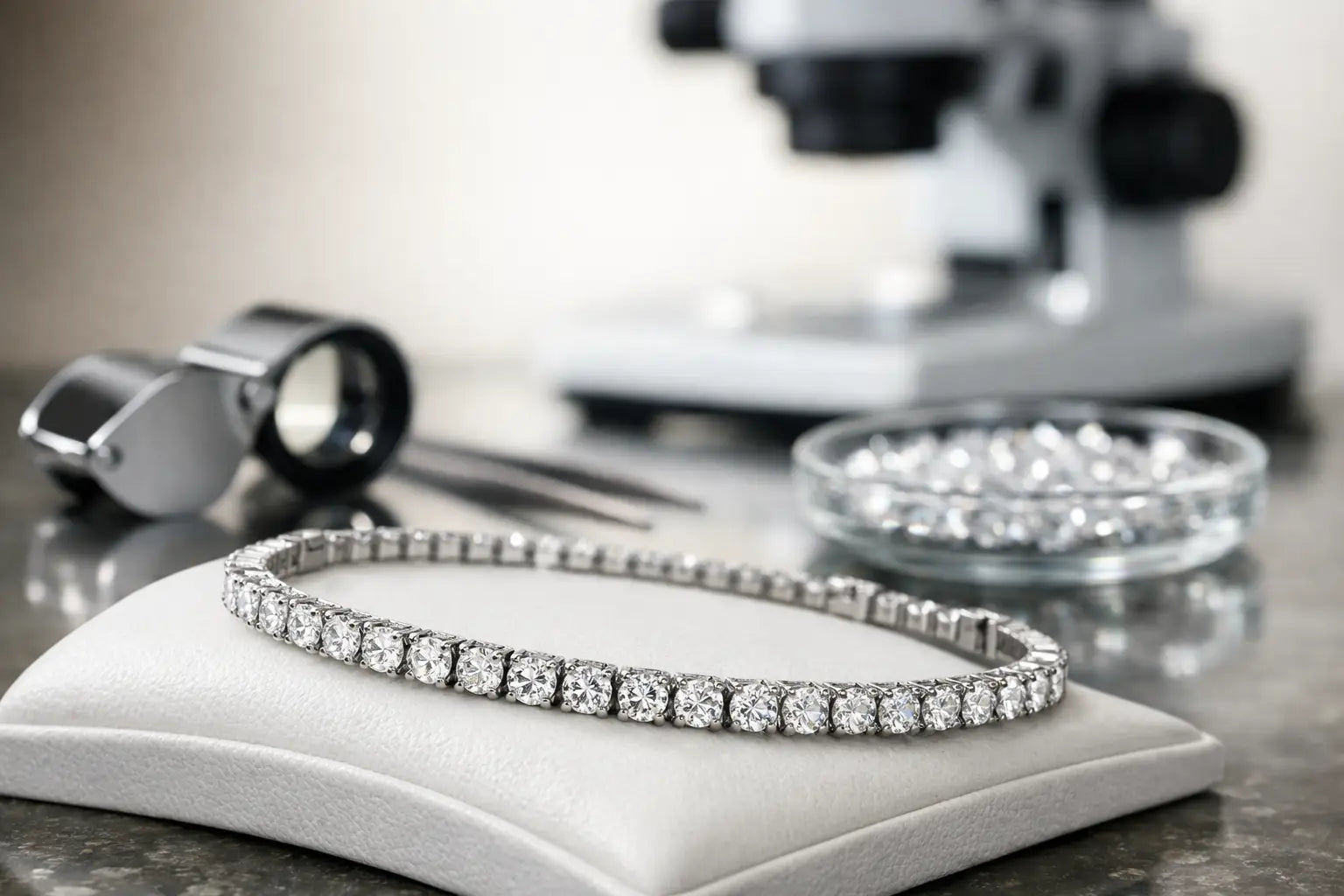
When you browse lab diamonds for sale, the first step is verifying that the stone actually matches its description. A Synthetic diamond is chemically identical to a mined one, but without a proper certificate, you are essentially buying on blind trust. Your certificate is your protection. It ensures that the stone's quality has been verified by an unbiased third party.
To better understand this concept, watch this helpful video:
Understanding Certification Standards
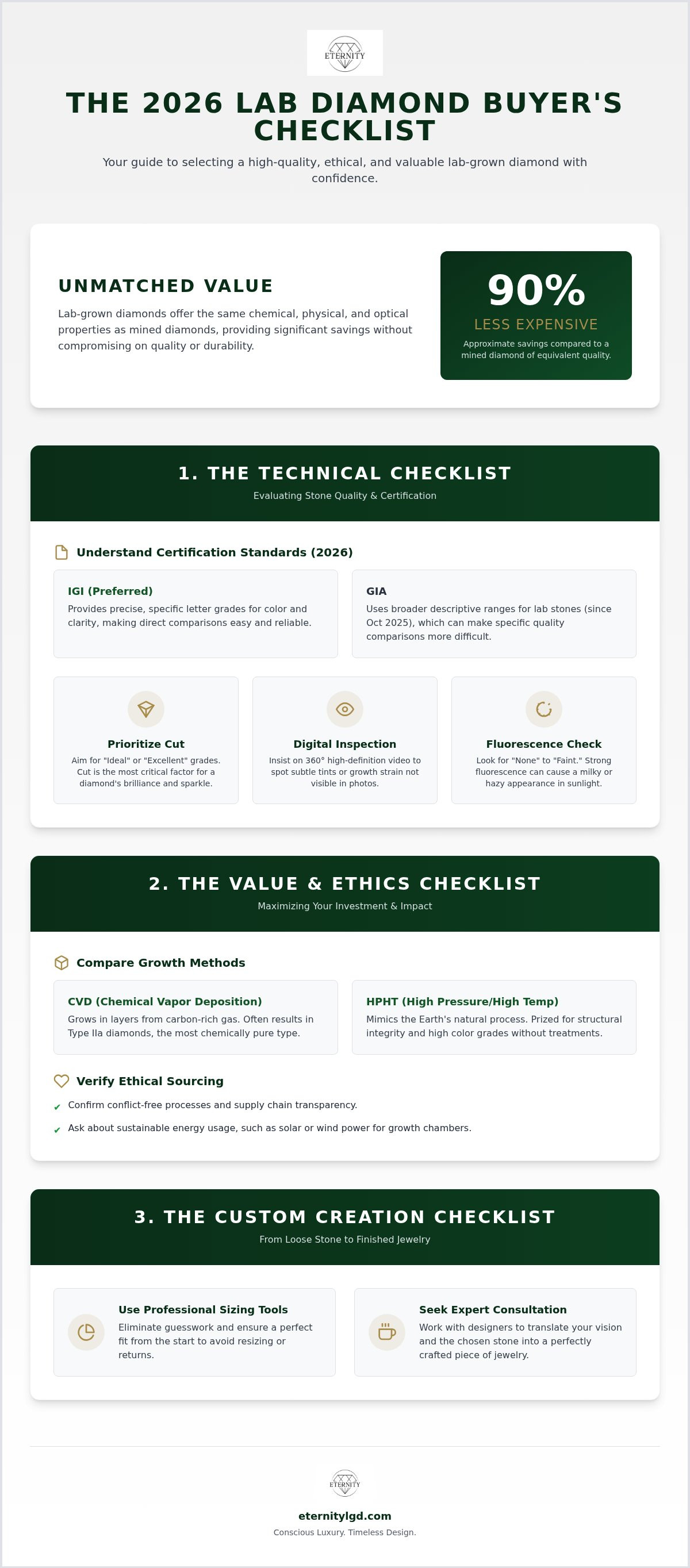
In 2026, the choice between grading labs is more than just a name. While GIA is a historic leader, their October 2025 decision to use broader descriptive ranges for lab stones has made specific comparisons difficult. Many buyers now find the International Gemological Institute (IGI) to be the more practical choice. IGI continues to provide precise letter grades for color and clarity, allowing you to know exactly how one diamond stacks up against another.
The "Fifth C": Certification Transparency
Transparency is about knowing the diamond's history. Your certificate must explicitly state the growth method, whether it's Chemical Vapor Deposition (CVD) or High Pressure High Temperature (HPHT). Check the "Comments" section for any mention of post-growth treatments. While these treatments are common, knowing they exist helps you understand the stone's true value and ensures you aren't overpaying for a diamond that required extra processing to look its best.
Beyond the paperwork, keep these physical attributes in mind:
- Prioritize Cut: This remains the most critical factor for brilliance. An "Ideal" or "Excellent" cut ensures the diamond captures and reflects light perfectly.
- Digital Inspection: Never buy a stone based on a static photo. Insist on 360-degree high-definition videos to spot growth strain or subtle tints that a lab report might miss.
- Fluorescence Check: Most lab stones show "None" to "Faint" fluorescence. This is ideal, as it prevents the diamond from looking milky or hazy in direct sunlight.
The Value and Ethics Checklist: Maximizing Your Investment
Choosing from the many lab diamonds for sale in 2026 is about more than just a certificate. It's about aligning your purchase with your personal values and financial goals. While natural diamonds are significantly more expensive, lab-grown stones offer roughly 90% savings for identical physical properties. This price gap has stabilized recently, meaning you can invest in a larger, higher-quality stone without the volatility seen in previous years.
Comparing HPHT and CVD Methods
Chemical Vapor Deposition (CVD) is often the choice for those seeking Type IIa purity, which is the most chemically pure type of diamond. It grows layer by layer in a vacuum chamber using a carbon-rich gas. High Pressure High Temperature (HPHT), on the other hand, mimics the Earth's natural crushing heat and pressure. HPHT stones are prized for their structural integrity and often achieve high color grades without the need for post-growth treatments.
The True Cost of Luxury
When you choose lab grown diamond engagement rings, your budget stretches much further. Instead of settling for a smaller natural stone, you can often secure a 2-carat or 3-carat lab diamond for the same price as a tiny mined equivalent. Unlike moissanite or other stimulants, these are real diamonds with a 10 on the Mohs scale. This ensures they won't scratch or cloud over decades of wear, making them a durable choice for everyday jewelry.
An ethical sourcing audit is your final step. Confirm that the retailer uses conflict-free processes and is transparent about where their stones are grown. In 2026, many leading labs have transitioned to solar or wind power to fuel their growth chambers. This level of transparency allows you to be an active participant in a more conscious luxury market. If you're ready to see how these values translate into a finished piece, you might want to browse our latest custom jewelry designs for inspiration.
The Custom Creation Checklist: From Loose Stone to Finished Jewelry
Finding the perfect stone is a major milestone. However, the search for lab diamonds for sale often leaves buyers wondering how to turn that loose gem into a wearable masterpiece. A custom design process ensures your jewelry reflects your style while maintaining the highest technical standards of craftsmanship. It transforms a simple purchase into a personalized experience that results in a truly unique piece.
The Made-to-Order Journey
Your journey begins with a professional diamond consultation. This step acts as a risk-reduction measure where you can discuss stone selection and mounting options with an expert advisor. Once your vision is clear, you'll review CAD drawings or 3D renderings. These digital models allow you to refine every detail of the design before any metal is cast or stones are set.
Precision is vital, especially for pieces you intend to wear daily. We recommend using a professional ring or bracelet sizing tool before you finalize your order. This simple step eliminates return anxiety and ensures a perfect fit from the moment your package arrives. It's a small detail that makes a significant difference in your overall satisfaction.
Whether you are designing your own diamond bracelet or a custom fashion ring, understanding the manufacturing timeline is essential. Most made-to-order pieces require specific lead times for hand-setting and rigorous quality checks. This methodical approach guarantees that your ethical, high-precision jewelry meets the standards of modern luxury.
Final Delivery and Assurance
The process concludes with secure shipping protocols and a final appraisal to verify your investment. Even after you've found the best lab diamonds for sale, the way they are set determines their lasting beauty and durability. You can also download a PDF catalog to browse matching sets or find inspiration for future additions to your collection.
By following this structured checklist, you move beyond a transactional purchase. You become an active participant in a creative journey that results in a certified, ethical, and beautifully finished piece of jewelry. This collaborative process ensures that the final product is a perfect marriage of scientific innovation and emotional significance.
Securing Your Ethical Masterpiece
Finding the right stone is a journey of both logic and emotion. By following this 2026 checklist, you've gained the tools to evaluate certification precision and maximize your investment through sustainable growth methods. You now understand that the best stones are those that offer a transparent history and a clear path toward custom craftsmanship.
We invite you to take the next step in your creative process. Our team bridges the gap between scientific innovation and artisanal beauty, offering expert diamond consultations to ensure your selection is perfect. With 100% ethical and sustainable sourcing and a meticulous made-to-order approach, we help you create jewelry that reflects your unique story without compromising on quality or conscience.
Your search for a brilliant, responsibly grown diamond ends here. Browse our IGI and GIA certified loose lab diamonds for sale to discover a stone that meets our rigorous standards. We look forward to helping you design a piece that you'll cherish for a lifetime.
Frequently Asked Questions
Are lab-grown diamonds for sale real diamonds?
Yes, lab-grown diamonds are authentic diamonds. They are physically, chemically, and optically identical to stones that are mined from the earth. Because they consist entirely of carbon and share the same crystal structure, they possess the same brilliance and fire as any natural diamond. They even rank as a 10 on the Mohs scale of hardness, ensuring they are just as durable for daily wear.
Which is better: IGI or GIA certification for lab diamonds?
In 2026, IGI is often the more practical choice for buyers. Following GIA's decision in October 2025 to use broader descriptive ranges for color and clarity, it's become much harder to compare stones using their reports. IGI continues to provide the specific letter grades that allow you to see exactly how one stone compares to another. This level of detail helps you ensure you are paying a fair price for the diamond's actual quality.
Do lab-grown diamonds lose their sparkle or turn yellow over time?
No, these diamonds don't lose their sparkle or change color. Since they share the same physical properties as mined diamonds, they are incredibly stable and resistant to environmental factors. A lab diamond won't cloud, scratch, or fade over time. It will maintain its original clarity and brilliance for decades, making it a reliable choice for engagement rings and other heirloom jewelry.
How much can I save by choosing a lab diamond over a mined one in 2026?
You'll find that lab diamonds for sale offer incredible value, typically costing about 90% less than mined diamonds with identical specifications. As of August 2026, while a high-quality 1-carat natural diamond might cost between $4,500 and $6,500, an equivalent lab-grown stone usually ranges from $446 to $678. These savings allow you to prioritize a higher carat weight or a more intricate custom setting within your existing budget.
Disclaimer
The information provided in this article is for educational and informational purposes only and should not be considered professional financial, legal, investment, or gemological advice. While Eternity strives to ensure all information is accurate and up to date, diamond grading standards, market prices, industry practices, and product availability may change over time.
All opinions expressed are based on current industry knowledge and are intended to help consumers make informed decisions. Product specifications, pricing, promotions, and services may vary and are subject to change without notice.
Lab-grown diamonds sold by Eternity are independently graded by recognized laboratories such as IGI or GIA where applicable. We encourage customers to consult with our jewelry specialists for recommendations tailored to their individual needs before making a purchase.
© Eternity Inc. All rights reserved. This content may not be reproduced without written permission.