Article: 2026 East West Settings for Modern Engagement Rings
2026 East West Settings for Modern Engagement Rings
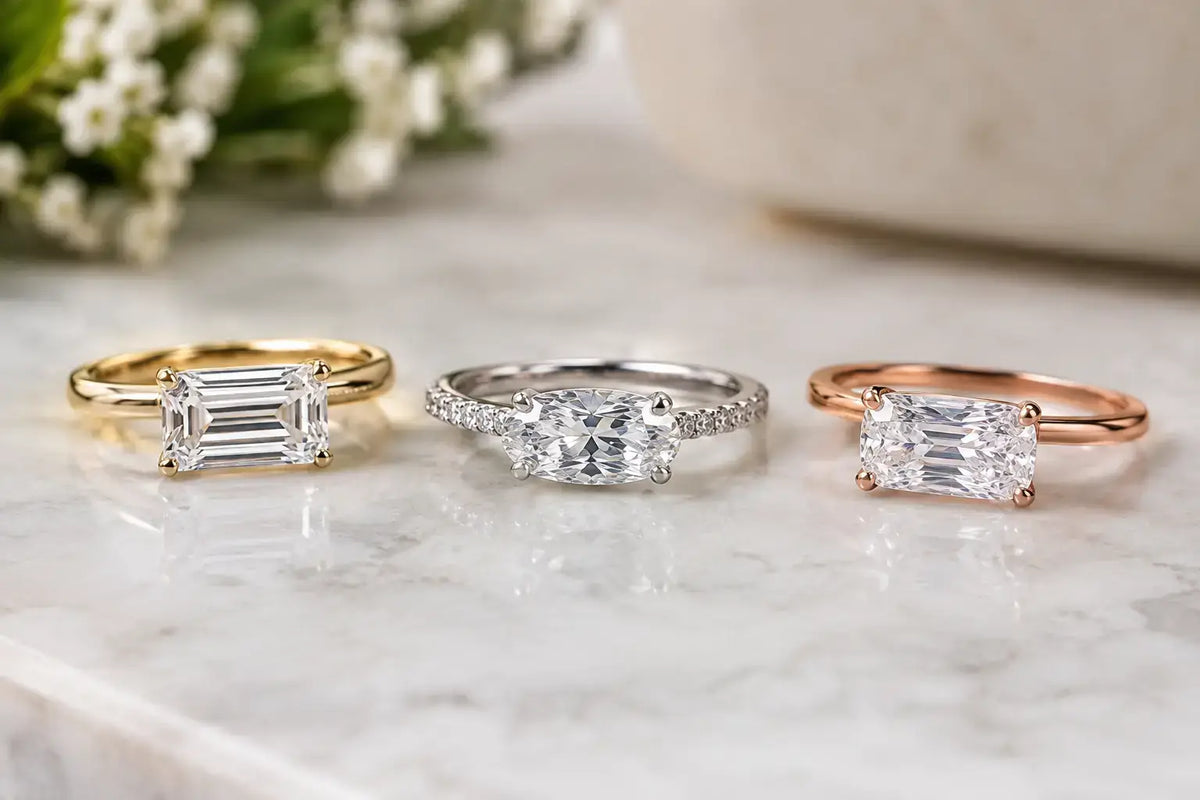
An engagement ring can feel completely different with one design decision: turn an elongated diamond sideways. 2026 east west settings are gaining attention for exactly that reason. By placing the stone horizontally across the finger rather than vertically, this look feels architectural, personal, and quietly unexpected while still allowing the diamond to remain the focus.
For couples who want a ring with modern character but lasting appeal, an east west orientation offers a compelling middle ground. It is expressive without relying on an oversized halo, unusual without being difficult to wear, and especially striking when paired with a lab-grown diamond chosen for exceptional cut and proportion.
Why 2026 East West Settings Feel So Current
East west is not a new setting style, but it is having a fresh moment. Many buyers are moving beyond the idea that an engagement ring must follow one traditional silhouette. They still want fine materials, beautiful craftsmanship, and a design that photographs well, but they also want jewelry that reflects their own style.
A horizontal stone creates that distinction immediately. An oval, emerald cut, radiant cut, marquise, or pear shape can look more graphic when turned east west. The ring often appears wider across the finger, which gives it visual presence without necessarily increasing carat weight or adding extra diamonds.
The appeal also fits the wider 2026 preference for intentional design. Instead of choosing every trend at once, many shoppers are selecting a meaningful center stone and letting a considered orientation make the statement. The result can feel modern now and still look refined decades from now.
There is a practical advantage, too. Elongated stones set north to south can extend noticeably toward the knuckle. An east west placement keeps the length traveling across the finger, which some wearers find more comfortable for everyday use. Comfort depends on the stone depth, setting height, and ring size, but the orientation can be a smart starting point for an active lifestyle.
The Best Diamond Shapes for an East West Ring
Not every diamond shape delivers the same effect when set horizontally. The right choice depends on whether you prefer soft romance, crisp geometry, or a bolder fashion-forward look.
Oval and marquise diamonds
Oval diamonds are among the most versatile choices for an east west ring. Their smooth curves make the orientation feel organic, and their faceting produces lively sparkle. A well-proportioned oval can look elegant in a solitaire, substantial with tapered side stones, or contemporary in a low-profile bezel.
A marquise diamond is more dramatic. Its pointed ends create a distinctive eye-shaped silhouette across the hand, especially in a horizontal bezel or a setting with protective V-prongs. Because the points are more exposed than a rounded diamond edge, secure craftsmanship matters. A marquise is ideal for someone who wants an unmistakably individual ring rather than a conventional oval alternative.
Emerald and radiant cuts
Emerald cuts make east west settings feel especially polished. Their step facets emphasize clean lines rather than a glittering, crushed-ice appearance, so clarity and proportion are worth prioritizing. A horizontal emerald cut can have the understated confidence of a signet ring while retaining the brilliance of a diamond engagement ring.
Radiant cuts offer a brighter, more energetic interpretation. Their faceting brings plenty of sparkle, while their rectangular outline remains modern and tailored. If you love the clean shape of an emerald cut but prefer more fire and scintillation, an east west radiant may be the better fit.
Pear-shaped diamonds
A pear-shaped diamond set east west adds asymmetry to an already distinctive shape. The point can face either direction, so it gives you a small but meaningful design choice. Some prefer the point facing outward toward the hand for a flowing profile; others prefer it facing inward for a softer look. Neither is universally correct. Try the orientation on your own hand before making it final.
Setting Style Changes the Entire Look
The east west position is only one part of the design. Prongs, bezel edges, side stones, and metal color each influence whether the finished ring reads as minimal, vintage-inspired, bold, or delicate.
A classic prong-set solitaire keeps attention on the diamond and lets maximum light enter the stone. Four prongs can look clean and open, while six prongs may provide additional visual security depending on the diamond shape. For marquise and pear diamonds, the pointed tip should receive thoughtful protection.
A bezel setting wraps a slim metal border around all or part of the diamond. It is an excellent option for people who prefer a sleek, low-maintenance profile or work with their hands often. A full bezel feels substantial and contemporary, while a partial bezel reveals more of the diamond outline. The trade-off is aesthetic: some buyers love the framed look, while others prefer the airy appearance of prongs.
Three-stone east west rings offer another way to personalize the design. Small round, trillion, baguette, or tapered side stones can add width and visual balance. This can be particularly beautiful with an emerald or radiant center diamond, but proportion is essential. Side stones should support the center rather than crowd it.
How to Choose Proportion, Carat Weight, and Metal
With an east west ring, measurements often matter as much as carat weight. Two diamonds with the same carat weight can have very different face-up dimensions, especially among fancy shapes. Reviewing millimeter measurements helps you understand how far the stone will span across the finger.
A wider center stone is not always better. On smaller ring sizes, a very broad diamond can reach close to both sides of the finger and feel visually heavy. On larger ring sizes, a wider outline may create a balanced, intentional presence. This is where a custom consultation can be especially valuable: the goal is to match the diamond's length-to-width ratio with the wearer's hand, style, and comfort preferences.
Metal color changes the mood. Yellow gold creates a warm contrast around a bright white diamond and works beautifully with organic shapes such as ovals and pears. White gold gives an icy, streamlined finish that suits modern solitaires and geometric cuts. Rose gold adds softness, though its warm tone can make the design feel more romantic than minimal.
Band width deserves equal attention. A slim band can make the center diamond appear more prominent, while a slightly wider band can ground a substantial horizontal stone. If you plan to wear a wedding band beside the ring, consider the setting profile early. A low east west center may sit flush with some bands but leave a gap with others, depending on the basket and gallery design.
Lab-Grown Diamonds Make Design Flexibility Easier
An east west ring is often chosen because it feels personal, and lab-grown diamonds give many buyers more room to follow that instinct. Since lab-grown diamonds have the same physical, chemical, and optical properties as mined diamonds, they offer the same brilliance and durability while often allowing more of the budget to go toward size, cut quality, or a custom setting.
That does not mean selecting the largest stone is always the right move. Cut quality remains central to beauty, particularly for shapes that reveal their interior pattern clearly. With emerald cuts, look for appealing step-facet patterning and transparent appearance. With ovals, marquises, and pears, review the stone for a bow-tie shadow and decide how much contrast you find acceptable. A subtle bow tie can be part of the character of these shapes; a prominent dark area may distract from the sparkle you expect.
Requesting diamond certification and examining detailed specifications helps you compare choices confidently. A thoughtful design process should make room for both the numbers and your response to the diamond when you see it.
Is an East West Setting Right for You?
Choose an east west ring if you are drawn to elongated diamonds but want a less expected presentation. It is a strong fit for someone who likes clean design, appreciates comfort, and wants a ring that feels distinctive without becoming overly ornate.
It may not be the best choice if your dream ring is built around the traditional vertical oval or pear silhouette. Orientation changes the visual language of the diamond, so it should feel exciting rather than like a compromise. Try comparing both directions side by side, ideally at a similar carat weight and setting height.
The most memorable ring is not defined by what is trending in 2026. It is the one whose proportions, craftsmanship, and diamond choice make you want to look down at your hand for years to come.