Article: Best Diamond Earrings for Style and Value
Best Diamond Earrings for Style and Value
A great pair of diamond earrings earns its place quickly. It catches the light during a video call, finishes an evening look without asking for attention, and becomes the piece you reach for when a gift deserves to feel personal. The best diamond earrings are not simply the largest pair within a budget. They balance diamond quality, secure construction, proportion, and the way you actually plan to wear them.
For many modern buyers, lab-grown diamonds make that balance easier to achieve. They have the same crystal structure, hardness, and visual brilliance as mined diamonds, while often allowing room in the budget for more carat weight, a refined setting, or a custom detail. The right choice begins with a clear picture of your style and your daily routine.
Start With the Earring Style You Will Wear Most
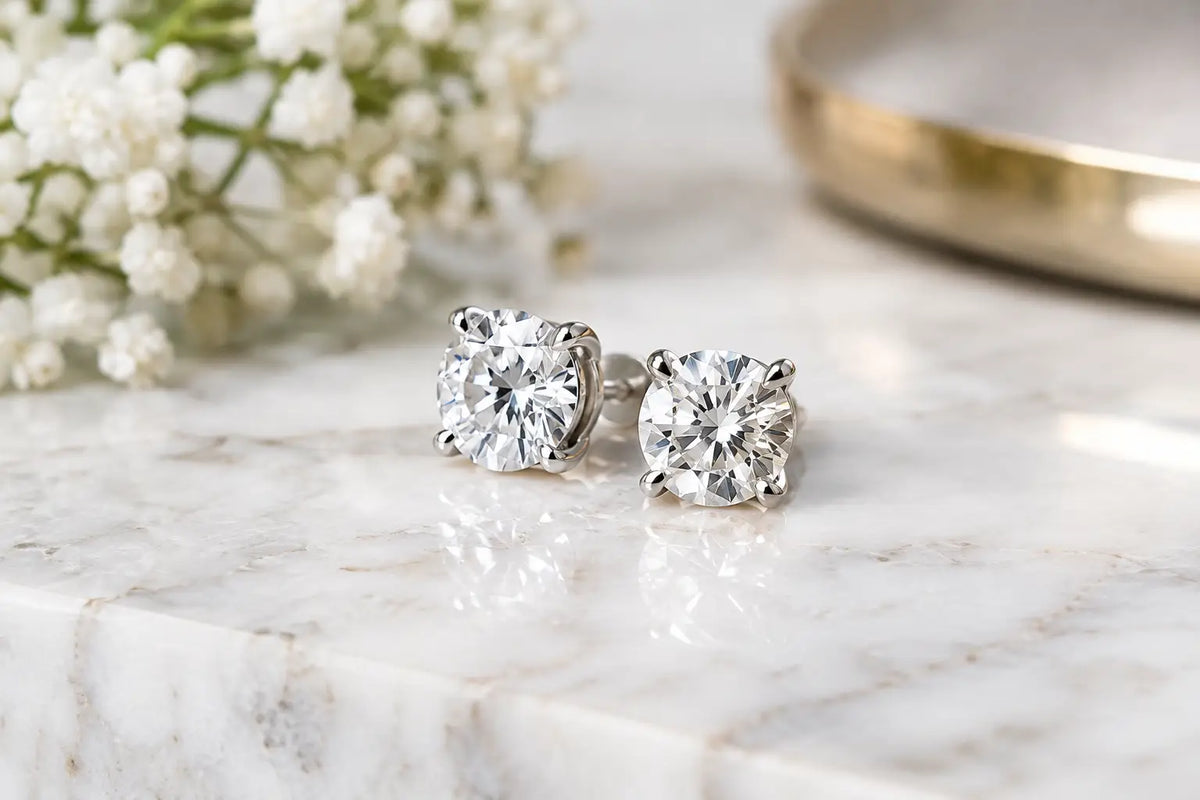
Diamond studs are the natural first choice for a reason. They are polished enough for a wedding, understated enough for work, and easy to pair with other jewelry. A classic round stud offers bright, even sparkle, while oval, cushion, emerald, and pear shapes create a more distinctive silhouette. If this is your first fine diamond earring purchase, studs offer the most versatility per wear.
Hoops bring movement and a stronger fashion presence. Small diamond huggies sit close to the ear and work beautifully in a curated ear stack. Larger inside-out hoops show diamonds from the front and inner curve, creating brilliance from more angles. They make sense for someone who already owns everyday studs or prefers jewelry that reads as a focal point.
Drop earrings and tennis-style designs feel more occasion-driven, though the right scale can still be wearable. A delicate diamond drop can lengthen the neckline for a dinner, celebration, or bridal look. These designs deserve a little more thought about comfort and movement, especially if you plan to wear them for long events.
The Best Diamond Earrings Begin With Proportion
Carat weight is one of the first details shoppers see, but with earrings, it helps to think in total carat weight and face-up size. Total carat weight describes both diamonds together. For example, 1.00 total carat weight studs usually contain two diamonds of approximately 0.50 carat each.
There is no universal “right” size. Around 0.50 to 1.00 total carat weight offers a subtle, everyday look on many ears. One to two total carats creates more visible presence without necessarily feeling formal. Above that, the effect becomes bolder, particularly in round or oval shapes. Your hairstyle, earlobe size, and preference for delicate or statement jewelry all affect what will look balanced.
Diamond shape changes perceived size, too. Oval, pear, and marquise diamonds often look larger than round diamonds of similar carat weight because of their elongated surface area. Emerald cuts can appear elegantly expansive, but their step facets emphasize clarity more than fiery sparkle. Round brilliants remain the most efficient choice when maximum sparkle is the goal.
A useful rule is to choose the visual impact first, then compare diamond specifications within that range. Buying solely by carat can lead to studs that feel too large for daily comfort or too small to deliver the presence you imagined.
Choose Diamond Quality for Real-Life Viewing
Earrings are viewed from farther away than an engagement ring. That changes how much emphasis you need to place on certain diamond grades. A diamond does not need to be flawless to look beautiful on the ear. In many cases, eye-clean clarity is the practical sweet spot, meaning inclusions are not noticeable without magnification.
Cut quality deserves particular attention for round diamonds because it has a direct effect on brightness and scintillation. For fancy shapes, look beyond a single grade and consider the diamond’s overall outline, symmetry, and light return. An oval or pear with a prominent dark bow-tie effect may appear less lively, even when its color and clarity grades look impressive on paper.
Color is personal and setting-dependent. Near-colorless diamonds often look crisp in white gold or platinum. A slightly warmer diamond can look intentional and beautiful in yellow or rose gold, particularly when the setting complements its tone. With matched stud pairs, consistency matters: the diamonds should look alike in size, shape, color, and brilliance when worn.
Certification adds confidence to a meaningful purchase. A grading report documents key characteristics such as carat weight, color, clarity, and proportions. For lab-grown diamonds, the report should clearly identify the diamond as laboratory grown. Transparent specifications let you compare options on more than a flattering product photo.
Match the Pair, Not Just the Grades
Two diamonds can share the same listed grades and still look different. One may have a slightly wider spread, a cooler tone, or stronger sparkle. Earrings should be carefully matched as a pair, especially at larger carat weights or in shapes with noticeable outlines. This is where a knowledgeable consultation can be valuable: you are evaluating the visual relationship between two stones, not merely selecting two separate diamonds.
Setting and Metal Affect Comfort, Sparkle, and Security
The setting frames the diamond and determines how it holds up to everyday wear. Four-prong stud settings are timeless and allow plenty of light around the stone. Three-prong martini settings create a clean, tapered profile, but can sit close to the ear in a way some wearers find less comfortable. Bezel settings surround the diamond with a smooth rim of metal, offering a sleek contemporary look and additional edge protection.
For hoops and drops, inspect the closure as closely as the diamonds. A reliable hinged closure or secure locking mechanism matters when an earring is worn often. Fine jewelry should feel substantial enough to be dependable, without becoming heavy or pulling on the lobe.
White gold gives diamond earrings a bright, classic backdrop. Yellow gold brings warmth and a more distinct contrast, while rose gold feels soft and romantic. Platinum is naturally white and durable, making it appealing for long-term wear, though it may carry a higher price. Your existing rings, necklace, and watch can guide the choice, but mixed metals are also a deliberate, modern styling option.
Lab-Grown Diamonds Offer More Freedom Within the Budget
A lab-grown diamond is a real diamond created in a controlled environment rather than extracted from the earth. Its optical and physical properties are the same as those of a mined diamond. For buyers who value ethical considerations and want more visible diamond presence for their investment, that distinction can be meaningful.
The financial advantage is not an instruction to buy the biggest stones available. It is an opportunity to decide where value matters most to you. One person may choose larger round studs. Another may select a higher color range, a platinum setting, or custom-designed drops that mark an anniversary. The best purchase is the one that reflects your priorities, not a generic hierarchy of grades.
When comparing prices, make sure you are comparing like with like. Total carat weight, individual diamond measurements, certification, setting metal, closure type, and whether the diamonds are matched all influence value. Clear specifications protect you from assuming that two pairs with similar photos are equivalent.
Make Everyday Care Part of the Decision
Even the most durable diamond earrings benefit from simple habits. Put them on after perfume, hairspray, and skincare products. Store them separately from other jewelry to reduce scratching, and clean them periodically with gentle jewelry-safe care. A soft brush can help lift residue from behind studs and around prongs, where product buildup can dull the sparkle.
Check prongs, backs, and closures occasionally, particularly on earrings worn every day. Screw backs can provide extra security for valuable studs, while push backs are quick and convenient. Neither is automatically better. The better choice depends on whether you prioritize speed, security, or a specific earring design.
For a gift, consider the recipient’s lifestyle before selecting a dramatic style. Someone who wears minimal jewelry may treasure classic studs more than a large hoop, while a fashion-forward partner may appreciate an unexpected shape or a custom design. A thoughtful pair feels luxurious because it feels known.
The right diamond earrings should make getting dressed easier, not make you worry about whether they are “special enough” to wear. Choose a pair that fits your life now, and it can become part of the moments you will want to remember later.