Article: Lab Diamond Origin Guide: How Diamonds Are Made
Lab Diamond Origin Guide: How Diamonds Are Made
A diamond’s origin can shape how you feel about the ring you propose with, the necklace you wear every day, or the anniversary gift you give. This lab diamond origin guide explains what “lab-grown” actually means, where these diamonds begin, and what details matter when choosing one for meaningful fine jewelry.
A lab-grown diamond is not an imitation, a crystal substitute, or a shortcut to the look of a diamond. It is a real diamond grown under controlled conditions rather than formed underground over geological time. It has the same carbon structure, hardness, brilliance, and fire as a mined diamond. The difference is its growth environment and supply chain - not whether it is a diamond.
Lab Diamond Origin Guide: From Carbon to Crystal
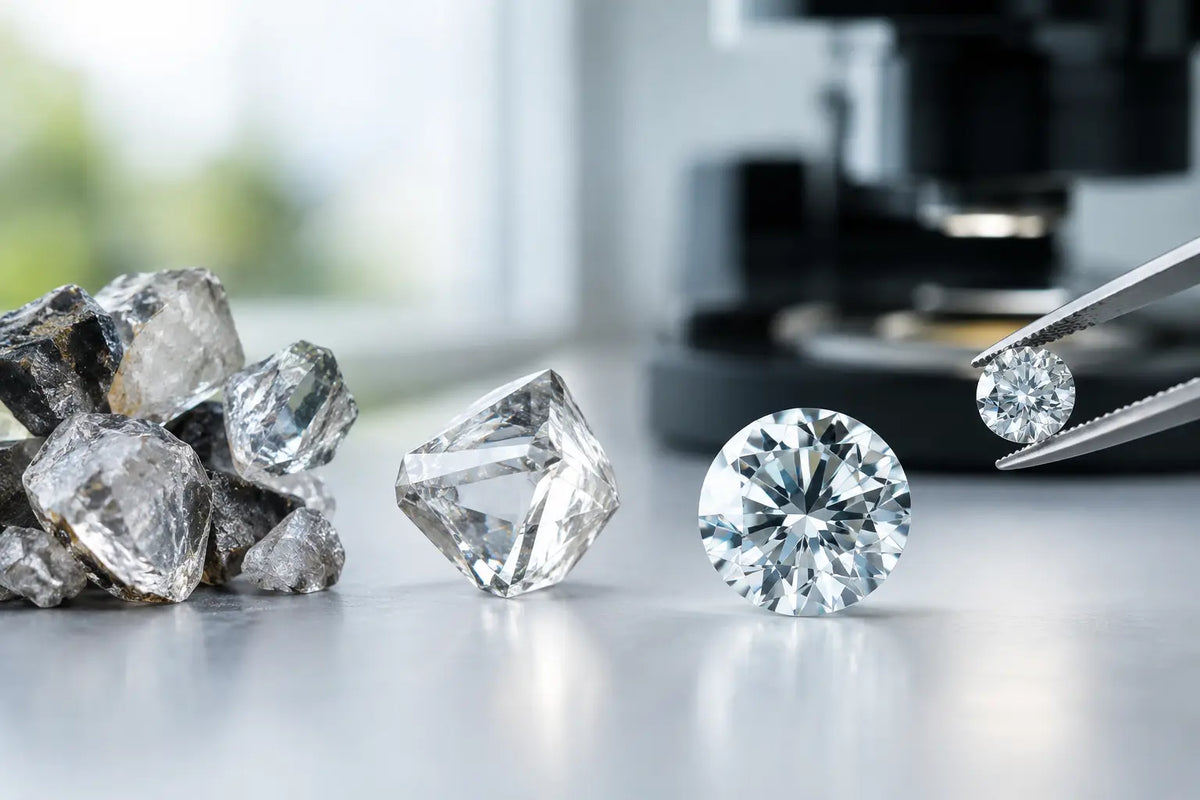
Every lab-grown diamond starts with a tiny piece of diamond called a seed. That seed provides the structure on which new carbon atoms can arrange themselves into a diamond crystal. From there, manufacturers use one of two primary growth methods: High Pressure High Temperature, known as HPHT, or Chemical Vapor Deposition, known as CVD.
HPHT growth recreates the extreme pressure and heat found deep within the Earth. A diamond seed is placed in a press alongside a carbon source, then exposed to intense heat and pressure. Over time, carbon crystallizes around the seed and forms a rough diamond.
CVD takes a different route. The diamond seed is placed inside a sealed chamber filled with carbon-rich gases. Those gases are activated so carbon separates and deposits layer by layer onto the seed. Think of it as carefully building a diamond crystal one atomic layer at a time. CVD is widely used for high-quality diamonds, particularly in the colorless and near-colorless ranges buyers often consider for engagement rings.
Neither method automatically makes one diamond better than the other. The finished stone should be judged on its individual qualities: cut, color, clarity, carat weight, certification, and overall visual performance. A well-cut diamond grown by either process can look exceptional in a solitaire, an eternity band, or a custom pendant.
Once the rough crystal has grown, it follows a path familiar to any fine diamond. It is studied, planned, cut, polished, and inspected. Skilled cutting is especially important because it determines how effectively the diamond returns light to the eye. Two diamonds with similar grades can look noticeably different if one has stronger proportions and light performance.
What Origin Does - and Does Not - Tell You
For a mined diamond, “origin” may refer to the country or region where it was extracted. For a lab-grown diamond, origin is more accurately about its method of creation and the chain of steps from growth to finished jewelry. A lab diamond may be grown in one facility, cut and polished in another country, graded by an independent laboratory elsewhere, and finally set into jewelry in the United States.
That does not make the origin unclear. It means buyers should ask more useful questions. Is the diamond clearly disclosed as laboratory-grown? Does it have a respected grading report? Are its cut, color, clarity, measurements, and carat weight available to review? Is the retailer transparent about the diamond you will receive?
A grading report is one of the clearest tools for verifying a lab-grown diamond’s identity and characteristics. Independent laboratories evaluate the finished stone and document details such as its shape, measurements, carat weight, color grade, clarity grade, cut grade when applicable, polish, symmetry, fluorescence, and growth method or treatment disclosures. Many certified diamonds also carry a microscopic report number inscription on the girdle.
Certification is not simply paperwork. It gives you a consistent reference point when comparing diamonds and helps make a significant purchase feel more straightforward. For an engagement ring or custom piece, keep a copy of the report with your jewelry records and match the report number to the diamond when possible.
Natural Diamond, Lab Diamond, and Diamond Simulant
These terms are often grouped together, but they do not mean the same thing. A natural diamond formed in the Earth. A lab-grown diamond was grown in a laboratory, but has the same essential chemical and physical makeup as a natural diamond. A simulant is a different material designed to resemble a diamond, such as cubic zirconia or moissanite.
This distinction matters because a lab-grown diamond has diamond-level hardness and optical properties, while simulants have their own characteristics, durability profiles, and value considerations. If you want a true diamond with a modern origin, a certified lab-grown diamond is the category to explore.
Ethical Brilliance Requires Clear Expectations
Many buyers choose lab-grown diamonds because they want an alternative to traditional mining and a more direct, traceable purchase path. That is a meaningful reason to choose lab-grown, especially for couples who want their ring to reflect both personal style and modern values.
Still, ethical sourcing is not a single claim that applies identically to every diamond or every facility. Diamond-growing equipment requires energy, manufacturing practices vary, and international supply chains remain complex. A thoughtful approach is to choose a seller that clearly identifies diamonds as lab-grown, provides certifications and product specifications, and can answer practical questions before you buy.
Lab-grown diamonds also make larger sizes and higher color or clarity grades more accessible within a set budget. This can create room for the details you care about most: a more substantial center stone, a precise elongated oval, a radiant-cut halo, or a custom setting with hidden diamonds beneath the center stone. The value advantage is real, but it is best viewed as buying power for the jewelry you want rather than a promise of future resale performance.
Like most retail jewelry, lab-grown diamonds can have resale values that differ from their original purchase price. If long-term resale is a top concern, discuss available upgrade, buyback, or service options before purchasing. If your priority is a beautiful, certified diamond with strong visual impact for your budget, lab-grown can be a particularly compelling choice.
How to Choose a Lab Diamond With Confidence
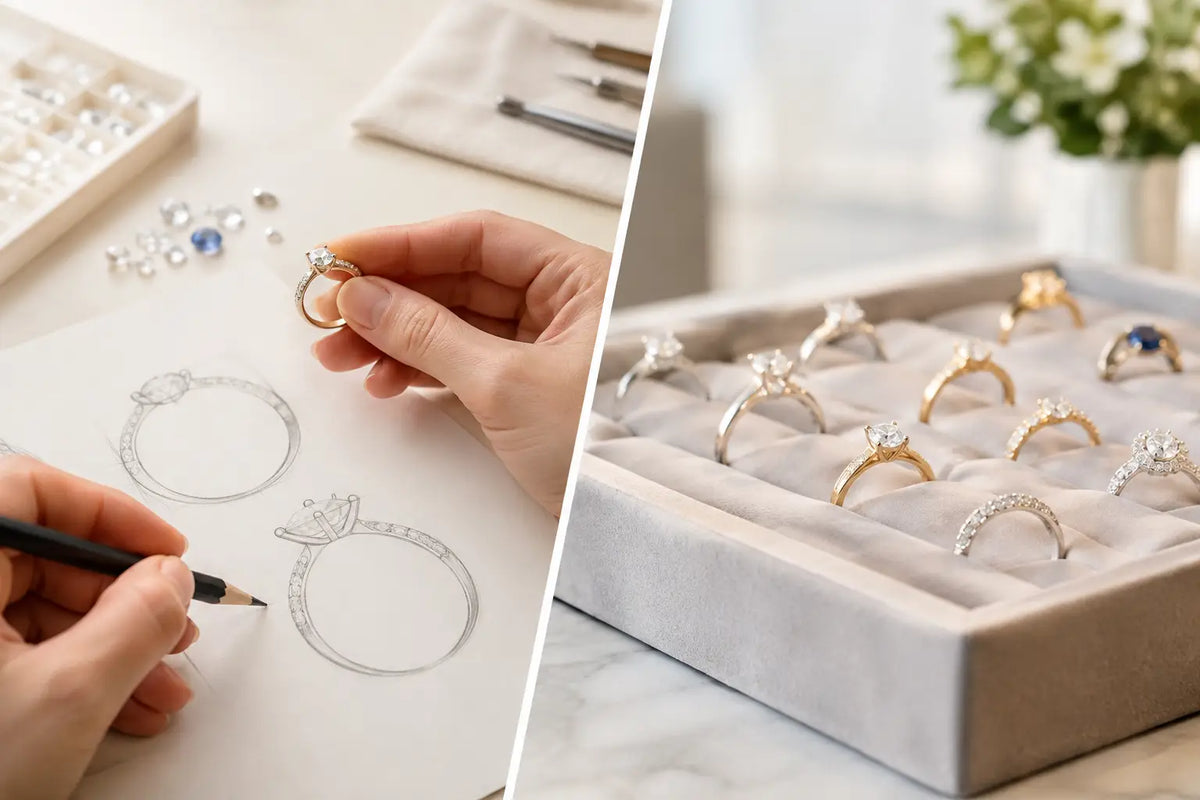
Start with shape and setting, because they influence the character of the finished piece. Round diamonds offer classic brilliance, while oval, pear, emerald, radiant, cushion, and marquise cuts each create a distinct look on the hand. A setting can make a diamond appear larger, introduce contrast through yellow or rose gold, or emphasize clean modern lines in platinum or white gold.
Then consider the quality balance. Cut should be a priority for maximum sparkle, particularly in round brilliant diamonds. For fancy shapes, look beyond the report grades and review videos or images when available. Watch for visible dark areas, uneven bow-tie effects in elongated shapes, or proportions that make a diamond appear smaller than its carat weight suggests.
Color and clarity are personal decisions, not a contest for the highest grade. A colorless diamond can look crisp and icy in white metal, while a near-colorless grade may offer excellent value, especially when set in yellow or rose gold. Likewise, an eye-clean diamond can be a smart choice when inclusions are not visible without magnification. The right diamond is the one that looks beautiful to you in the design you plan to wear.
Finally, verify the diamond’s documentation and ask about the finished jewelry itself. A beautiful center stone deserves a well-made setting, secure prongs, accurate sizing, and support after delivery. For custom jewelry, it is worth reviewing the design before production so the metal, proportions, and diamond placement feel intentional from every angle.
A diamond’s story begins long before it reaches a ring box, but its real meaning begins when it becomes part of yours. Choose the origin and design that feel aligned with your values, your style, and the moment you are marking.