Article: Platinum Versus Yellow Gold Rings: Which Fits?
Platinum Versus Yellow Gold Rings: Which Fits?
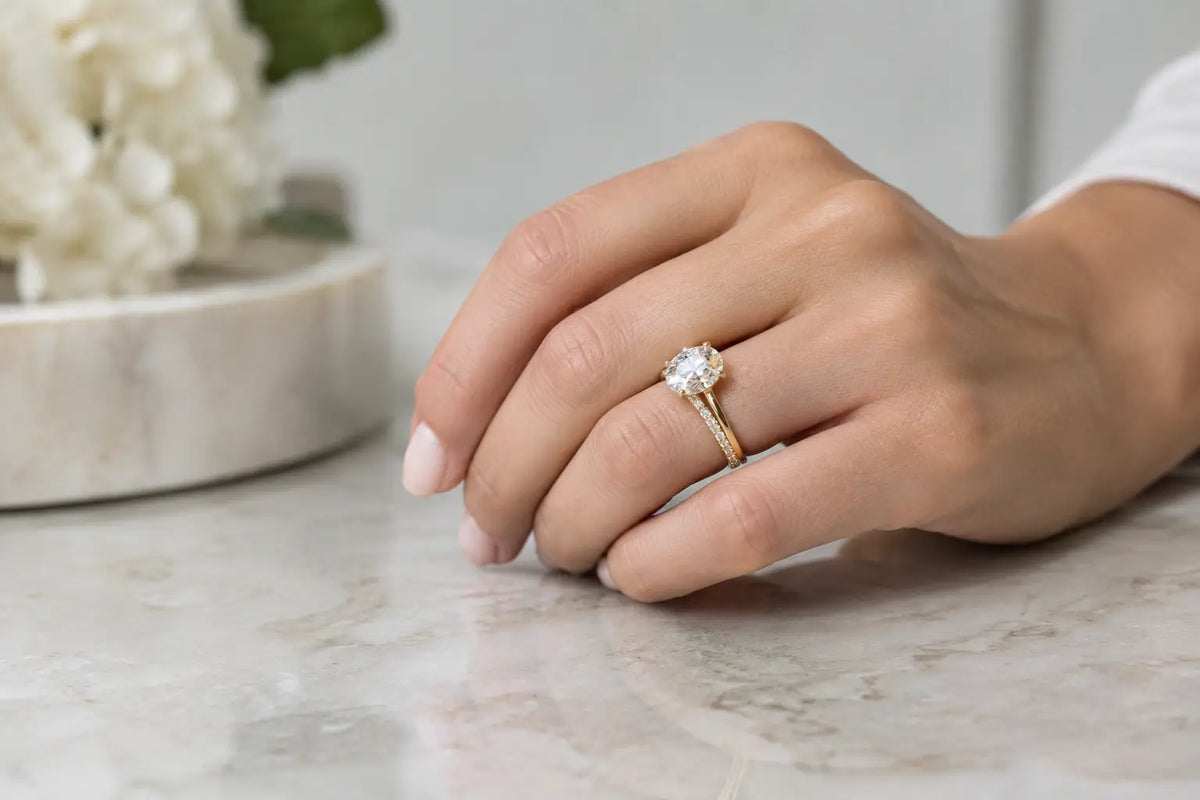
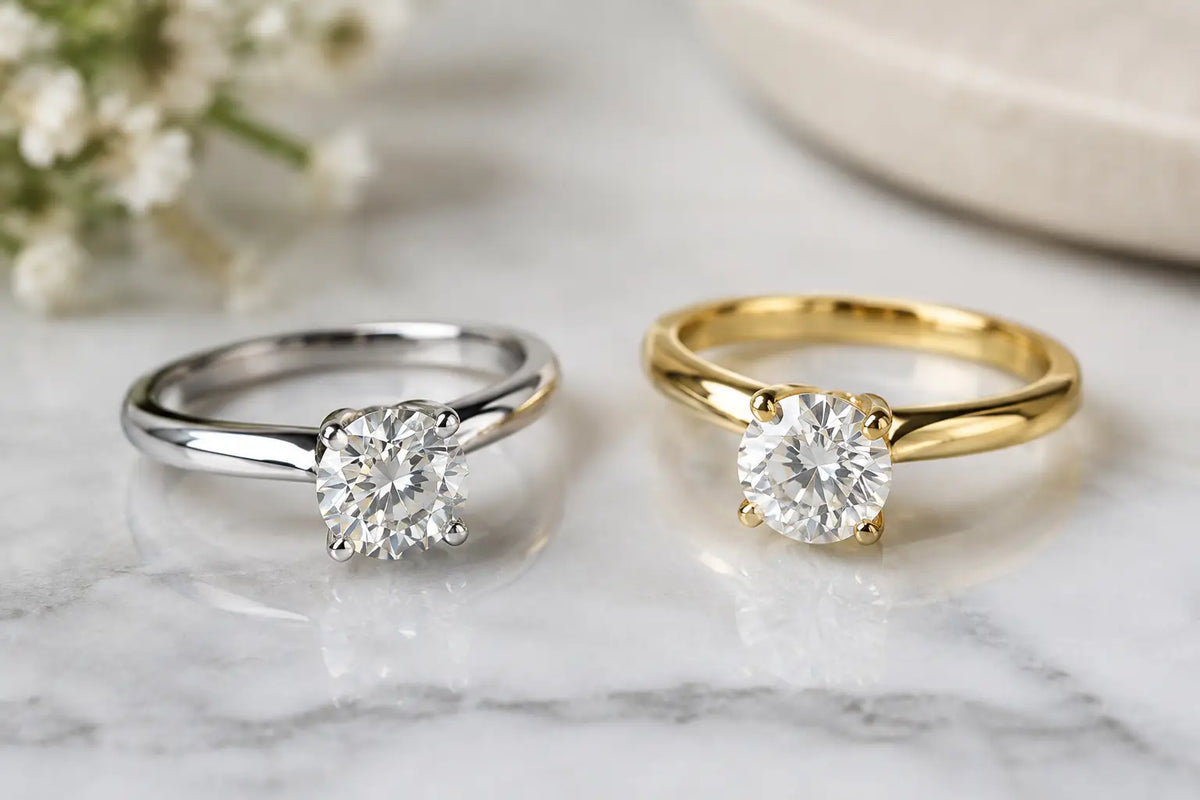
A ring can look completely different the moment its metal changes. The same oval lab-grown diamond may feel crisp and architectural in platinum, then warm, romantic, and a little more vintage-inspired in yellow gold. That is why the choice between platinum versus yellow gold rings is not simply about price or durability. It is about how you want your ring to look, wear, and tell your story over time.
For an engagement ring, wedding band, anniversary gift, or custom diamond design, both metals are beautiful long-term choices. The better option is the one that aligns with your lifestyle, skin tone preferences, diamond selection, and vision for the finished piece.
Platinum versus yellow gold rings: the visual difference
Platinum is naturally white with a cool, understated luster. It allows a white diamond to take center stage without adding warmth around the stone. This makes it a favorite for buyers drawn to clean lines, modern solitaires, pavé settings, and diamonds with a bright, icy appearance.
Yellow gold brings a richer presence. Its golden tone creates contrast against a diamond and can make even a minimalist setting feel intentional and expressive. Yellow gold is especially compelling for those who love classic jewelry, old-world details, bold signet styles, or a warm stack of rings that feels collected rather than overly matched.
Neither metal makes a lab-grown diamond more or less real, brilliant, or beautiful. Lab-grown diamonds have the same optical and physical properties as mined diamonds. The metal simply changes the frame around the diamond, much like choosing a white mat or a gold frame for a piece of art.
How metal color can influence diamond appearance
A platinum setting tends to complement colorless and near-colorless diamonds, particularly when your goal is a bright white look from every angle. For a diamond in the colorless range, platinum prongs can help maintain that uninterrupted white appearance at the edge of the stone.
Yellow gold creates a purposeful contrast with a white diamond. Many people love this look because it makes the center stone stand out. It can also be a beautiful partner for diamonds with slightly warmer color, where the golden setting makes the overall design feel cohesive rather than clinical.
If you love yellow gold but prefer platinum around the center diamond, a custom two-tone design can offer both. Yellow gold on the shank provides warmth and personality, while platinum prongs create a neutral frame around the diamond. This is a thoughtful option when every visual detail matters.
Durability is more nuanced than “stronger”
Platinum has a well-earned reputation for durability, but it wears differently from gold. It is dense, naturally white, and commonly used in highly pure alloys for fine jewelry. When platinum is scratched, the metal is typically displaced rather than worn away. Over time, it develops a soft satin finish known as a patina. Some owners love that lived-in character, while others choose occasional professional polishing to restore a brighter surface.
Yellow gold is an alloy, meaning pure gold is blended with other metals to create jewelry sturdy enough for daily wear. Its durability depends largely on karat. Fourteen-karat yellow gold contains more strengthening alloy metals and is often a practical choice for an engagement ring worn every day. Eighteen-karat yellow gold has a richer, deeper color and higher gold content, but it is somewhat softer.
A platinum ring is not scratch-proof, and a yellow gold ring is not fragile. Both can serve beautifully for decades when the setting is well made and cared for properly. The more relevant question is how you wear your jewelry. Someone who works with their hands, exercises frequently, or rarely removes their ring may appreciate platinum's density and enduring structure. Someone who wants a lighter-feeling ring or a more budget-flexible design may prefer yellow gold.
Comfort, weight, and daily wear
Platinum is noticeably heavier than yellow gold. That substantial feel can be reassuring, particularly in a solitaire or a wider wedding band. For some people, it signals luxury. For others, especially those unaccustomed to rings, it can feel more present on the hand.
Yellow gold is lighter, which may make it more comfortable for a wide band, a stackable style, or anyone who prefers a ring that feels almost weightless. Ring design affects comfort just as much as metal does. Band width, thickness, interior shaping, stone height, and the balance of the setting all deserve attention before you decide.
Skin sensitivity can also influence your choice. Platinum is generally an excellent option for those with metal sensitivities because it is commonly alloyed with metals that are gentle on skin. Yellow gold can also work well, but buyers with known allergies should ask about the specific alloy composition, particularly if they are sensitive to nickel.
Cost: look beyond the price per gram
Platinum usually costs more than yellow gold for a finished ring, even when raw metal prices shift. It is denser, so more metal is required to make the same design. Its specialized fabrication and finishing can also add to the cost.
Yellow gold often offers more flexibility when you are allocating your budget. Choosing 14K yellow gold instead of platinum may allow you to direct more toward a larger lab-grown diamond, a higher color or clarity grade, or design details such as a hidden halo or hand-engraved band.
That does not automatically make yellow gold the better value. A ring is a daily-wear object with emotional weight, and the right metal is worth choosing deliberately. If platinum is the look and feel you have pictured for years, it may be the design decision you value most. If the warmth of yellow gold is what makes the ring feel like yours, saving money by choosing platinum would not be a win.
Which styles suit each metal?
Platinum is a natural match for sleek solitaires, radiant and emerald-cut diamonds, diamond-forward eternity bands, and contemporary settings with crisp geometry. It also pairs beautifully with pear, marquise, and oval diamonds when you want the setting to visually disappear behind the stone.
Yellow gold complements round brilliant diamonds, antique-inspired cushions, bezel settings, east-west designs, and textured or sculptural bands. It is equally at home in a delicate engagement ring or a substantial men's band. Its versatility is one reason it remains a lasting favorite, even as ring trends evolve.
Do not let a style rule make the choice for you. An emerald-cut diamond can look stunning in yellow gold. A vintage-inspired ring can feel elegant in platinum. The strongest designs come from a clear point of view, not from following a formula.
Maintenance and long-term ownership
Both metals benefit from routine care. Remove your ring for heavy lifting, gardening, harsh chemicals, and activities where it could take a hard impact. Clean it gently with warm water, mild dish soap, and a soft brush, then have the prongs and setting checked periodically by a jewelry professional.
Platinum may need refinishing if you prefer a high-polish surface, while yellow gold can require polishing over the years as fine scratches accumulate. Any ring with diamonds, regardless of metal, should have its prongs inspected. The security of the setting matters more than whether the band is platinum or gold.
For a custom ring, this is also the moment to think ahead. A low-profile setting may be practical for an active routine. A straight wedding band may sit flush with one engagement ring but require a contour beside another. At Eternity LGD, thoughtful design conversations can help turn those everyday considerations into a ring that feels personal from the first fitting onward.
Let your preference lead
Choose platinum if you want a naturally white metal, satisfying weight, and a diamond-first look that develops character with wear. Choose yellow gold if you are drawn to warmth, classic contrast, a lighter feel, or the opportunity to prioritize more of your budget for the diamond or design.
Try to picture the ring not only in a jewelry box, but on your hand during an ordinary Tuesday, at dinner, in photos, and years from now beside a wedding band or new anniversary piece. The metal that still feels unmistakably like you is the one worth choosing.