Article: Ring Settings That Make Your Diamond Look Its Best
Ring Settings That Make Your Diamond Look Its Best
A diamond can be beautifully cut, well sized, and carefully chosen, yet its final look depends heavily on the ring settings around it. The setting determines how much light reaches the stone, how high it sits on the finger, how it feels during everyday wear, and whether the finished ring reads classic, modern, delicate, or bold.
For an engagement ring, anniversary gift, or custom design, the best choice is rarely about following one trend. It is about pairing your diamond shape, personal style, and real-life routine with a design you will still love years from now.
What a Ring Setting Actually Does
A ring setting is the metal structure that holds a diamond or gemstone in place. It may use prongs, a surrounding rim of metal, tiny beads, or a combination of these features. Beyond security, it shapes the diamond's visual presence.
An open setting can allow more of a diamond's sides to be visible and create a light, airy appearance. A more protective design can frame the stone, reduce snagging, and offer welcome peace of mind for hands-on lifestyles. Neither approach is automatically better. The right balance depends on the wearer.
The setting also affects budget and design flexibility. A simple solitaire directs more of the budget toward the center diamond. A halo or pavé design adds detail and extra diamonds, creating a larger-looking surface area but also increasing craftsmanship and maintenance considerations.
Popular Ring Settings and Who They Suit
Solitaire: the enduring classic
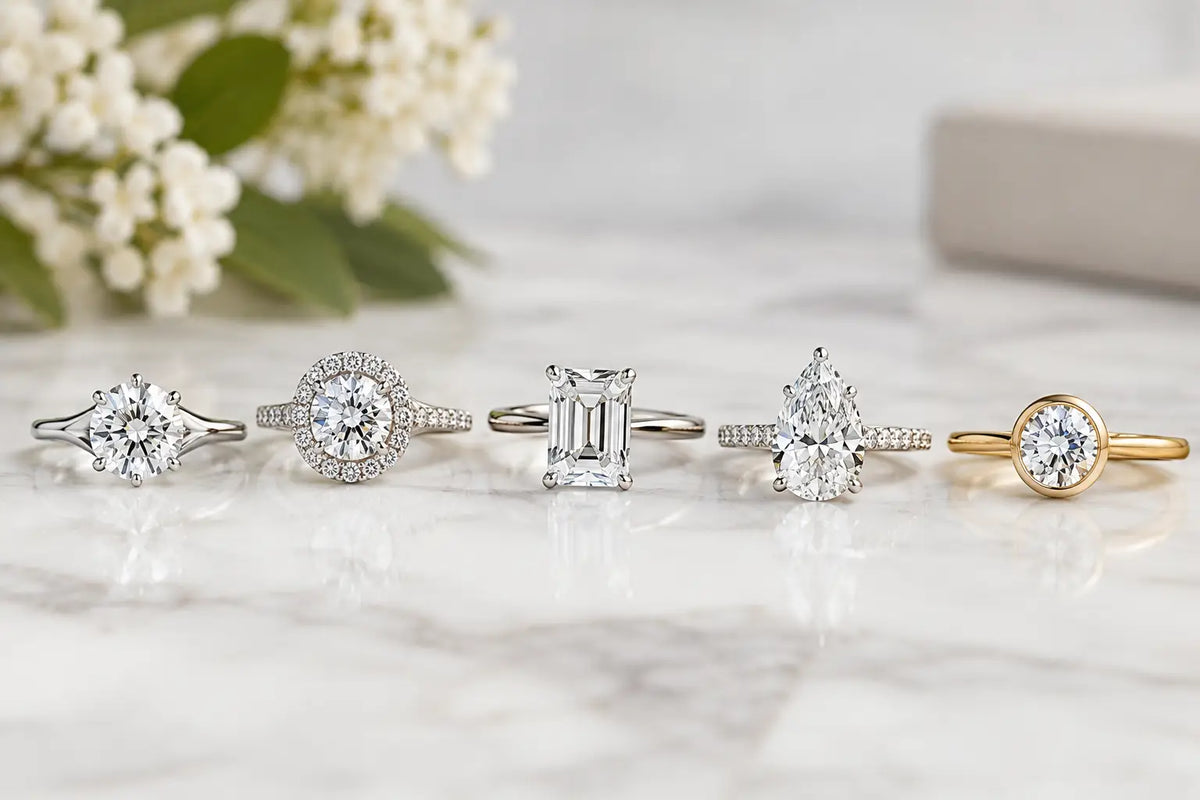
A solitaire features one center stone, usually held by four or six prongs. It remains a favorite because it gives the diamond full attention and works with nearly every shape, from round and oval to emerald cut and pear.
Four prongs expose more of the diamond and can make a stone appear slightly more prominent. Six prongs provide additional security and create a more traditional silhouette, especially on round diamonds. A solitaire is an excellent choice for someone who wants timeless style, easy cleaning, and the option to pair the ring with different wedding bands over time.
Its simplicity is also its trade-off. If you want your ring to have visual detail from every angle, a solitaire may feel too minimal unless the band, gallery, or hidden accent diamonds bring in more personality.
Halo: extra presence and sparkle
A halo surrounds the center diamond with a border of smaller diamonds. This setting can make the center stone appear larger from the top and brings high-impact brilliance to the ring. It is especially flattering for oval, cushion, pear, and radiant-cut lab-grown diamonds.
Halos are not only for dramatic styles. A slim, delicate halo can feel refined, while a double halo makes a stronger statement. The main consideration is upkeep: small accent diamonds and fine prongs should be inspected periodically, particularly if the ring is worn every day.
Choose a halo because you love the look, not simply because you want a larger appearance. A well-proportioned center diamond in a clean solitaire can have just as much presence, only in a different visual language.
Bezel: sleek protection for everyday life
A bezel setting wraps a thin border of metal around all or part of the diamond's edge. Full bezels are among the most protective ring settings, making them a smart option for people who work with their hands, exercise often, or prefer a low-profile ring.
The look is clean and contemporary, particularly in yellow gold or platinum. A bezel can also emphasize the outline of fancy-shaped diamonds, such as an emerald cut, marquise, or pear. Because there are no exposed prongs to catch on knits or hair, it offers a practical advantage.
A full bezel covers more of the diamond than a prong setting, which may slightly change how the stone looks from the side. A partial bezel provides a middle ground, offering a modern frame while leaving more of the diamond visible.
Pavé: detail that catches the light
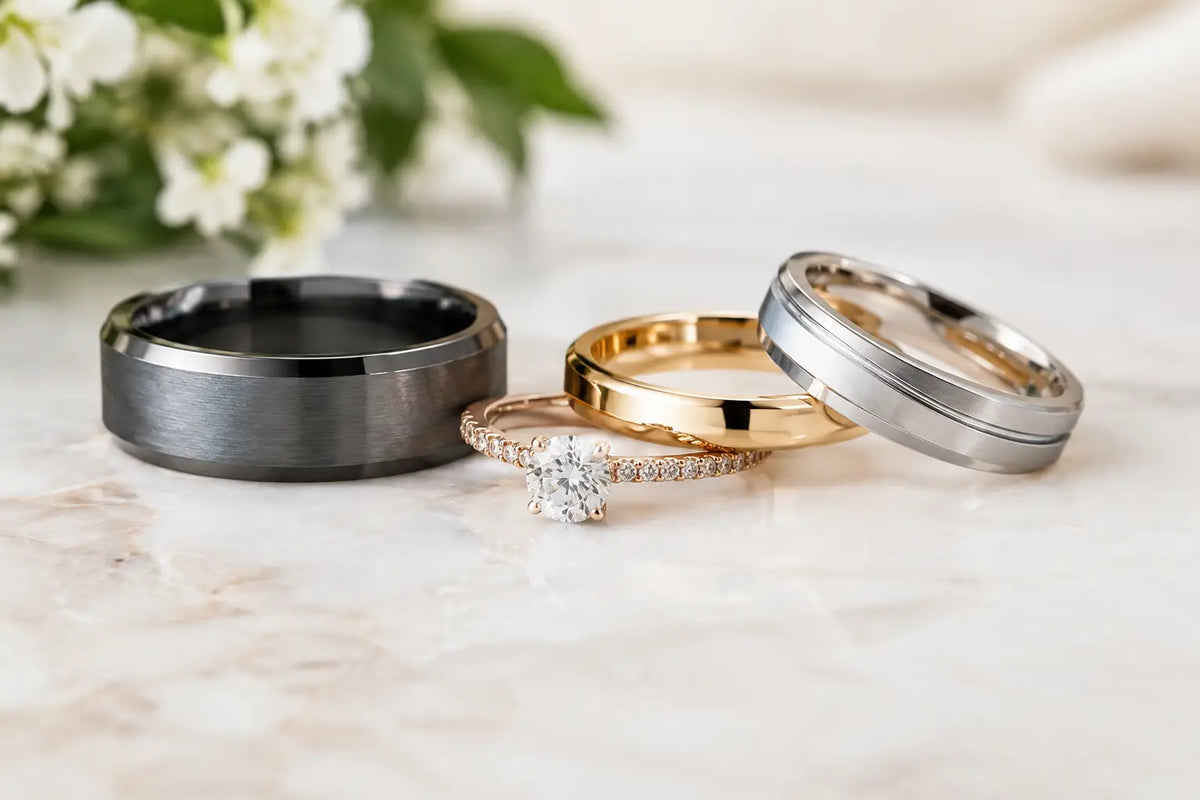
A pavé band is set with closely spaced small diamonds, creating a ribbon of sparkle along the shank. It can be paired with a solitaire center stone, a halo, or a three-stone design. Pavé brings dimension to a ring without changing the center diamond's shape or silhouette.
This setting is ideal for someone drawn to refined brilliance and a more ornate finish. It does require thoughtful care. Avoid hard knocks, and have the ring checked if you notice a rough spot, a missing stone, or a prong catching on fabric. A plain band can be more forgiving for very active daily wear, while pavé rewards careful ownership with exceptional sparkle.
Three-stone: meaningful and balanced
A three-stone ring places a center diamond between two side stones. Many couples love the symbolism of past, present, and future, but the appeal is also practical: side diamonds broaden the ring's top view and create a substantial, balanced profile.
Tapered baguettes offer an elegant, architectural look beside an emerald-cut or radiant-cut center diamond. Pear or round side stones can feel softer and more romantic. The key is proportion. Side stones should support the center diamond rather than compete with it.
Cathedral and low-profile designs
A cathedral setting uses arches of metal that rise from the band to support the center diamond. This added height can make a solitaire feel more dramatic and create a graceful side view. It is a beautiful choice for those who enjoy a traditional engagement-ring profile.
A low-profile setting keeps the diamond closer to the finger. It often feels more practical for daily wear and less likely to catch on clothing. However, a lower setting may limit which wedding bands sit flush beside it. If a perfectly paired stack matters to you, discuss the wedding band early in the design process.
Match the Setting to Your Diamond Shape
The shape of your lab-grown diamond should guide the setting, but it does not have to dictate it. Round diamonds are exceptionally versatile and look at home in solitaires, halos, and pavé designs. Oval and pear diamonds benefit from protective prongs at their pointed ends, where they are more vulnerable to impact.
Emerald-cut and Asscher-cut diamonds have broad, open facets rather than the crushed-ice sparkle of some other shapes. A clean solitaire, bezel, or baguette-accented three-stone setting often complements their crisp geometry. Overly busy details can distract from their elegant step-cut pattern.
Marquise diamonds can create a long, graceful look on the finger, especially when oriented north to south. East-west settings turn the stone horizontally for a more fashion-forward effect. For elongated shapes, make sure the setting supports the tips securely and sits comfortably on the hand.
Metal Choice Changes the Whole Design
Metal color influences how the diamond and setting read. Platinum and white gold create a cool, bright frame that blends into the look of a colorless diamond. Yellow gold offers warm contrast and can make a classic solitaire feel instantly more distinctive. Rose gold brings a soft, romantic tone that suits vintage-inspired and personal designs.
Platinum is naturally white and known for its density, while gold alloys offer a range of colors and are commonly used across fine jewelry. The right metal depends on skin tone preferences, existing jewelry, budget, and the mood you want the piece to have. There is no rule requiring an engagement ring to match every other piece you own.
For a two-tone design, a white-metal head can keep the focus on the diamond while a yellow or rose gold band adds warmth. This is a thoughtful option for someone who enjoys mixed-metal jewelry or wants a versatile ring stack.
Consider Your Lifestyle Before You Commit
The most romantic ring is the one you can wear with confidence. If you are frequently at a keyboard, work in healthcare, lift weights, care for young children, or use your hands professionally, a lower profile or bezel setting may feel more natural than a high-set center stone.
Ask how the ring will fit into ordinary days, not just proposal photos. Will it catch on gloves? Do you prefer a clean band that is easy to maintain? Do you want a wedding band to sit flush? These details are not limitations. They are the information that turns a beautiful concept into jewelry made for you.
A custom consultation can be particularly useful when you have a specific diamond in mind. Seeing the stone's shape, measurements, and proportions alongside a setting design helps ensure that prongs, band width, and overall scale feel intentional.
Care Helps Every Setting Last
All fine jewelry benefits from routine attention. Clean your ring gently with warm water, mild soap, and a soft brush, then rinse and dry it carefully. Remove it for activities that expose it to harsh chemicals, heavy impact, or abrasive surfaces.
Prongs, pavé accents, and shared-prong designs should be professionally inspected from time to time. If you hear a rattle, spot a loose diamond, or notice a snag, stop wearing the ring until it can be examined. Prompt care is often far simpler than replacing a lost stone.
The best setting is one that gives your diamond a place to shine while fitting comfortably into the life you already live. Start with what you are drawn to, be honest about how you use your hands, and let the final design feel as personal as the reason you chose it.