How Are Lab-Grown Diamonds Made? The 2026 Science of Cultivation
What if you could replicate the extreme conditions of the Earth's mantle to create a gemstone that is physically, chemically, and optically identical to a mined diamond? It sounds like science fiction, but it's the reality of modern craftsmanship. You might feel overwhelmed by technical jargon and don't want to be misled by simulants like cubic zirconia. The question of how are lab grown diamonds made is often met with confusing explanations, yet the answer reveals a beautiful blend of science and art.
This guide explores the fascinating scientific processes used to cultivate these stones from tiny carbon seeds into brilliant gems. We'll break down the 2026 standards for HPHT and CVD cultivation, showing you how these ethical diamonds become the perfect foundation for a custom bracelet or engagement ring. By the end, you'll see why a lab-grown diamond isn't just a sustainable alternative; it's a masterpiece of human innovation.
Key Takeaways
- Learn how lab-grown diamonds achieve 100% carbon purity, sharing the exact physical and chemical structure of mined stones.
- Explore the "Brute Force" and "Atomic Precision" techniques to understand exactly how are lab grown diamonds made in a controlled environment.
- Follow the journey from raw crystal blocks to custom, made-to-order luxury pieces through precision laser cutting and artisan polishing.
- Gain confidence in your selection by understanding the 2026 GIA and IGI certification standards that verify the ethical origin of every stone.
Cultivating Brilliance: What Are Lab-Grown Diamonds Made Of?
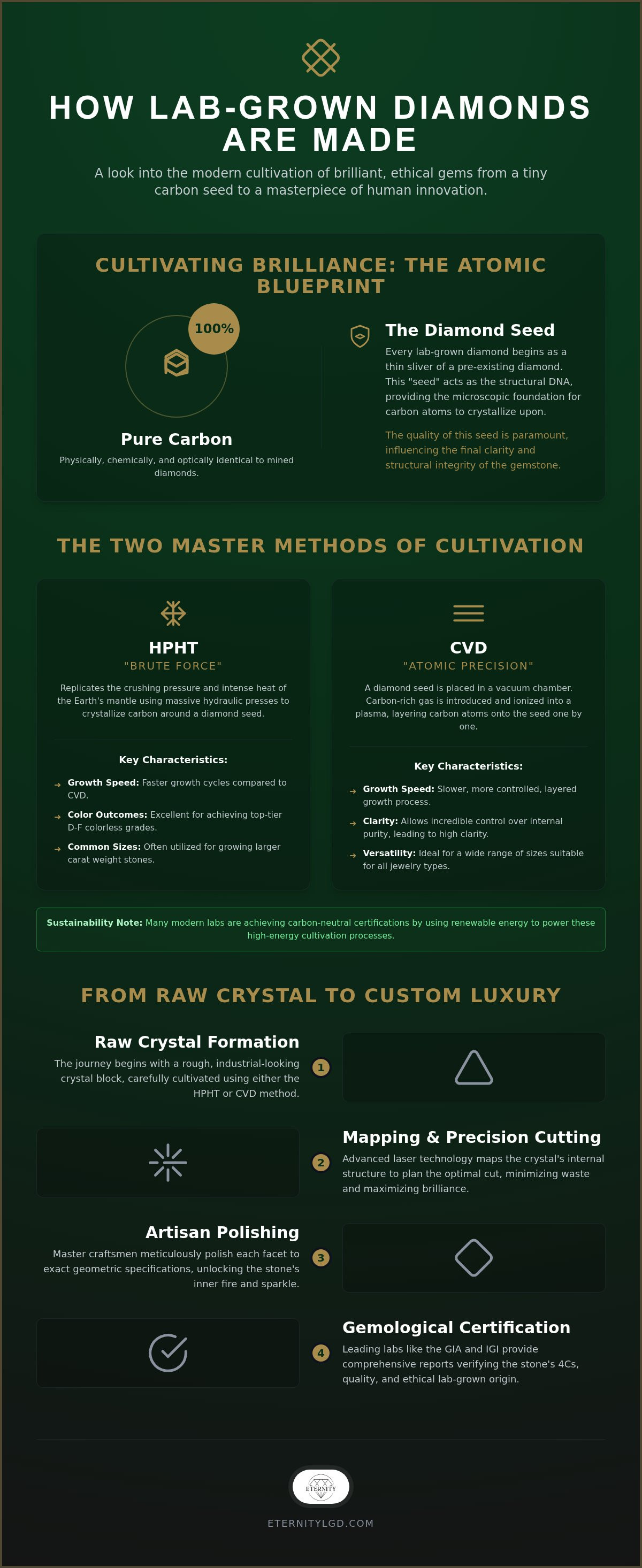
To understand how are lab grown diamonds made, we must first look at their atomic composition. These stones consist of 100% pure carbon, sharing the exact same chemical lattice and physical properties as diamonds pulled from the Earth. While industry standards like the Synthetic diamond entry describe their origin, it's vital to know they aren't "fakes" or simulants. They represent a perfect scientific replication of the high-pressure, high-heat conditions found deep within the Earth's mantle.
Because these gems are grown from the same element, they possess the identical sparkle, hardness, and fire you expect from a premium stone. This often leads many to wonder are lab grown diamonds real diamonds; and the answer from 2026 gemological experts is a definitive yes. They are cultivated through controlled innovation, making them a sophisticated and ethical choice for modern jewelry.
The Diamond Seed: The Blueprint of Every Stone
Every journey toward a finished gemstone begins with a diamond seed. This is a thin sliver of pre-existing diamond that acts as the structural "DNA" for the new crystal. A diamond seed is the microscopic foundation upon which carbon atoms arrange themselves into a crystal lattice. Think of it as a blueprint that guides the growth process from the very first atom.
The quality of this initial sliver is paramount. It influences the final clarity and structural integrity of the gemstone. High-quality seeds produce stones with fewer inclusions, ensuring the resulting crystal is clear and brilliant. By understanding how are lab grown diamonds made from these tiny foundations, you can feel confident in the precision and craftsmanship behind every custom piece. This transparent process allows for the creation of stunning jewelry that aligns with both your aesthetic and your values.
The Two Master Methods: How Lab Diamonds Are Grown
When exploring how are lab grown diamonds made, two primary technologies dominate the 2026 landscape. High Pressure High Temperature (HPHT) uses brute force to mimic the Earth, while Chemical Vapor Deposition (CVD) relies on atomic precision. Both methods yield stones that are physically identical to their mined counterparts. This makes them indistinguishable to the naked eye, a topic we cover extensively in our guide on lab diamonds vs diamond simulants. Today's high-tech labs increasingly prioritize sustainability, with many 2026 facilities achieving carbon-neutral certifications by using renewable energy to power these high-energy processes.
HPHT vs. CVD: Choosing the Right Growth Path
HPHT replicates the crushing pressure and intense heat of the Earth's core using massive hydraulic presses. It's a powerful method often used to grow large stones with exceptional color. In contrast, CVD involves placing a diamond seed in a vacuum chamber filled with carbon-rich gas. A plasma cloud then layers carbon atoms onto the seed, atom by atom. This method allows for incredible control over the diamond's internal purity, making it a favorite for high-clarity custom pieces.
| Feature | HPHT (Brute Force) | CVD (Atomic Precision) |
|---|---|---|
| Growth Speed | Faster growth cycles | Slower, layered growth |
| Color Outcomes | Excellent for D-F colorless grades | Highly consistent clarity |
| Common Sizes | Often used for larger carat weights | Versatile for all jewelry types |
Whether a stone is grown via HPHT or CVD, the result is a genuine diamond ready for a lifetime of wear. If you're ready to see the results of this innovation, you might enjoy browsing our certified loose diamonds to find the perfect match for your next custom project.
From Raw Crystal to Custom Made-to-Order Luxury
The journey doesn't end when the growth chamber opens. At this stage, the result is a rough, industrial-looking crystal block. To transform this raw material into a sparkling gem, master craftsmen use advanced laser-cutting technology to map the stone's internal structure. This transition from "Rough to Radiant" is where the technical reality of how are lab grown diamonds made meets the delicate art of jewelry design. Every facet is polished to exact specifications to maximize light return and fire.
Verification is a critical part of the modern luxury experience. In 2026, leading laboratories like the IGI and GIA provide comprehensive certification for lab-grown stones. These reports confirm the stone's quality and its ethical origin, ensuring you know exactly what you're buying. For those looking to create something truly unique, choosing loose diamonds for custom jewelry offers the ultimate path to personalization. It allows you to select a specific stone as the foundation for a bespoke engagement ring or bracelet.
The Ethics of Engineering: Why the Process Matters
Choosing a cultivated diamond is a statement of values. The controlled environment of a lab allows for the creation of Type IIa diamonds. These are the purest form of diamond, representing only 2% of those found in nature. Because the supply chain is entirely transparent, you can be certain your stone is free from the environmental and social costs associated with traditional mining. This shift toward conscious consumption has made custom lab-grown diamond jewelry a modern status symbol. It combines the allure of high-end design with a commitment to a sustainable future.
Embracing the Future of Conscious Luxury
Understanding the science behind these stones changes the way we view fine jewelry. You've seen how they start as a simple seed and grow into a pure carbon crystal through advanced HPHT or CVD methods. This process ensures that every stone is physically identical to its mined counterpart while meeting the highest ethical standards of 2026. It's no longer just about aesthetics; it's about choosing a gemstone that aligns with a modern, sustainable lifestyle.
By demystifying how are lab grown diamonds made, it's clear that these gems offer a transparent path from the lab to your private collection. Eternity specializes in made to order sustainable luxury, providing GIA and IGI certified loose diamonds with full direct-to-consumer transparency. Start your custom jewelry journey with Eternity today and create a bespoke piece that reflects both your unique style and your personal values.
Frequently Asked Questions
How long does it take to make a lab-grown diamond?
It typically takes between two to six weeks to cultivate a lab-grown diamond. The exact timeframe depends on the target carat weight and the growth method used. Larger stones require more time in the chamber to allow carbon atoms to layer correctly. This controlled pace ensures the crystal lattice remains stable and brilliant for jewelry use.
Are lab-grown diamonds as durable as mined diamonds?
Yes, lab-grown diamonds are just as durable as mined ones because they share the same physical properties. Both rank at a 10 on the Mohs scale of hardness, making them the hardest material on Earth. They won't scratch, cloud, or degrade over time, ensuring your custom ring or bracelet remains a lasting heirloom.
Can you tell the difference between a lab-made and a natural diamond?
You cannot tell the difference with the naked eye. Because of how are lab grown diamonds made, they possess the same optical and chemical traits as natural stones. Even seasoned gemologists require specialized laboratory equipment to identify the specific growth patterns that distinguish a lab-made diamond from one that was mined.
Do lab-grown diamonds have flaws or inclusions?
Inclusions and tiny flaws are common in lab-grown diamonds. Since the cultivation process replicates nature, tiny carbon crystals or structural feathers can form during growth. These characteristics are why every stone receives an official grade for clarity, helping you choose a diamond that meets your specific standards for perfection.
Disclaimer
The information provided in this article is for educational and informational purposes only and should not be considered professional financial, legal, investment, or gemological advice. While Eternity strives to ensure all information is accurate and up to date, diamond grading standards, market prices, industry practices, and product availability may change over time.
All opinions expressed are based on current industry knowledge and are intended to help consumers make informed decisions. Product specifications, pricing, promotions, and services may vary and are subject to change without notice.
Lab-grown diamonds sold by Eternity are independently graded by recognized laboratories such as IGI or GIA where applicable. We encourage customers to consult with our jewelry specialists for recommendations tailored to their individual needs before making a purchase.
© Eternity Inc. All rights reserved. This content may not be reproduced without written permission.