How to Design Bespoke Jewelry That Feels Like You
A bespoke piece begins long before a diamond is set. It begins with the reason you want it: a proposal that deserves a ring unlike any other, an anniversary marking a shared milestone, or a necklace designed around a stone with personal meaning. Learning how to design bespoke jewelry is less about knowing jewelry terminology and more about making thoughtful decisions in the right order.
Custom jewelry gives you room to choose the details that matter most, from a lab-grown diamond’s shape and proportions to the way a band feels on your hand. The best designs balance emotion, everyday wear, and budget so the finished piece is not just beautiful in a box, but a natural part of your life.
Start With the Story Behind the Piece
Before selecting a diamond or sketching a setting, identify what the jewelry should represent. A custom engagement ring may need to reflect both partners’ style. A pendant might incorporate a birthstone, an initial, or a diamond from an existing piece. A fashion ring can be more expressive, with a bolder silhouette or unusual combination of shapes.
Gather a small collection of references rather than hundreds of screenshots. Look for patterns in what you save. You may notice that you consistently prefer oval diamonds, low-profile settings, yellow gold, clean lines, or vintage-inspired details. Just as useful is recognizing what you do not like, such as a high setting that catches on clothing or a heavily detailed band that feels too ornate.
Think about how the piece will be worn. Someone who works with their hands, exercises often, or rarely removes their ring may need a lower setting and a more protective design. If the jewelry is for occasional events, there may be more freedom to prioritize dramatic proportions or delicate details. Personal style matters, but lifestyle determines whether a design stays comfortable over time.
How to Design Bespoke Jewelry Around a Real Budget
A clear budget is not a limitation on creativity. It is the tool that helps direct your investment toward the elements you care about most. For many diamond pieces, the largest variables are the center stone, metal choice, setting complexity, and any accent diamonds.
Start by deciding where the visual impact should come from. If you want a larger center diamond, a lab-grown diamond can offer meaningful value while providing the same chemical, physical, and optical properties as a mined diamond. That flexibility may allow you to choose a larger carat weight, a higher color grade, or a more distinctive cut without sacrificing the quality of the finished piece.
There are always trade-offs, and the right choice depends on your priorities. A perfectly colorless diamond may matter less in a yellow-gold setting, where a near-colorless stone can still look bright and beautiful. A complex halo or pavé design can create exceptional sparkle, but it requires more labor and may need more attentive long-term care than a simple solitaire. Being honest about what matters most keeps the process focused.
It also helps to reserve part of the budget for the construction of the piece. A well-made setting, secure prongs, balanced proportions, and a comfortable fit are not secondary details. They are what allow a custom design to be enjoyed for years.
Choose a Diamond Shape Before Chasing Specifications
Diamond shape has one of the strongest effects on a piece’s personality. Round brilliant diamonds offer classic fire and versatility. Ovals, pears, and marquise shapes can create an elongated look on the finger. Emerald cuts and Asscher cuts feel architectural, with broad flashes of light rather than the glittering sparkle of a round diamond. Cushion cuts are softer and often carry a romantic, vintage-inspired character.
Once you have chosen a shape, review the qualities that affect appearance. Carat weight describes a diamond’s weight, not necessarily how large it looks face-up. Cut quality and proportions influence brightness and can make a substantial difference in visual size. Color and clarity should be considered in context with the shape, setting, and your personal expectations.
For a custom diamond piece, certification provides valuable clarity. An independent diamond report documents key characteristics so you can compare options with confidence. Inclusions are not automatically a problem if they are not visible to the unaided eye and do not affect durability. The goal is not to pay for grades you cannot appreciate, but to select a diamond that looks exceptional in the design you have chosen.
Build the Setting From Function and Style
The setting is where your design becomes uniquely yours. Begin with the metal. Yellow gold brings warmth and a timeless look, white gold offers a bright, modern finish, and rose gold gives a softer, romantic tone. Platinum is naturally white and durable, making it a strong choice for jewelry intended for daily wear. The best metal is often the one that complements your existing jewelry and feels most natural to you.
Next, consider the stone’s security and profile. Prongs let more light reach the diamond and create a classic appearance. A bezel surrounds the stone with metal, offering a sleek look and added protection. Cathedral settings elevate the center stone with graceful arches, while a low-profile setting keeps it closer to the finger for a more practical silhouette.
The band can be quiet or expressive. A plain band centers attention on the diamond. Pavé diamonds add light-catching detail. Tapered shoulders can make a center stone appear more prominent, while a split shank adds visual openness. If you plan to wear a wedding band alongside an engagement ring, make that part of the design conversation early. A flush fit may require a carefully shaped setting, while some couples prefer a small, intentional gap between rings.
Add Personal Details With Restraint
The most memorable custom jewelry usually has one or two defining details, not ten competing ones. That could be a hidden halo, a meaningful engraving, a colored gemstone tucked beneath the center diamond, or a distinctive side-stone arrangement. These details reward a closer look without overwhelming the design.
Engraving is especially effective for dates, initials, short phrases, or coordinates connected to a meaningful place. It is personal without changing the outward style of the piece. For a family heirloom-inspired design, consider incorporating stones from existing jewelry when appropriate, or echoing a loved one’s setting style in a new, more wearable form.
Move From Concept to a Design You Can Approve
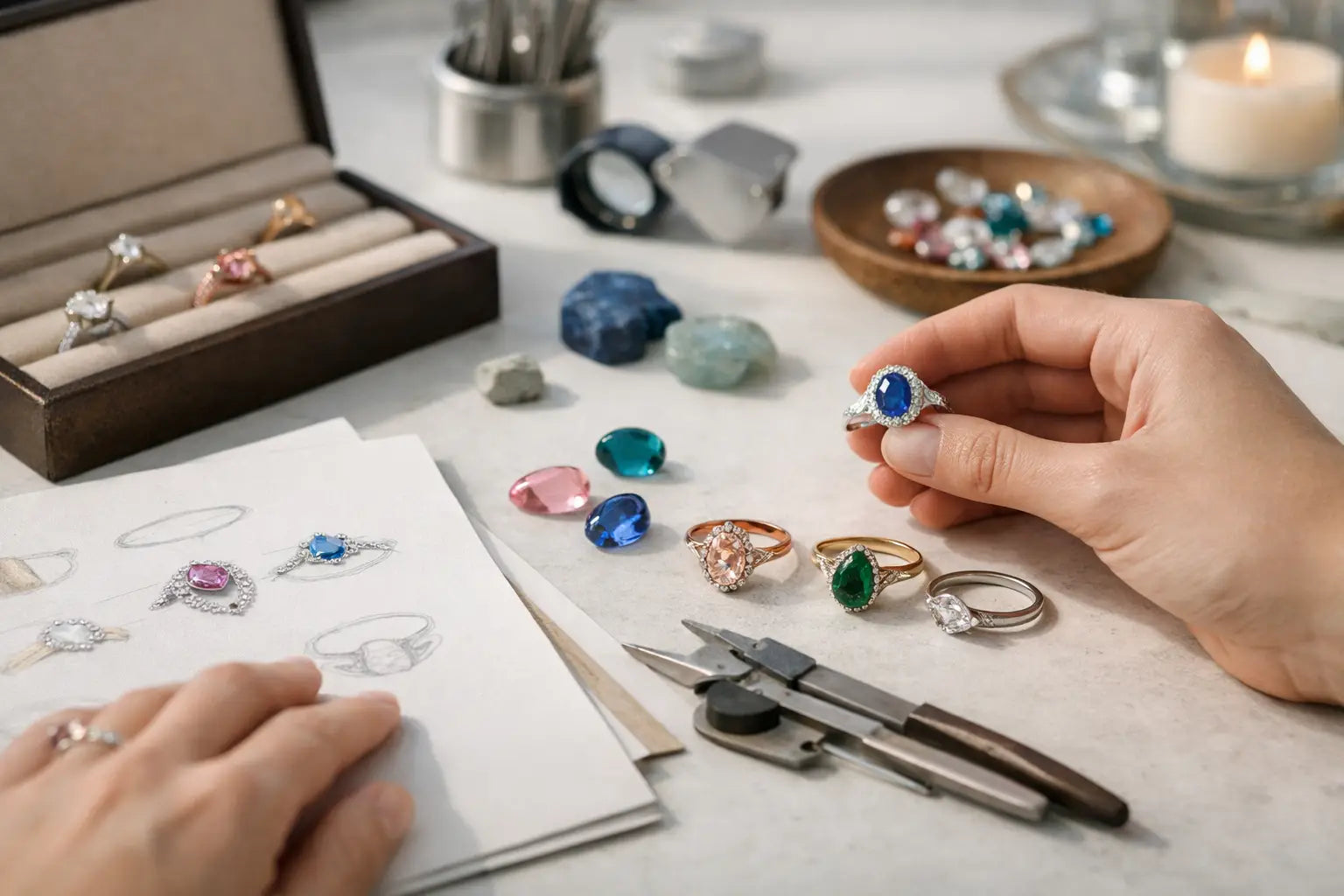
A professional custom process should make decisions feel clearer, not more complicated. After a consultation establishes your vision, budget, and preferred materials, the design is developed through sketches, digital renderings, or both. This is the point to assess proportion: how the center stone relates to the band width, how high the setting sits, and whether accent stones support rather than distract from the main diamond.
Do not rush the refinement stage. Ask how the ring will feel between the fingers, whether the design accommodates a wedding band, and how it will look from the side as well as from the top. If you are designing earrings or a pendant, consider scale against the body and how the piece will move when worn.
Production should begin only after you feel comfortable approving the final design and diamond selection. At Eternity LGD, the custom process is structured around consultation, concept development, design refinement, production approval, inspection, and delivery. That sequence gives you a chance to make informed choices before the piece is made, rather than trying to correct a detail after it is complete.
Plan for Fit, Care, and the Years Ahead
Sizing deserves more attention than many buyers expect. Fingers can change slightly with weather, travel, exercise, and time of day. If the piece is a surprise, use a sizing tool or a ring that is already worn on the correct finger as a starting point. Wide bands can feel tighter than slim bands, which may affect the ideal size.
Once your jewelry arrives, regular care helps preserve its beauty. Remove fine jewelry for activities that involve hard impact, harsh chemicals, or heavy lifting. Periodic inspection is wise for pavé settings and prong-set diamonds, since small stones and prongs benefit from professional attention over time. Keep documentation for your diamond and purchase, and ask about warranty, repair, upgrade, and buyback options before you buy.
Bespoke jewelry should not feel like a design exercise you have to get perfect on the first try. It should feel like a considered collaboration, shaped by what you love, what you will wear, and what the piece will mean years from now.