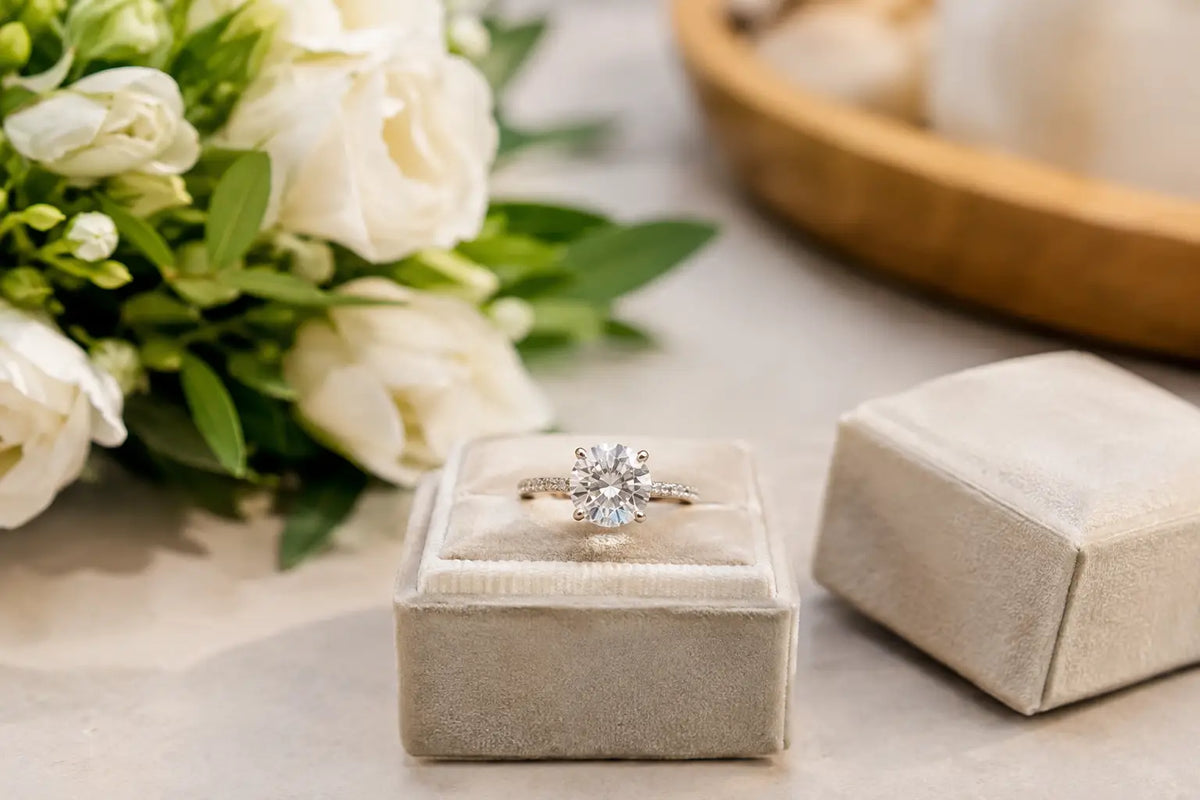
Article: Lab Diamond Proposals That Feel Truly Personal

Lab Diamond Proposals That Feel Truly Personal
A proposal ring is one of the few purchases that needs to hold two truths at once: it should feel breathtaking in the moment, and it should still feel right years later. Lab diamond proposals give couples more room to honor both. You can prioritize a meaningful design, a beautiful center stone, and a budget that leaves space for the life you are building together.
A lab-grown diamond is a real diamond with the same chemical composition, crystal structure, and visual brilliance as a mined diamond. The difference is origin. Rather than forming underground over billions of years, it is grown in a controlled laboratory setting. For many modern couples, that distinction makes the proposal feel more aligned with their values while opening up more possibilities for size, quality, and customization.
Why Lab Diamond Proposals Feel So Current
The most memorable proposals are rarely about following someone else’s script. They reflect the couple: the restaurant where they had their first date, a quiet beach at sunrise, a backyard dinner with family nearby, or a weekend away with no audience at all. Choosing a lab-grown diamond follows the same instinct. It is a decision rooted in personal priorities rather than old expectations about what an engagement ring is supposed to be.
Value is often the first practical advantage. Lab-grown diamonds can make it possible to select a larger carat weight or higher grades in color and clarity for a comparable budget. That does not mean every couple should automatically choose the biggest diamond available. A well-proportioned stone that suits the wearer’s style will always make a stronger impression than a diamond chosen only for its carat number.
The ethical consideration matters, too. Couples who want to avoid the concerns often associated with diamond mining may appreciate the traceable laboratory origin of a lab-grown stone. It is still wise to ask about the diamond’s grading report and specifications, but the category offers a more intentional path for shoppers who want luxury to reflect their values.
Start With the Person, Not the Carat Weight
Before comparing diamond grades, think about how your partner dresses and what they wear every day. Someone with a minimal wardrobe may love the crisp simplicity of a solitaire. Someone drawn to vintage details might prefer a halo, milgrain accents, or a setting with side stones. A person who stacks rings may want a lower-profile design that sits comfortably with a future wedding band.
Shape is a useful place to begin because it changes the entire character of a ring. Round diamonds offer classic brilliance and suit nearly every setting. Oval, pear, and marquise shapes can create an elongated look on the finger. Emerald and radiant cuts feel more architectural, while cushion cuts bring a softer, romantic presence. There is no universally best shape. The right one is the shape your partner will be excited to see on their hand every morning.
If the proposal is a surprise, look for quiet clues. Notice the jewelry they already wear, save images they have liked, or ask a trusted friend or sibling for input. Be careful not to let too many opinions dilute the one that matters most. The ring should feel like them, not like a committee decision.
Choose Diamond Quality With Perspective
The classic four Cs - cut, color, clarity, and carat weight - remain useful for lab-grown diamonds. They are most helpful when treated as connected decisions rather than a checklist where every grade must be at the top.
Cut has the greatest influence on how lively a diamond appears. A well-cut diamond reflects light beautifully, giving it the sparkle people notice first. For round brilliant diamonds, strong cut quality is often worth prioritizing. With fancy shapes such as oval, pear, emerald, or cushion, proportions, faceting style, and the individual stone’s appearance deserve closer attention.
Color is also personal. A near-colorless diamond can look bright and beautiful, especially in yellow or rose gold, where a slight warmth may blend naturally into the setting. Platinum and white gold can make cooler color grades more noticeable, though a thoughtfully selected near-colorless stone can still look stunning.
Clarity refers to internal characteristics and surface features. Many inclusions are not visible without magnification, which means an eye-clean diamond can offer excellent value without requiring the highest clarity grade. Carat weight should come after those visual considerations. A slightly smaller diamond with excellent sparkle and a balanced setting can look more impressive than a larger stone with weaker proportions.
A grading report from a respected independent laboratory provides an objective record of the diamond’s key characteristics. Review the report alongside photos or videos whenever possible. The report tells you what the diamond is; imagery helps you understand how it actually looks.
Make the Setting Work for Real Life
A proposal ring has to survive far more than one beautiful evening. It needs to work through commutes, workouts, travel, handwashing, hobbies, and ordinary busy days. That is why the setting deserves as much attention as the center stone.
A classic prong setting allows plenty of light into the diamond and creates a timeless silhouette. A bezel setting surrounds the stone with a protective rim of metal, making it a strong option for active lifestyles or anyone who prefers a sleek, modern look. Cathedral settings add height and visual drama, while lower-profile designs can feel more practical and less likely to catch on clothing.
Metal choice changes the mood of the ring. Platinum is naturally white and known for its durability. White gold offers a similarly bright look, while yellow gold can make a modern or vintage-inspired design feel warmer. Rose gold is softer and more distinctive, particularly with delicate settings. Consider your partner’s existing jewelry before deciding. If every piece they wear is yellow gold, a platinum engagement ring may not feel as natural to them.
Custom design can be especially meaningful when you have a clear idea but cannot find the exact ring. You might combine an heirloom-inspired detail with a modern lab-grown diamond, add a hidden birthstone, or create a setting designed around a specific wedding band. A structured custom process should include diamond consultation, design refinement, approval before production, and inspection before delivery. Those steps help transform a sentimental idea into a ring that is both beautiful and wearable.
Plan the Proposal Around Comfort, Not Performance
A polished proposal does not require a public crowd, a professional photographer, or an elaborate surprise. It requires thoughtfulness. Start with what makes your relationship feel most like itself. If your partner loves being the center of a celebration, a proposal surrounded by friends and family may be perfect. If they value privacy, a quiet moment before a planned dinner can feel far more romantic than a grand gesture.
Timing matters more than people expect. Avoid planning the proposal when your partner is stressed, rushing to catch a flight, or worried about a major obligation the next morning. Build in breathing room. If you are traveling, keep the ring secure in your carry-on bag rather than checked luggage, and consider how you will protect it from curious hands before the moment arrives.
Ring size is the practical detail most likely to cause anxiety. Borrowing a ring they already wear can help, but make sure it is worn on the correct finger, since sizes vary between hands. If you are uncertain, it is usually better to choose a reasonable estimate and confirm that resizing support is available. A slightly imperfect fit should never overshadow the proposal itself.
Think Beyond the Yes
The proposal is the beginning of the ring’s story, not the end of the purchase. Ask about warranty coverage, inspections, repair options, and future upgrade or buyback policies before making a final decision. These details are not unromantic. They show that you are choosing a piece meant to be worn, loved, and cared for over time.
It is also worth discussing insurance after the proposal. Keep the diamond grading report, sales documentation, and clear photographs in a safe place. A little preparation makes it easier to protect a ring that will quickly become part of everyday life.
At Eternity LGD, the goal is not to push a single version of the perfect ring. It is to help couples make a confident choice with transparent specifications, personal design support, and room for the details that make the proposal theirs.
The best proposal does not need to look impressive to everyone else. It needs to make one person feel known. Choose a lab-grown diamond ring that reflects their style, plan a moment with enough space to be present, and let the meaning of the question carry the day.