Article: Top Engagement Ring Metal Options Compared
Top Engagement Ring Metal Options Compared
The diamond gets the first look, but the metal is what you will notice every morning when you reach for coffee, type at work, or catch your ring in a photo. The top engagement ring metal options each create a different balance of color, durability, maintenance, and price. Choosing well is less about finding one universally “best” metal and more about matching the ring to the person who will wear it for years.
For a lab-grown diamond engagement ring, the decision works much the same as it does for any fine diamond. A lab-grown diamond has the same chemical and physical properties as a mined diamond, so it can be set securely in platinum, yellow gold, white gold, rose gold, or a mixed-metal design. The advantage is that choosing a lab-grown diamond may leave more room in your budget to select the metal, setting details, or diamond size that feel right for your story.
Top Engagement Ring Metal Options at a Glance
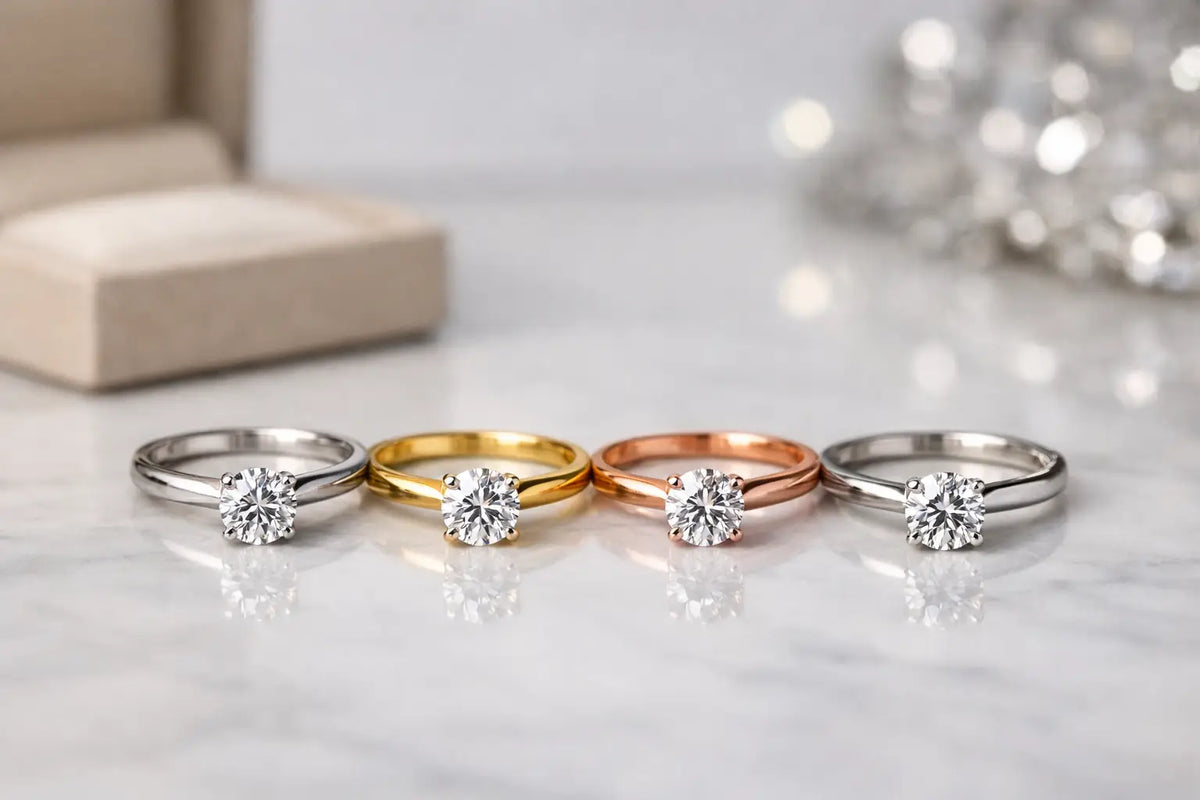
Platinum is the premium choice for strength, a naturally white appearance, and a reassuringly substantial feel. Yellow gold brings warmth and classic character, while white gold offers a bright, streamlined look at a more accessible price than platinum. Rose gold is romantic and distinctive, especially for vintage-inspired or fashion-forward designs.
Within gold, karat matters. An 18K gold ring contains more pure gold and usually has a richer color, but 14K gold contains more strengthening alloys, making it a practical favorite for everyday wear. There is no wrong answer between them. It depends on whether you prioritize a deeper gold tone or a bit more resistance to everyday scuffs.
Platinum: Durable, Naturally White, and Substantial
Platinum is prized for its naturally white color and density. It does not need rhodium plating to look white, making it a strong match for colorless or near-colorless lab-grown diamonds, particularly in solitaire, pavé, and halo settings where you want the metal to disappear behind the stone.
Because platinum is dense, a platinum ring typically feels heavier than a similar gold ring. That weight can feel luxurious and secure to some wearers, while others prefer a lighter ring. Platinum is also a durable metal for prongs. Rather than wearing away quickly, it tends to displace under impact, which helps it retain metal around a diamond over time.
Platinum does scratch. Its surface develops a soft, satin-like patina with regular wear, and many people love that lived-in finish. If you prefer a freshly polished shine, a jeweler can refinish it during routine service. Platinum generally costs more than gold because of its density and the amount of metal required for a ring.
Yellow Gold: Warm, Timeless, and Versatile
Yellow gold has moved far beyond the idea of a traditional engagement ring. It can make a crisp round brilliant feel warmer, give an emerald-cut diamond a refined vintage note, or create beautiful contrast around a white lab-grown diamond. It also complements many skin tones and pairs naturally with yellow-gold necklaces, hoops, and bracelets.
For an engagement ring worn every day, 14K yellow gold is often the practical choice. It offers a rich golden appearance with added durability from its alloy mix. An 18K yellow gold ring has a more saturated, buttery color and a slightly more luxurious feel, though it is softer and may show wear sooner.
Yellow gold can be especially flattering for diamonds with warmer color grades, because the metal's color makes subtle warmth in the diamond less noticeable to the eye. That does not mean it is only for warm diamonds. A colorless lab-grown diamond in yellow gold creates a clean, intentional contrast that many couples love.
Consider Yellow Gold If You Want
Yellow gold is an excellent fit if your style leans classic, organic, vintage-inspired, or quietly bold. It is also a smart option if you want to maximize diamond size or setting detail within a set budget, since it is usually less expensive than platinum.
White Gold: Bright Style With Flexible Pricing
White gold gives engagement rings the sleek, silvery appearance many shoppers associate with platinum, usually at a lower initial cost. It looks especially polished with oval, pear, radiant, and princess-cut lab-grown diamonds, as well as diamond-forward designs with pavé bands or hidden halos.
Most white gold engagement rings receive rhodium plating, a bright white finish that enhances their color and shine. Over time, that plating can wear in areas of frequent contact, revealing a slightly warmer undertone beneath. Replating is standard fine-jewelry maintenance, and the timing depends on your skin chemistry, lifestyle, and how often you wear the ring.
White gold is a compelling middle ground for someone who wants a white-metal look and a lighter feel than platinum. If your ring has delicate pavé or multiple small diamonds, regular inspection remains important regardless of metal choice. Tiny stones depend on well-maintained settings, not just the metal itself.
Rose Gold: Soft Color With Personal Character
Rose gold gets its blush tone from copper in the alloy. The result ranges from pale pink to a deeper rosy hue depending on the karat and alloy formula. It feels romantic without being overly formal, and it can make a simple solitaire look remarkably personal.
Like yellow gold, rose gold is available in different karats. A 14K rose gold ring is a popular choice for daily wear because it balances color and durability. It pairs beautifully with round, cushion, pear, and marquise diamonds, especially in designs with floral details, milgrain, or a low-profile setting.
One consideration is coordination. Rose gold is easy to wear on its own, but its distinct color may not match every existing jewelry piece as effortlessly as yellow gold or white metal. For someone who already wears mixed metals, however, that contrast can become part of the appeal.
Mixed Metals: The Best Answer May Be Both
A mixed-metal engagement ring can solve a practical design question while adding visual interest. For example, a yellow-gold shank with white-gold or platinum prongs lets you enjoy warm gold around the finger while keeping a white metal close to a colorless diamond. This can make the center stone appear especially bright.
Mixed metals also make stacking easier when a wedding band or everyday jewelry collection includes more than one metal color. The key is intentional design. A subtle white-metal head on a yellow-gold solitaire often looks classic, while contrasting bands, bezels, and gallery details can feel more modern.
How to Choose the Right Metal for Your Lifestyle
Start with the jewelry you already wear most. If every favorite piece is yellow gold, choosing platinum solely because it is durable may leave you with a ring that feels disconnected from your personal style. Conversely, if you love bright white metals and want minimal color around your diamond, platinum or white gold may feel immediately right.
Next, consider how you use your hands. Frequent gym sessions, hands-on work, gardening, cooking, or caring for young children do not rule out any metal, but they may influence the setting you choose. A low-profile bezel or a secure prong design can matter as much as the metal. Remove your ring for heavy lifting, swimming, harsh cleaning chemicals, and activities where it could be knocked or snagged.
Finally, decide where you want to invest. If platinum is nonnegotiable, you might select a simpler band or adjust diamond specifications. If a larger lab-grown diamond or custom setting is the priority, 14K gold can offer excellent beauty and everyday performance while preserving more of your budget for the details you will see first.
Match the Metal to the Ring Design
Metal color changes the personality of a setting. A minimalist solitaire in platinum reads crisp and contemporary. The same design in yellow gold feels warmer and more traditional. Rose gold adds softness, while a mixed-metal version offers contrast without committing entirely to one look.
For intricate designs, ask how the metal will perform over time. Fine pavé, thin bands, and detailed vintage-style elements should be designed with appropriate proportions, especially if the ring will be worn daily. A custom design consultation can help balance delicate visual details with the structural support needed for long-term wear.
The right choice is the metal that makes you want to look at your ring again, while still fitting your budget, routine, and future wedding-band plans. Whether that is the enduring weight of platinum, the warmth of yellow gold, the brightness of white gold, or the individuality of rose gold, your engagement ring should feel like a lasting part of your life, not a compromise you learn to live with.