Article: What Is Diamond Fluorescence? A Buyer’s Guide
What Is Diamond Fluorescence? A Buyer’s Guide
A diamond can look beautifully bright under the jewelry-store lights, then appear slightly different outdoors or under a blacklight. That shift often leads buyers to ask, what is diamond fluorescence and does it matter when choosing an engagement ring or fine jewelry? The short answer is that fluorescence is a natural light response, not a flaw. Whether it should influence your choice depends on the individual diamond, its color, and how it looks to your eye.
For a meaningful purchase, the goal is not simply to avoid a line item on a grading report. It is to understand what that line means, view the diamond thoughtfully, and select a stone that delivers the brilliance and value you want.
What Is Diamond Fluorescence?
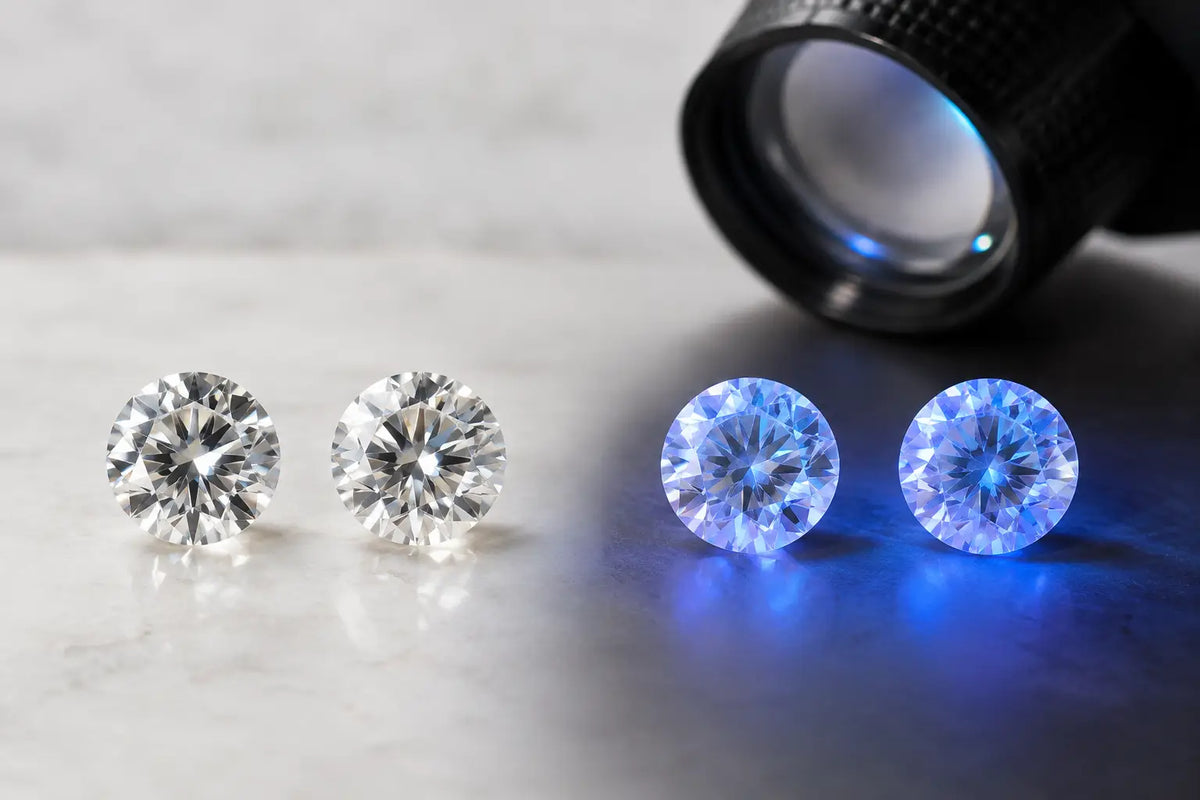
Diamond fluorescence is the visible glow some diamonds emit when they are exposed to ultraviolet, or UV, light. UV light occurs naturally in sunlight and is also present in sources such as blacklights. Once the UV source is removed, the glow generally stops immediately.
Blue is by far the most common fluorescent color in diamonds. Under strong UV exposure, a diamond with blue fluorescence may show a soft blue glow. Less commonly, diamonds can fluoresce yellow, white, or other colors.
Fluorescence is caused by trace elements within the diamond’s crystal structure. It is not a surface coating, a treatment, or evidence that a diamond is less real. Both mined and lab-grown diamonds can fluoresce because both are genuine crystallized carbon with the same fundamental material properties.
Most diamond grading reports describe fluorescence using levels such as None, Faint, Medium, Strong, and Very Strong. Reports may also identify the fluorescent color. This information is useful, but it cannot tell the full visual story on its own.
Does Fluorescence Change How a Diamond Looks?
Usually, no noticeable change occurs in normal day-to-day wear. Many diamonds with faint or medium fluorescence look exactly as expected in indoor lighting, daylight, and evening settings. In fact, a large number of people would not identify fluorescence without seeing the diamond under UV light.
The effect becomes more relevant with strong or very strong blue fluorescence. In some diamonds, it can make a slightly warm, near-colorless stone appear a touch whiter in sunlight. This is because blue can visually balance subtle yellow body color. A diamond in the I through K color range, for example, may sometimes benefit from blue fluorescence.
There is a trade-off. In a small number of strongly fluorescent diamonds, the stone can look hazy, oily, or milky in certain lighting conditions. This is not common, and it is not guaranteed simply because a report says Strong or Very Strong. Two diamonds with identical fluorescence grades can look quite different, which is why visual inspection matters more than a label alone.
For diamonds in the D through H color range, fluorescence is less likely to provide a visible color benefit. It may still have no negative effect whatsoever. The right decision comes down to the diamond’s transparency, sparkle, and price rather than an automatic rule about avoiding fluorescence.
Fluorescence Does Not Create Sparkle
A common misunderstanding is that fluorescence makes a diamond more brilliant. Fluorescence may create a glow under UV light, but it is not the same as sparkle. A diamond’s fire, scintillation, and brightness are primarily shaped by its cut quality, proportions, polish, symmetry, and lighting environment.
If you are deciding between two stones, prioritize a beautiful cut and lively face-up appearance first. Fluorescence is a secondary characteristic that can refine the selection, especially when comparing diamonds with warmer color grades or different prices.
Diamond Fluorescence in Lab-Grown Diamonds
Diamond fluorescence can appear in lab-grown diamonds just as it can in mined diamonds. It does not change a lab-grown diamond’s authenticity, durability, or suitability for an engagement ring. A laboratory-grown diamond is still a diamond, and fluorescence is simply one of the characteristics a grading laboratory may observe.
The key is to evaluate the specific stone. Look at its certification details, high-quality imagery or video when available, and its appearance in a range of lighting. If a diamond has strong fluorescence, ask whether it appears transparent and crisp rather than cloudy. A knowledgeable jewelry professional can also help compare it directly against a non-fluorescent option.
For value-minded shoppers, fluorescence can occasionally create an opportunity. Some buyers automatically filter out any diamond with fluorescence, which can reduce demand for stones that actually look excellent. If a blue-fluorescent lab-grown diamond is bright, clean, and visually appealing, a modest price difference may work in your favor.
That said, a lower price should never be the only reason to choose it. The diamond should still meet your standards for cut, color, clarity, and overall beauty.
How Fluorescence Can Affect Price and Value
In the traditional diamond market, strong blue fluorescence has sometimes led to lower pricing, particularly in high-color diamonds. This is tied to concern about the possibility of haziness, even though many strongly fluorescent diamonds remain perfectly transparent and beautiful.
Pricing in lab-grown diamonds is influenced by many factors, including carat weight, shape, cut, color, clarity, certification, and current supply. Fluorescence can be part of the picture, but it is rarely the feature that should define the purchase.
Consider the comparison this way: if two diamonds have similar carat weight, cut quality, color, clarity, and visible beauty, but one has medium blue fluorescence and a more favorable price, it may be an intelligent choice. If one looks dull or cloudy despite appealing paper specifications, the savings are not worth compromising the finished piece.
The setting also matters. A well-designed solitaire, halo, or three-stone ring can make a diamond look striking, but no mounting can correct a diamond that lacks transparency. Start with a stone you love before moving into the design details.
How to Shop Smart When a Diamond Has Fluorescence
There is no need to reject a diamond solely because its report lists fluorescence. Instead, use the report as the beginning of a conversation. Review the fluorescence intensity alongside the color grade, then assess the stone’s actual appearance.
For a diamond with faint or medium blue fluorescence, most shoppers can focus on the same essentials they would use for any other diamond: a high-performing cut, pleasing color, appropriate clarity, reliable certification, and a shape that suits the wearer’s style.
For strong or very strong fluorescence, take a closer look. Confirm that the diamond appears clear and lively in normal lighting, not just under showroom lights. Ask to see detailed visuals and compare it with a similar diamond that has none or faint fluorescence. If you are choosing a custom piece, it can be helpful to make the diamond decision before finalizing the setting so every design choice supports the stone’s character.
Also remember that a diamond is worn in real life, not under a grading lamp. View it near a window, in ordinary indoor light, and in the lighting you encounter most often. The best diamond should feel exciting when you see it on your hand or imagine it as part of the finished jewelry.
Should You Buy a Fluorescent Diamond?
Yes, if the diamond looks beautiful, transparent, and well priced for its overall quality. No, if visible haze or a lack of brilliance gives you pause. Fluorescence is neither automatically desirable nor automatically problematic.
A faintly fluorescent diamond is often an easy choice. A medium or strong blue-fluorescent diamond may be especially worth considering if you are shopping for a near-colorless stone and want to maximize your budget. For high-color diamonds or very strong fluorescence, a closer visual review provides extra reassurance.
The most personal jewelry decisions balance the details on paper with the emotion of the finished piece. Choose the diamond that looks alive to you, supports your design vision, and lets you feel confident every time it catches the light.