Which Diamond Shape Suits Me? Find Your Match
A diamond can look completely different from one hand to the next. The same carat weight that feels sleek and refined in an emerald cut may look bold and brilliant in a round. If you are asking, “which diamond shape suits me?”, the best answer begins with your personal style, finger proportions, daily routine, and the feeling you want every time you look down at your ring.
Shape is not a measure of diamond quality. It is the outline you see from above, and it has a major influence on sparkle, apparent size, and setting style. Lab-grown diamonds give you the freedom to explore those differences while often putting more carat weight or higher specifications within reach.
Which diamond shape suits me based on my style?
Start with the jewelry you already wear. Do you gravitate toward clean lines, vintage details, soft curves, or pieces that make a statement? Your answer can narrow the field quickly.
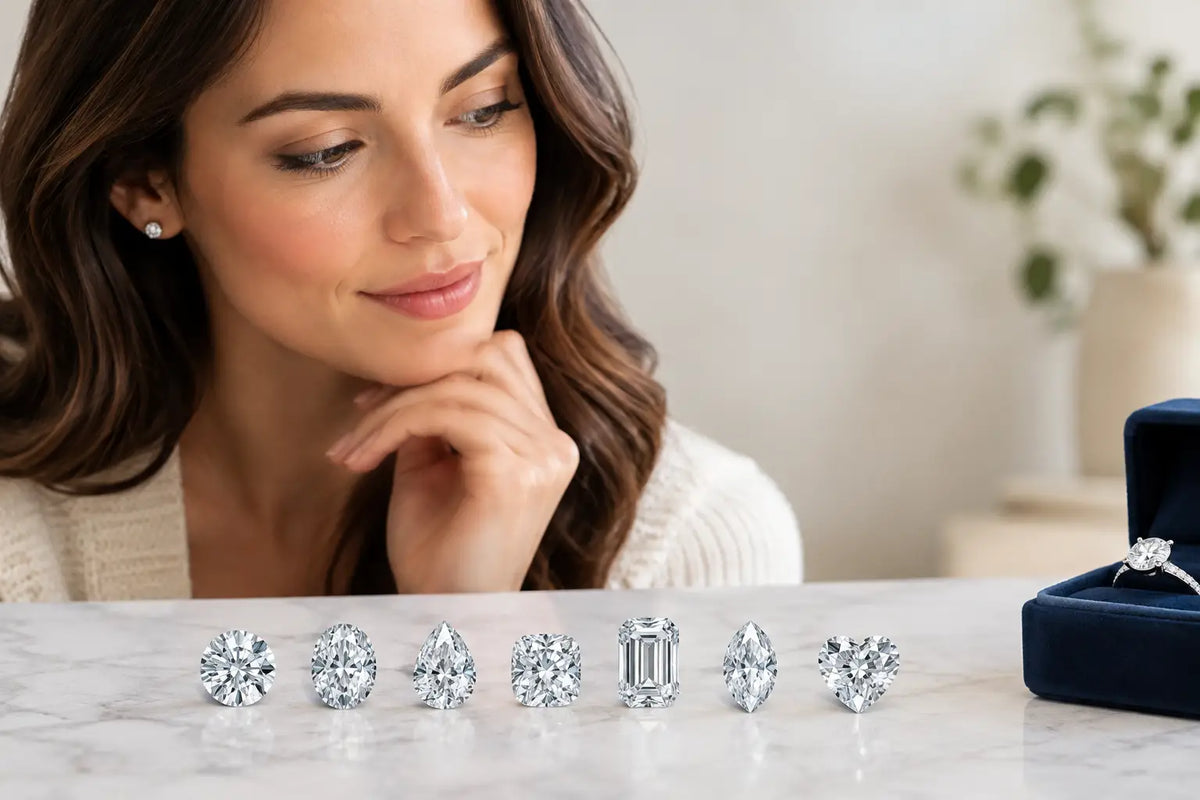
Round: for timeless, high-sparkle style
Round brilliant diamonds remain a favorite for a reason. Their facet pattern is designed for intense brightness, fire, and scintillation, which is the flash of light you see as the diamond moves. A round diamond works beautifully in a simple solitaire, a halo, or a more detailed custom setting.
Choose round if you want a classic engagement ring that will feel at home with almost any wedding band and wardrobe. The trade-off is that rounds typically have less visible surface area than elongated shapes of the same carat weight. If a larger-looking center stone is your priority, compare it beside oval, pear, or marquise options before deciding.
Oval: for an elegant look with extra finger coverage
An oval has the brilliance of a round with a longer outline. That length can make the finger appear more elongated and can create generous face-up coverage for its carat weight. It suits someone who likes traditional sparkle but wants a slightly more modern silhouette.
Ovals vary dramatically. Some are fuller and softly rounded, while others are narrow and elongated. Ask to see the length-to-width proportions that appeal to you rather than relying on a single “ideal” ratio. Also look for a visible bow-tie, the darker area that may appear across the center. A mild bow-tie can be normal, but it should not dominate the stone when viewed in person or in detailed video.
Cushion: for romance, softness, and personality
Cushion-cut diamonds have rounded corners and a pillowy outline that feels warm and romantic. They can be square or rectangular, and their faceting styles range from chunky, antique-inspired flashes to a more splintered crushed-ice look.
This shape is especially appealing if you love vintage influence without wanting a formal antique ring. Because cushion cuts vary so much, there is no substitute for comparing individual diamonds. Two cushions with similar grading reports can have very different personalities, brightness, and visual size.
Emerald and asscher: for clean lines and quiet confidence
Emerald and asscher cuts belong to the step-cut family. Instead of a flurry of tiny flashes, they show broad, mirror-like reflections and distinct geometric facets. Their beauty comes from clarity of design, not maximum sparkle.
An emerald cut is rectangular and elongated, giving it a polished, architectural presence. An asscher cut is typically square with cropped corners and a mesmerizing hall-of-mirrors effect. Both shapes reward careful selection because their open facets can make inclusions or color easier to notice. They are ideal for someone drawn to tailored clothing, minimalist interiors, or jewelry that feels understated but unmistakably luxurious.
Pear and marquise: for a distinctive, lengthening silhouette
Pear and marquise diamonds make a statement without automatically requiring a large carat weight. Their pointed ends and elongated shapes can visually lengthen the finger and offer impressive spread.
A pear feels graceful and versatile. It can be worn with the point facing toward or away from the hand, depending on your preference. A marquise has two points and a more dramatic, regal profile. Both need protective prongs at their tips, since points are more vulnerable to chipping than rounded edges. As with ovals, inspect these shapes for a distracting bow-tie and choose symmetry you genuinely enjoy.
Princess and radiant: for crisp brilliance
Princess cuts are square with sharp corners, offering a bright, contemporary look. They have a graphic quality that appeals to buyers who want something more angular than a round or cushion. Corner protection is essential, so a setting with secure prongs is a smart choice.
Radiant cuts combine a rectangular or square outline with brilliant-style faceting. Think of them as a lively alternative for someone who likes the clean shape of an emerald cut but wants more sparkle and less emphasis on transparency. A rectangular radiant can also provide a flattering elongated look with a fashion-forward edge.
Let your hand guide the choice, not rule it
There are useful visual guidelines, but none of them should override your own reaction. Elongated shapes such as oval, emerald, pear, marquise, and rectangular radiant often create the appearance of longer fingers. Wider shapes, including round, cushion, and asscher, can feel balanced and substantial on longer or narrower fingers.
If you have shorter fingers, you may love the lift of an oval or pear set north-south. If you have long fingers, a round, cushion, or asscher can create a beautifully proportional focal point. But these are starting points, not restrictions. A ring should reflect your taste, not a rulebook about hand shape.
Band width changes the picture, too. A delicate band can make almost any center diamond appear larger, while a wider band adds presence and may balance a larger or more angular stone. East-west settings, where an elongated diamond sits horizontally, are another option for a fresh, modern look, though they create less lengthening effect.
Consider the setting and your everyday life
The right diamond shape should work with the ring you will actually wear. Someone who uses their hands constantly may prefer the smooth profile of a bezel setting or the rounded edges of a round or oval. A pear, marquise, or princess cut needs thoughtful protection around its points and corners.
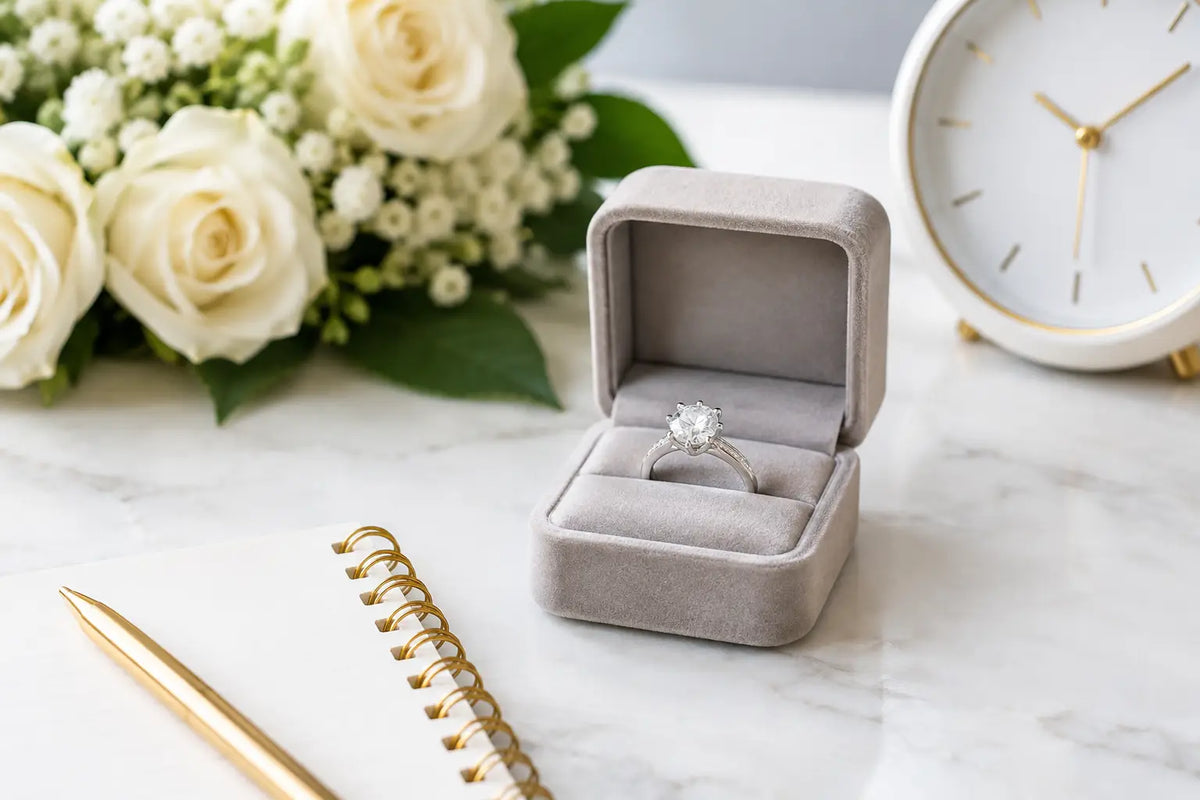
Your planned wedding band matters as well. Rounds, ovals, cushions, and radiants often pair easily with straight bands. Pears, marquises, and some elongated solitaires may leave a small gap beside a straight band unless the setting is designed to sit high enough or you choose a contoured band. Neither approach is wrong, but it is worth considering before you fall for a specific setting.
For a custom piece, a design consultation can bring these details together early: diamond shape, setting height, metal color, band width, and the way any future wedding band will fit. That planning is especially valuable when you want a less common shape or a ring built around a specific lifestyle.
Compare diamonds by appearance, not shape alone
A beautiful shape still needs a well-chosen individual diamond. Carat weight does not tell you how large a diamond will look from the top, particularly across different shapes. An oval and a round of equal weight can present very differently, just as a deep-cut cushion may look smaller than a more spread-out cushion.
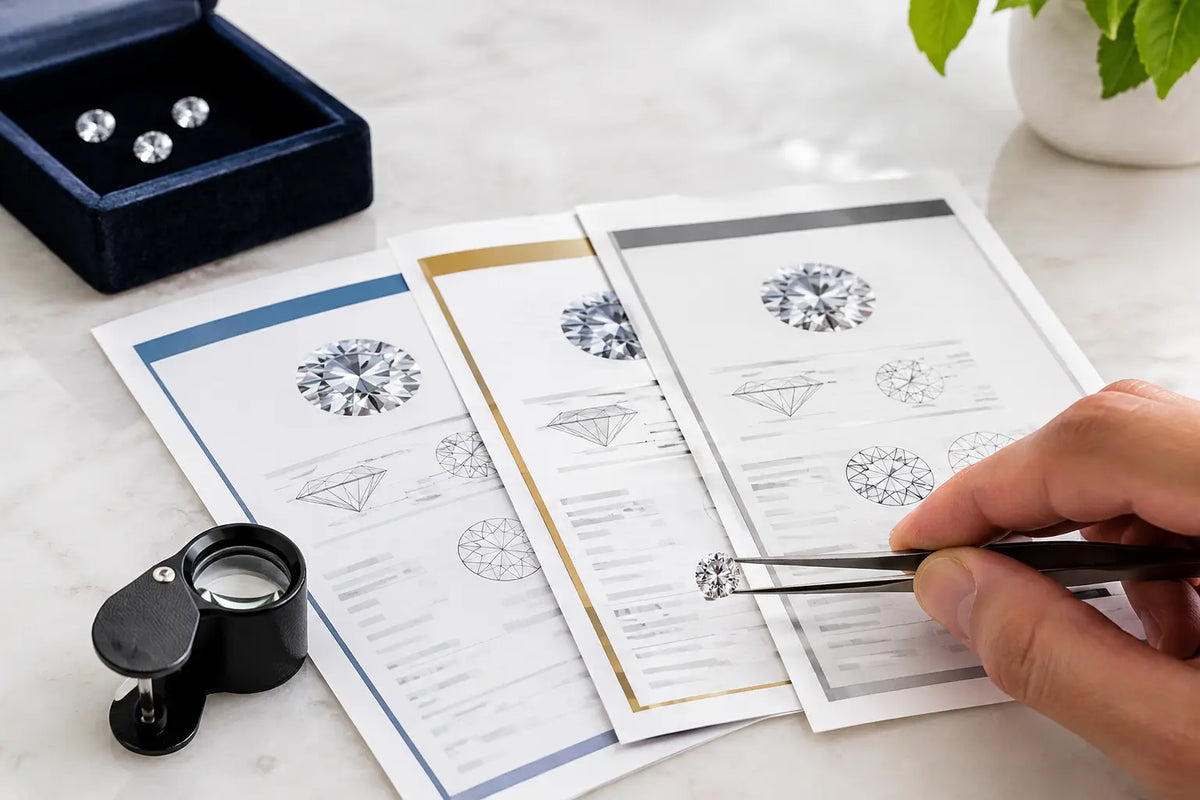
For brilliant shapes, focus on lively light return and an even pattern without obvious dark zones. For step cuts, prioritize a clean appearance and appealing, balanced reflections. Certification remains useful for understanding the diamond’s measured characteristics, while images, videos, and expert guidance help you judge how those characteristics translate visually.
Lab-grown diamonds are real diamonds with the same optical, chemical, and physical properties as mined diamonds. That means every shape offers the same essential opportunity for beauty and durability. The decision is about design, not compromise.
Try a short-list before making the final call
Most people do not need to compare every diamond shape. Pick two or three that match your instinct, then view them at similar carat weights and in similar settings. Notice which one catches your eye first, which one feels proportional on your hand, and which one still feels exciting after the initial sparkle wears off.
Photographs are helpful, but your preference becomes clearer when you see how a shape looks from different angles and under different lighting. A knowledgeable jewelry consultant can also explain the practical details that are easy to miss, from bow-ties and corner protection to the setting choices that make a particular shape shine.
The diamond shape that suits you is the one that makes the ring feel like yours before anyone asks to see it. Choose the silhouette you will be happy to wear through ordinary mornings, major milestones, and every meaningful moment in between.