Article: Diamond Alternatives That Fit Your Love Story
Diamond Alternatives That Fit Your Love Story
A beautiful center stone should feel like a reflection of your relationship, your style, and the future you are building - not a compromise you have to explain. That is why more couples are researching diamond alternatives before choosing an engagement ring, anniversary gift, or custom jewelry piece. The category includes stones with very different origins, appearances, durability, and long-term considerations.
The right choice is not simply the lowest price or the largest carat weight. It is the stone that delivers the look and meaning you want while fitting the way you plan to wear it every day.
What Counts as a Diamond Alternative?
“Diamond alternative” is often used as a catchall term, but it can describe two very different things. A lab-grown diamond is a real diamond created in a controlled laboratory rather than mined from the earth. It has the same carbon crystal structure and the same fundamental optical, chemical, and physical properties as a mined diamond.
Other alternatives are diamond simulants or colored gemstones. They may offer sparkle, color, or a lower initial price, but they are not diamonds. Moissanite, white sapphire, morganite, and aquamarine all have their own character. None should be judged as a lesser version of something else. They simply make different promises in terms of brilliance, durability, maintenance, and style.
For shoppers who specifically want a diamond, lab-grown diamonds are usually the most direct alternative to mined diamonds. For shoppers who want a distinctive look or prefer color, gemstones can create a deeply personal design.
Lab-Grown Diamonds: A Diamond in Every Meaningful Way
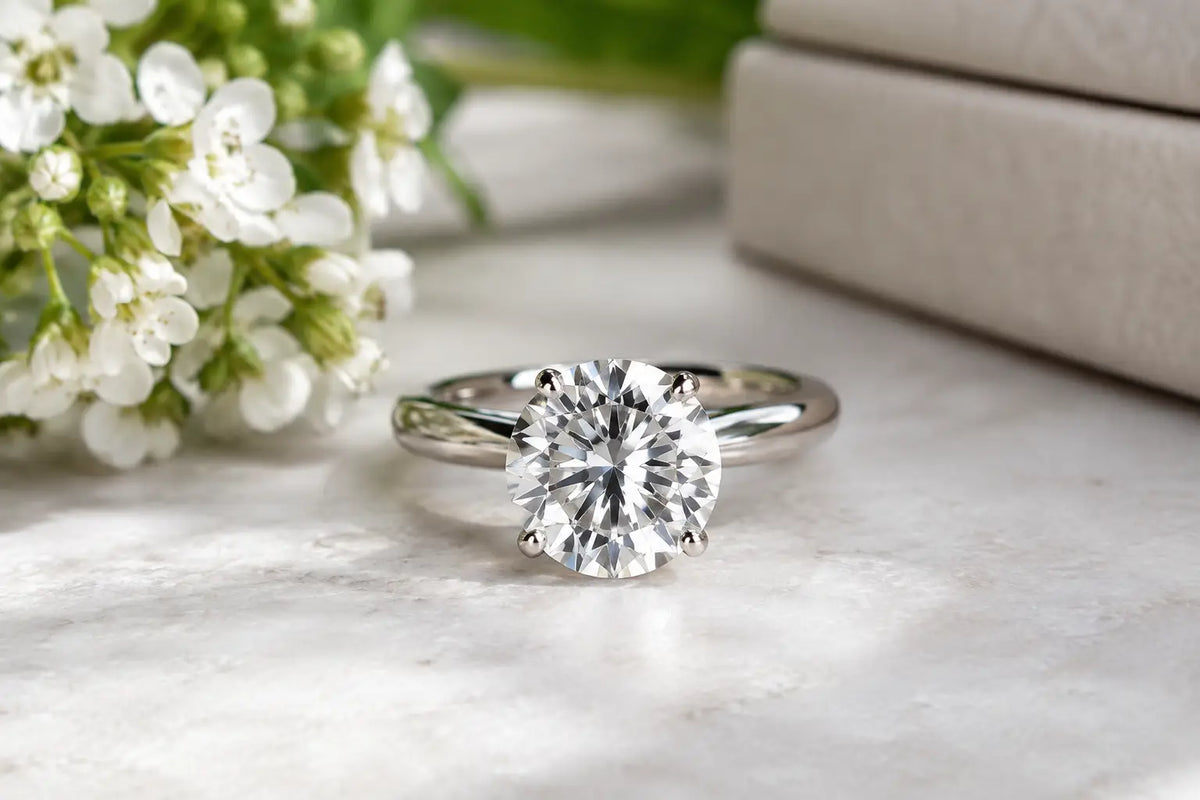
A lab-grown diamond is ideal for buyers who want the classic diamond look, exceptional durability, and the confidence of choosing a stone with a documented origin. Like mined diamonds, lab-grown diamonds are graded by the 4Cs: cut, color, clarity, and carat weight. They can also be evaluated by respected independent grading laboratories.
The visual difference between a well-cut lab-grown diamond and a well-cut mined diamond is not something the unaided eye can identify. Both can show the bright white light, fire, and crisp scintillation people expect from diamond jewelry. The difference is their growth environment and, often, the price structure.
That price difference can give you more room to prioritize what matters most. You may be able to select a larger center stone, a higher cut quality, or a more detailed setting while staying within your intended budget. For an engagement ring worn every day, that flexibility can be especially meaningful.
Lab-grown diamonds also appeal to buyers looking for a modern approach to ethical luxury. Their traceable laboratory origin can help customers avoid many of the sourcing questions that come with traditional mining. Still, thoughtful shopping matters. Ask for clear stone specifications and a grading report when applicable, and compare diamonds based on quality rather than carat weight alone.
What to prioritize when selecting a lab-grown diamond
Cut deserves your attention first. A strong cut gives a diamond its life and sparkle, while a poorly cut stone can look less brilliant even at a higher carat weight. After cut, consider the balance of color and clarity that looks beautiful to you in your chosen shape.
For many engagement ring buyers, a near-colorless diamond with eye-clean clarity offers excellent visual value. Shape also changes how a diamond appears. An oval, pear, or marquise can look larger across the finger than a round diamond of the same carat weight, while an emerald cut highlights clean lines and clarity.
Moissanite: High Sparkle at a Different Price Point
Moissanite is one of the most recognized diamond alternatives because it is bright, durable, and generally more accessible than diamond. It is a distinct gemstone, not a type of diamond. Its optical properties create a lively, colorful flash that some people love and others find more noticeable than diamond sparkle.
For jewelry that will be worn regularly, moissanite performs well. It ranks high on the Mohs scale of hardness and can stand up to daily wear with reasonable care. It is especially appealing for someone who wants a large, eye-catching center stone while reserving more of the budget for a wedding, home, travel, or another shared goal.
The trade-off is mostly aesthetic and personal. If you want the familiar light performance and status of a true diamond, a lab-grown diamond may feel more aligned. If you love bold brilliance and want an alternative that is clearly its own gemstone, moissanite can be a beautiful choice.
Gemstone Diamond Alternatives for a More Personal Look
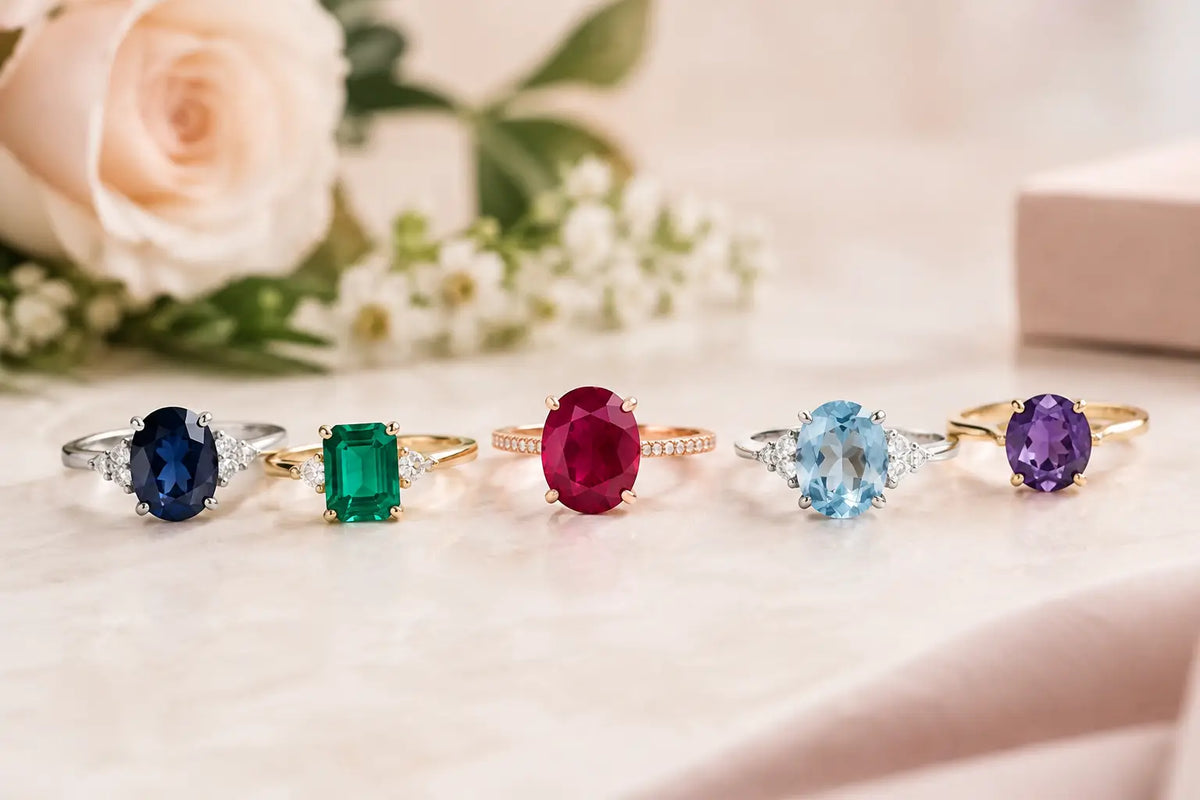
A colored gemstone center stone can turn a ring into something unmistakably yours. It may honor a birth month, reference a favorite color, or simply suit a style that feels less traditional. Sapphire is a popular option for its excellent durability and wide range of colors, including blue, pink, yellow, green, and white.
Morganite offers a soft peach-pink glow that works beautifully in rose gold, while aquamarine brings a cool blue tone that feels light and refined. White sapphire can provide a neutral look at a lower price point, although it does not have the same brilliance or hardness as diamond and may need more frequent cleaning to stay bright.
Durability matters more with some gemstones than others. A ring is exposed to handwashing, desk work, exercise, cooking, and the occasional accidental knock. Softer stones can still be used in engagement rings, but they benefit from protective settings and more mindful wear. If the ring will be worn every day for decades, discuss lifestyle and setting design before settling on a stone.
How Diamond Alternatives Compare for Daily Wear
When comparing diamond alternatives, look beyond the first impression. A stone can be stunning in a jewelry box yet require more care than you want from an everyday ring.
Diamond is the hardest commonly used jewelry stone, making it an outstanding choice for frequent wear. Moissanite also offers strong durability. Sapphire and ruby are highly suitable for daily jewelry, though they can show wear differently over time. Softer gems such as morganite, opal, pearl, and emerald need greater care and may be better suited to occasional wear, protective settings, or a design that acknowledges their natural character.
Maintenance is part of ownership, not a drawback. Even a diamond ring can look dull when lotion, soap, and natural oils build up beneath the setting. Regular cleaning, periodic prong inspections, and removing jewelry for heavy activity help preserve almost any fine piece.
Budget, Value, and the Question of Resale
Every meaningful jewelry purchase deserves clear expectations. A lower purchase price does not automatically mean a stone is a better value, and a higher price does not guarantee a better choice. Value comes from how well the stone meets your priorities: appearance, longevity, origin, craftsmanship, and the emotion attached to it.
Lab-grown diamonds often make it possible to buy more diamond for your budget than a comparable mined diamond. Moissanite and many gemstones can cost less still. However, shoppers should not assume that any alternative will retain value in the same way. Resale markets vary widely by stone type, quality, demand, certification, and jewelry design.
For most people, an engagement ring is not an investment vehicle. It is a piece of fine jewelry intended to mark a commitment and be worn with joy. That perspective makes it easier to choose based on what you will genuinely love seeing on your hand.
Choosing the Right Stone for Your Ring Design
Your setting can change the entire effect of the center stone. A slender solitaire lets the stone take the lead. A hidden halo adds detail from the side. Three-stone rings bring added symbolism, while vintage-inspired designs create texture and romance. With a custom design, the stone, metal, proportions, and setting can be planned together rather than chosen in isolation.
Before deciding, consider how the ring fits into your real life. Do you prefer a low-profile setting that sits comfortably under gloves? Do you want a stone that looks elongated on the finger? Are you drawn to warm yellow gold, cool platinum, or romantic rose gold? These details often matter more to your long-term happiness than chasing a single grading number.
A helpful jewelry consultation should make the choice feel clearer, not more complicated. At Eternity LGD, buyers can compare lab-grown diamond specifications, explore ready-to-wear styles, or shape a custom design around the stone and story that feel right to them.
The best choice is the one you will reach for every morning with confidence. Whether that is a lab-grown diamond with timeless brilliance, a luminous moissanite, or a gemstone in a color that feels entirely yours, meaningful jewelry begins with a decision that feels honest to you.