Article: How to Spot Diamond Simulants Before You Buy
How to Spot Diamond Simulants Before You Buy
A diamond can look convincing under the bright lights of a jewelry case, especially when it is clean, well cut, and set in a beautiful ring. Knowing how to spot diamond simulants helps you shop with confidence, whether you are choosing an engagement ring, upgrading a meaningful piece, or selecting a gift meant to last for decades.
The first distinction matters most: a diamond simulant is not the same as a lab-grown diamond. Lab-grown diamonds have the same chemical composition, crystal structure, and optical properties as mined diamonds. Simulants are different gemstones or materials selected because they resemble a diamond. They can be lovely, durable choices in their own right, but they should always be represented and priced accurately.
What Counts as a Diamond Simulant?
Diamond simulants are materials that imitate a diamond's bright, colorless appearance without being diamond. Common examples include cubic zirconia, moissanite, white sapphire, and glass. Each has a distinct look and performance profile, from brilliance and fire to scratch resistance and long-term wear.
This does not make a simulant “fake” in the sense of being inherently deceptive. A moissanite ring can be a deliberate, stylish purchase. The issue is disclosure. When a seller calls a simulant a diamond, avoids direct questions, or provides vague paperwork, it is time to slow down.
A lab-grown diamond should not be grouped with these alternatives. Unlike simulants, it is a real diamond, grown in a controlled setting rather than formed deep in the earth. Professional testing and a grading report can distinguish it from a mined diamond, but visually, they share the same essential material properties.
How to Spot Diamond Simulants With Your Eyes
Visual clues can raise useful questions, although they cannot replace professional verification. Lighting, setting style, cleanliness, and the quality of the cut all affect what you see. Use these checks as a starting point, not as a final verdict.
Look for exaggerated rainbow flashes
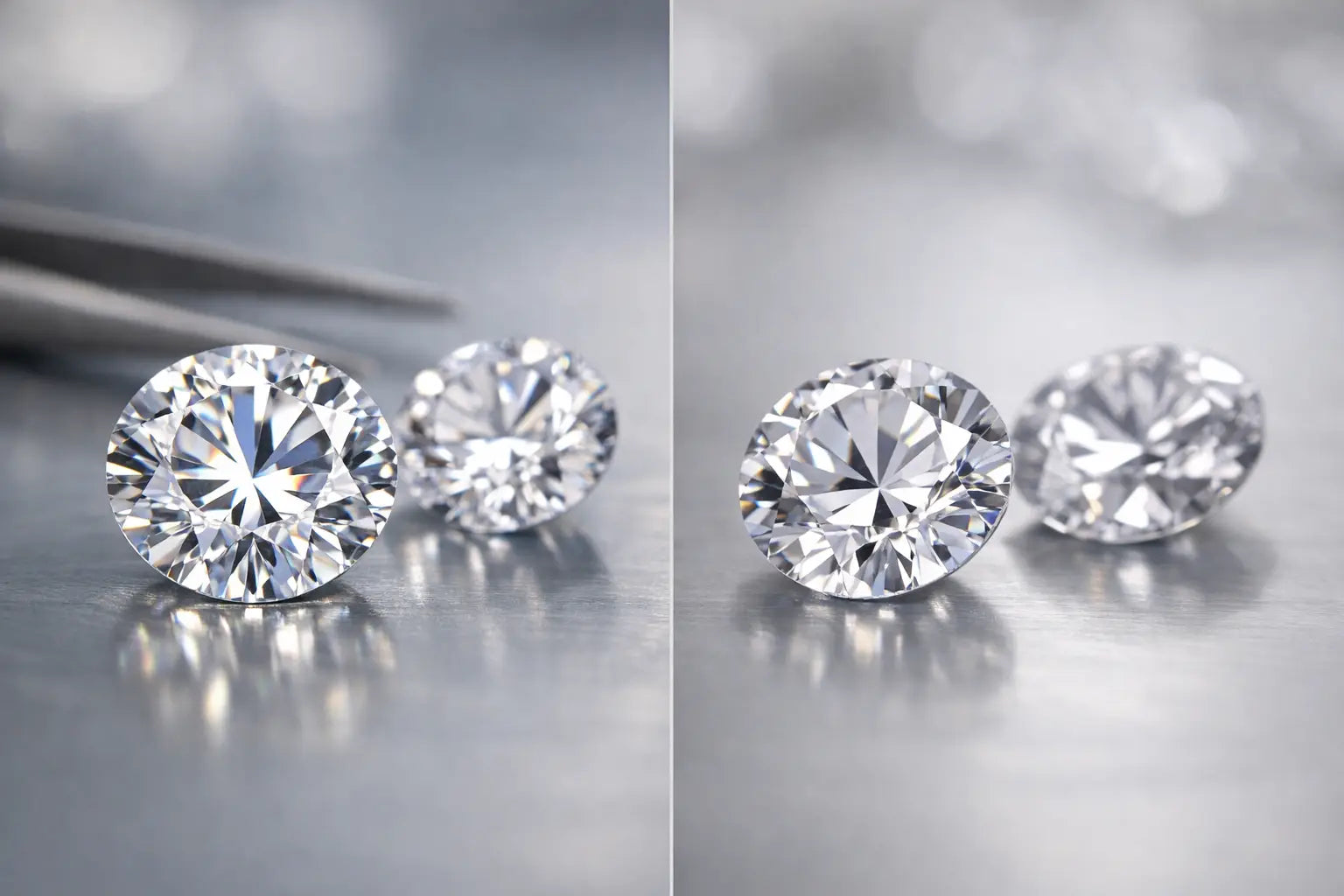
Diamonds reflect white light as brilliance and colored light as fire. Moissanite also delivers impressive sparkle, but larger stones can show noticeably stronger, broader rainbow flashes, particularly in direct sunlight or under LED lighting. Some people love this lively effect; others prefer the more balanced pattern of light associated with diamond.
Do not rely on this clue alone. A beautifully cut diamond can show plenty of fire, while a poorly cut stone of any kind may appear less lively. Compare stones in several lighting conditions instead of making a judgment in one showroom spotlight.
Check for a glassy or overly smooth appearance
Cubic zirconia often begins with a bright, diamond-like look, but it may appear softer or more glassy beside a diamond. Over time, it can collect surface wear that dulls its crisp reflections. Glass is generally easier to identify because it lacks diamond's sharp, scintillating light return and scratches more readily.
White sapphire can create a different kind of confusion. It is a natural gemstone with respectable durability, but it tends to show less sparkle than a diamond. Its reflections may look more subdued, and the stone can appear slightly sleepy in lower light.
Inspect the facets under magnification
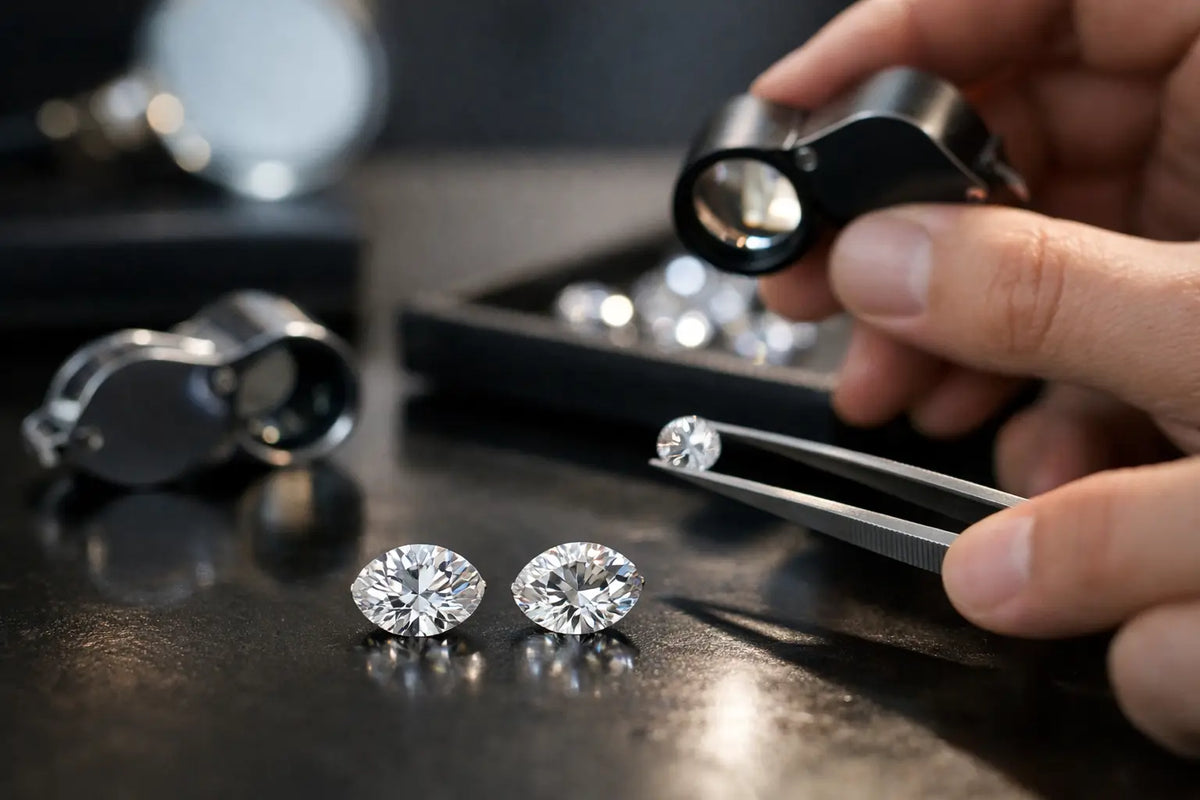
A jeweler's loupe can reveal clues in a worn stone. Diamonds resist scratching exceptionally well, while cubic zirconia and glass can develop surface abrasions with regular wear. Small scratches, softened facet edges, or cloudy patches may suggest a softer material, though a well-cared-for simulant can still look excellent.
Inclusions are not a shortcut. Natural diamonds often have internal features, but lab-grown diamonds can have them too, and some simulants may appear very clean. A flawless-looking stone is not proof of anything by itself.
Do Not Trust Popular At-Home Tests
Many online “diamond tests” are unreliable and may damage jewelry. The fog test, newspaper test, water test, and scratch test are especially poor choices. A diamond should never be scratched against another object simply to prove a point. Even if the stone survives, the setting, finish, or nearby accent stones may not.
Thermal diamond testers can be helpful in trained hands, but they have limits. Moissanite conducts heat in a way that may confuse basic testers, which is why professional jewelers often use combination instruments and close examination. Home devices can also produce misleading results when a stone is dirty, loose, very small, or set in metal.
The practical lesson is simple: use visual observation to ask better questions, not to make a high-stakes decision based on a viral test.
Ask for the Right Documentation
For a significant diamond purchase, the paperwork should match the stone you are being shown. A grading report from a recognized independent laboratory is one of the most useful protections available. It identifies whether a stone is natural or laboratory-grown and records key quality details, such as carat weight, color, clarity, cut information where applicable, measurements, and any relevant comments.
Read the report rather than simply accepting that one exists. Confirm that its measurements and carat weight align with the stone. If the report includes a report number or inscription reference, a jeweler can help you verify the connection between the document and the diamond.
A simulant may come with its own documentation, particularly moissanite, but it should clearly state what the stone is. Terms such as “simulated diamond,” “diamond alternative,” or “moissanite” are disclosures, not red flags, when presented plainly. Be cautious with phrases designed to sound diamond-like without making a direct claim, such as “diamond essence” or “created gemstone,” unless the material is specifically named.
Compare the Price to the Full Specification
Price is a clue, not proof. A price that seems unusually low for the stated carat weight and quality deserves a closer look, but lab-grown diamonds have changed old assumptions about what a real diamond must cost. They allow many buyers to prioritize size, cut, and design within a more comfortable budget.
Instead of comparing a single price tag, compare the complete specification: stone type, carat weight, shape, color, clarity, cut quality, grading report, metal, setting craftsmanship, and return or warranty terms. A 2-carat moissanite and a 2-carat lab-grown diamond are very different products, even if both create a dramatic look from across the room.
Transparency should feel easy. A knowledgeable seller can explain why a particular diamond, simulant, or setting costs what it does without pressure or vague language.
When an Expert Evaluation Is Worth It
If you already own a piece and are unsure what it contains, an independent appraisal or professional evaluation is the most dependable route. This is especially worthwhile for estate jewelry, inherited rings, private sales, and pieces that have been repaired or reset over the years.
A qualified professional can examine the stone with appropriate instruments, assess the setting, identify possible treatments, and provide documentation for insurance or resale purposes. They can also tell you whether a stone's condition affects its value or security in the setting.
For a new purchase, ask to see the stone before finalizing whenever possible, either in person or through detailed images and specifications. Pay attention to how clearly the seller answers direct questions. You deserve to know whether you are choosing a mined diamond, a lab-grown diamond, moissanite, cubic zirconia, or another gemstone.
Choose the Stone That Matches Your Story
The goal is not to treat every diamond alternative as inferior. It is to make a choice with clear information. Some buyers prefer moissanite for its distinct sparkle, while others want the scientific identity and enduring hardness of diamond. Many couples choose lab-grown diamonds because they want exceptional beauty, verified quality, and a more accessible path to a larger or more detailed design.
A meaningful piece of jewelry should never rely on guesswork. Ask what the stone is, request documentation, and give yourself room to compare. When the details are transparent, you can focus on the part that matters most: choosing a piece that feels unmistakably yours.