Lab Diamond Versus Cubic Zirconia: Key Differences
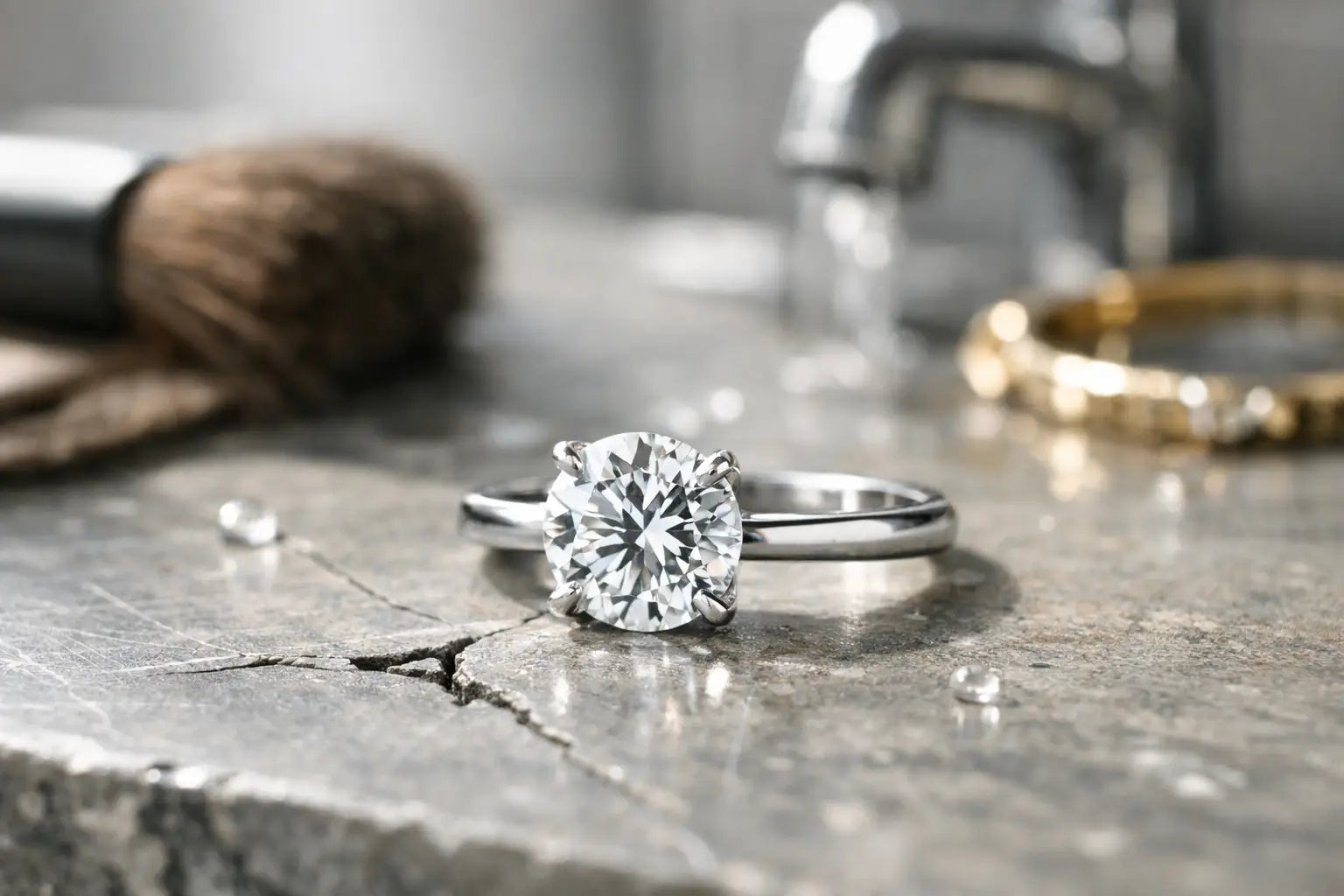
A sparkling center stone can look convincing across a restaurant table, but the difference becomes more meaningful when it is part of a ring you plan to wear every day. In the lab diamond versus cubic zirconia decision, both options offer bright, colorless beauty without the cost of a traditional mined diamond. They are not, however, interchangeable materials.
For an engagement ring, anniversary gift, or custom piece intended to become part of your everyday life, the right choice depends on what you value most: diamond authenticity, long-term wear, size within your budget, or a look meant for occasional fun. Understanding how each stone is made, wears, and holds up over time makes the decision far more straightforward.
Lab Diamond Versus Cubic Zirconia at a Glance
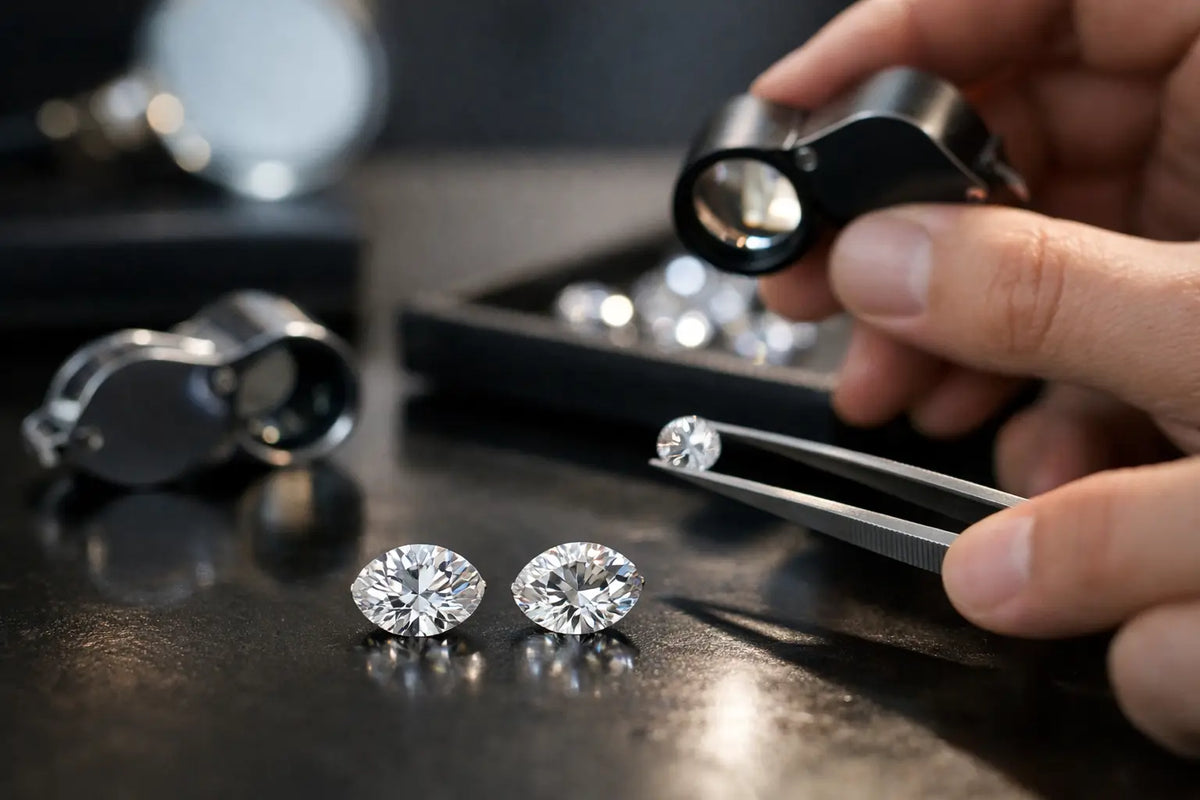
A lab-grown diamond is a real diamond created in a controlled laboratory rather than formed beneath the earth. It has the same chemical composition, crystal structure, hardness, and optical properties as a mined diamond. Both are carbon crystals, and both can be evaluated using the familiar 4Cs: cut, color, clarity, and carat weight.
Cubic zirconia, often called CZ, is a diamond simulant. It is usually created from zirconium dioxide and is designed to resemble a diamond visually. It is not a type of diamond, and it does not share diamond's carbon crystal structure or its physical properties.
That distinction affects nearly every practical consideration, from sparkle and durability to certification and future ownership. A well-cut cubic zirconia can be beautiful, especially when new. A lab-grown diamond delivers the same visual and material experience as any other diamond, with a more accessible path to a larger carat weight or higher quality.
Brilliance: Why They Do Not Sparkle the Same Way
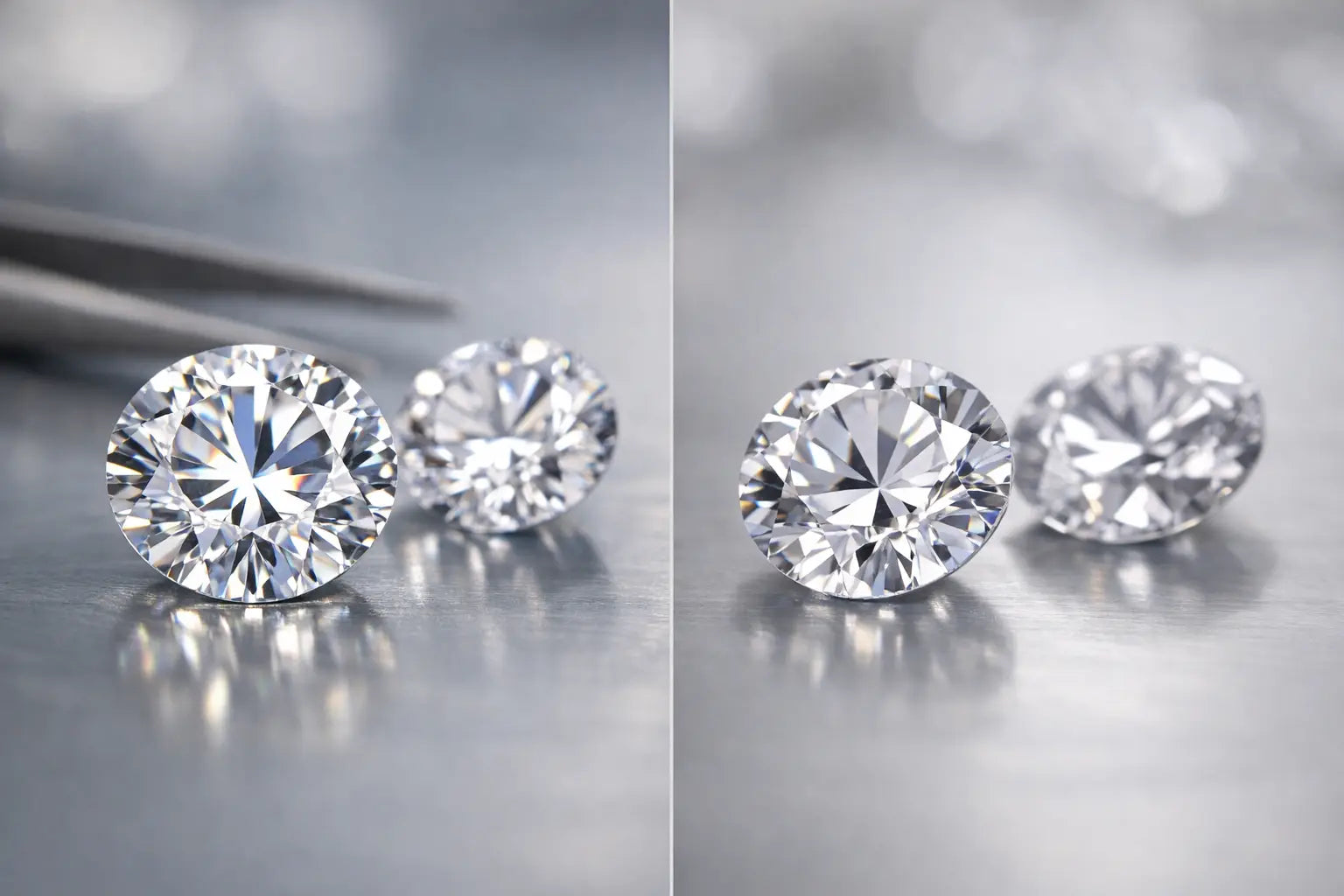
Both stones reflect light, but their sparkle has a different character. Diamonds are known for a balance of white-light brilliance, colored fire, and crisp scintillation as the stone moves. Their high refractive index and precise faceting create the lively, sharp flashes most people associate with fine diamond jewelry.
Cubic zirconia can show strong flashes of color, sometimes more rainbow-like than a diamond. To some eyes, especially in larger stones, that extra fire can appear less natural. CZ is also commonly cut with broader facets and may not have the same crisp pattern of contrast seen in a finely cut diamond.
Cut matters in either choice. A beautifully proportioned lab diamond will usually look brighter and more alive than a poorly cut diamond with a larger carat weight. When choosing an engagement ring, it is wise to prioritize cut before chasing size alone. That is where a diamond consultation can be especially valuable: the goal is not simply to buy more carats, but to select a stone that looks exceptional in its setting.
Color and clarity over time
High-quality lab diamonds can be selected across a wide range of color and clarity grades, just like mined diamonds. They remain stable and do not cloud or yellow through ordinary wear. A diamond may collect lotion, soap, or oils on its surface, but cleaning restores its brightness.
Cubic zirconia often begins with a very white, nearly flawless appearance. Over time, it can develop a hazy look as surface scratches and residue build up. Its appearance can be refreshed with careful cleaning, but wear-related dullness is more likely than with diamond.
Durability Matters for Everyday Rings
An engagement ring experiences far more than special occasions. It meets countertops, gym bags, steering wheels, desk drawers, hand sanitizer, and daily cleaning products. For that kind of wear, durability is one of the clearest differences between lab diamond and cubic zirconia.
Diamond ranks 10 on the Mohs hardness scale, making it the hardest commonly used jewelry stone. A lab-grown diamond has that same hardness. It resists scratching extremely well, which is why diamonds are a natural choice for rings, bracelets, and other pieces worn often.
Cubic zirconia ranks around 8 to 8.5 on the Mohs scale. That is still reasonably hard, but it can scratch and abrade over time, particularly in rings with exposed stones. Fine surface wear can soften the facets that create sparkle. For occasional earrings, a pendant, or a fashion piece you rotate frequently, that trade-off may be perfectly acceptable. For a center stone meant to last through decades of daily wear, a lab diamond is generally the stronger choice.
Hardness is not the whole story. Diamonds can chip if struck at a vulnerable angle, particularly near pointed shapes or exposed corners. A protective setting, thoughtful ring design, and periodic prong checks all help preserve any valuable stone. Fine jewelry deserves care, even when the center diamond is remarkably durable.
Price, Value, and What You Are Really Buying
Cubic zirconia costs substantially less than a lab-grown diamond. If your goal is a large, bright look for a modest budget, CZ makes that possible. It can be a practical choice for travel jewelry, trend-driven styles, or a temporary ring while you plan a future upgrade.
A lab-grown diamond costs more because it is diamond, with the material properties, lasting wear, and grading standards that come with it. Yet it is typically more accessible than a comparable mined diamond, allowing many buyers to prioritize a larger size, a higher color grade, or a more intricate setting without stretching their budget as far.
Neither lab-grown diamonds nor cubic zirconia should be purchased primarily as financial investments. Jewelry is first personal, expressive, and meant to be enjoyed. Still, a lab diamond has a more established place in fine jewelry because it can be independently graded, set in heirloom-quality designs, and supported through services such as repairs, upgrades, and buyback options where available. CZ generally carries minimal resale value and is often treated as a replaceable fashion stone.
Certification brings useful clarity
For a lab-grown diamond, an independent grading report can identify the stone and document its carat weight, cut, color, clarity, and proportions. This creates a clear basis for comparing diamonds and understanding exactly what you are purchasing. It is particularly helpful for a significant center stone or custom engagement ring.
Cubic zirconia is not graded under the diamond 4Cs in the same meaningful way. Sellers may describe its color or clarity, but those descriptions do not carry the same standardized value. If transparency, specifications, and a documented diamond identity matter to you, lab-grown diamond is the more fitting category.
Ethics and Personal Priorities
Many buyers choose lab-grown diamonds because they want a diamond with known laboratory origin and without the mining associated with traditional diamond supply. That preference can align naturally with a modern view of luxury: meaningful materials, transparent details, and a purchase that feels considered rather than automatic.
Cubic zirconia is also laboratory-made, so it avoids diamond mining as well. But it is worth separating the ethical question from the material question. Choosing CZ does not mean choosing a diamond alternative with identical properties. It means choosing a different gemstone material that offers a diamond-like appearance.
There is no universal answer here. Some shoppers love the idea of a real diamond that is created in a lab. Others want an inexpensive stone for a specific look and do not need it to function as a lifelong center stone. The best choice is the one that matches the meaning and intended lifespan of the jewelry.
Which Stone Is Right for Your Jewelry?
Choose a lab-grown diamond if you want the beauty and physical properties of diamond, plan to wear the piece every day, or are designing an engagement ring, wedding band, anniversary gift, or custom heirloom-style piece. It is also the better fit when certification, lasting brilliance, and a refined fine-jewelry experience are priorities.
Choose cubic zirconia if you want a low-cost statement piece, travel-friendly jewelry, or a style you expect to change frequently. It can offer satisfying sparkle without the commitment of a fine diamond purchase, as long as you go into it expecting more visible wear over time.
For many couples, the most compelling value lies in a lab-grown diamond selected with intention: a stone that feels personal, wears beautifully, and leaves room in the budget for the setting and details that make the ring unmistakably yours. The right stone should not just photograph well on proposal day. It should still feel exciting every time you look down at it years later.